


Factors Affecting the Compatibility of Motion Capture Devices with Human Motion Biomechanics Analysis Software
Release time:
2025-08-25 16:38
Source:
In the fields of biomechanics research, clinical rehabilitation, and sports science, the compatibility between motion capture devices and analysis software directly affects the accuracy and reliability of research outcomes. With technological advancements, from optical and inertial systems based on wearable sensors to markerless motion capture, how various motion capture technologies efficiently collaborate with human musculoskeletal simulation modeling software has become a focus for researchers.
01 Technical Compatibility, the Key to Data Bridging
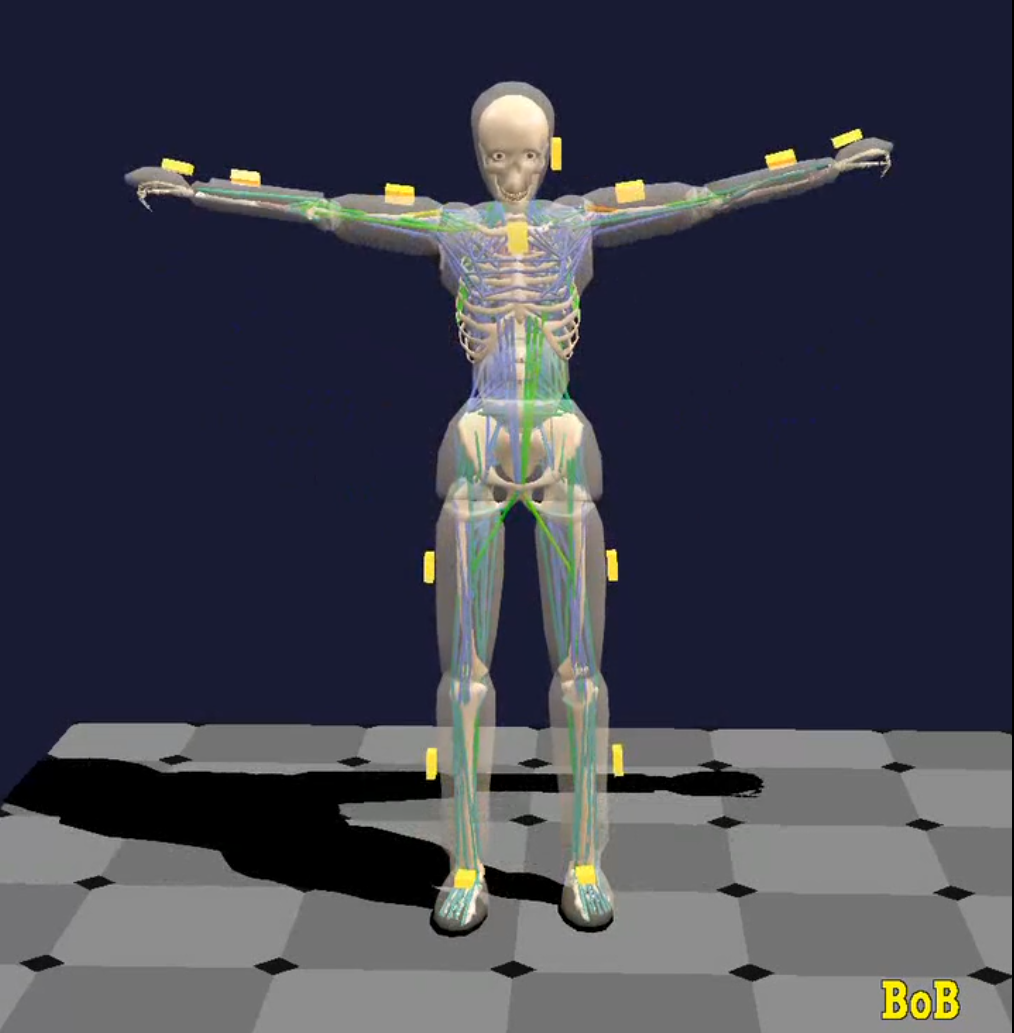
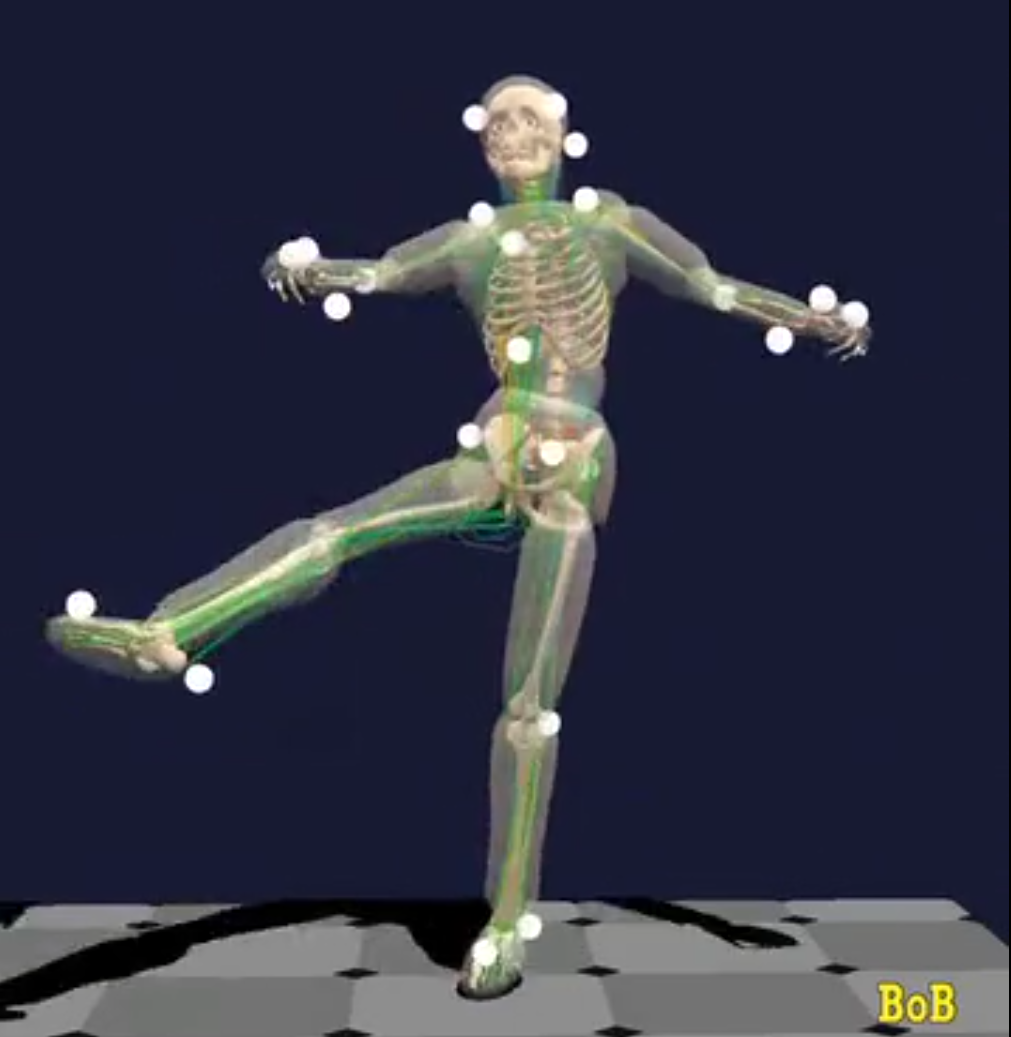
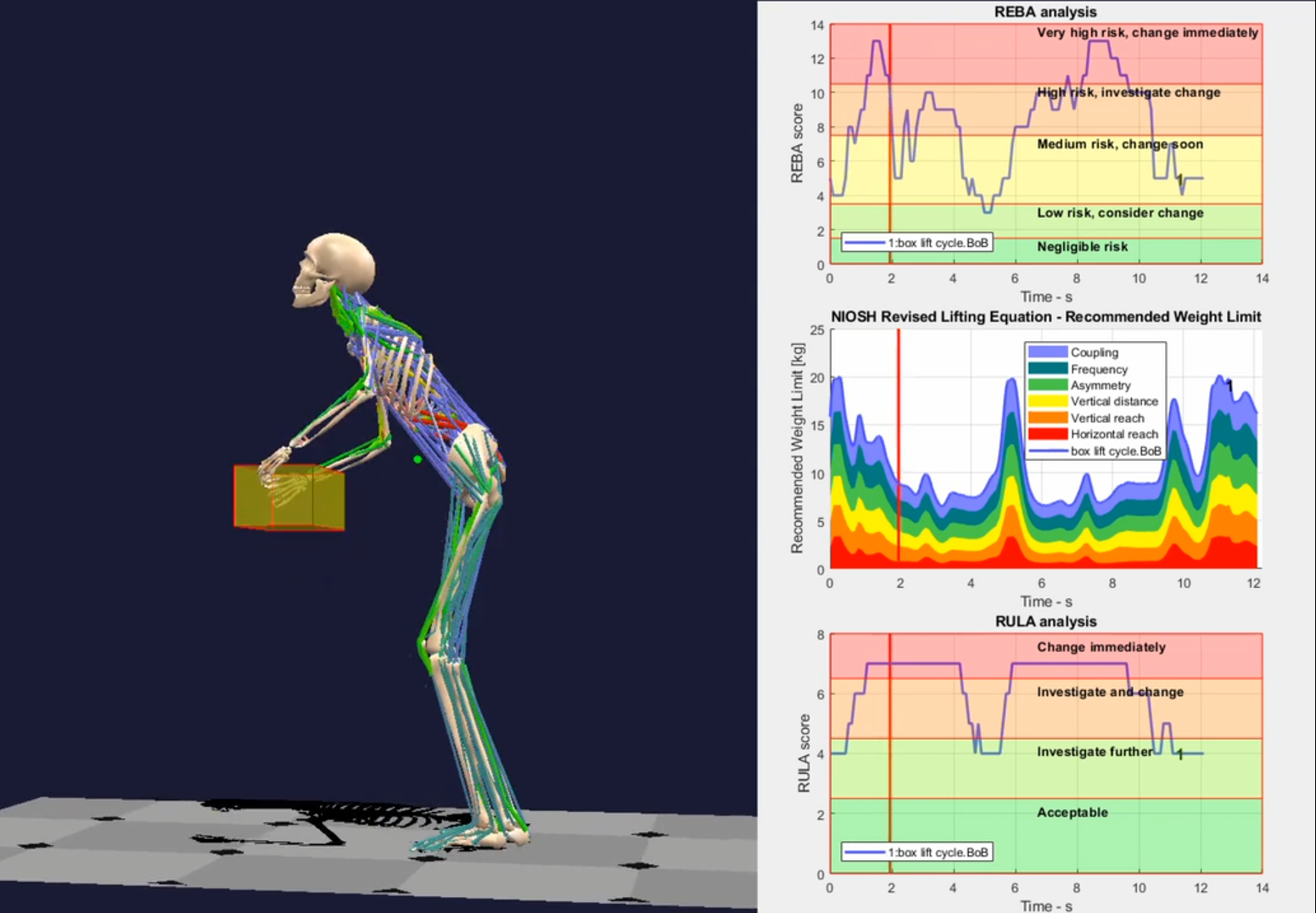
The adaptability between motion capture devices and biomechanical analysis software primarily depends on data format compatibility. Mainstream motion capture systems such as Optitrack 、 Vicon and other optical devices usually output C3D format files, while Xsens and other inertial systems mainly generate MVNX format data. Biomechanical analysis software such as OpenSim 、 AnyBody need to accurately parse these data formats; BOB human musculoskeletal simulation modeling software supports importing multiple data formats, including C3D files, Perception Neuron exported CALC files, Xsens files and MVNX Biovision BVH files and files. This compatibility is the foundation for device and software collaboration. The lack of unified standards can lead to data loss or misinterpretation, affecting the accuracy of research results. However, besides data format compatibility, attention should also be paid to whether the biomechanical analysis software used later includes or supports the biomechanical models applied during motion data collection by the motion capture system, which has a significant impact on data analysis effectiveness!
02 Precision Matching, from Laboratory to Practical Application
The matching degree between device precision and software algorithms is another key factor affecting compatibility. Research shows that,
3D motion capture systems with cameras arranged in a semi-arc alternating layout, Optitrack X Y 、 and Z axis coordinate precision are respectively μ 5.00 m. This level of precision must match the analytical capabilities of biomechanical software. For example, lower limb musculoskeletal models built on the platform can perform inverse kinematics and inverse dynamics calculations based on motion capture data to obtain joint net moments. The Biomechanics Clinical Rehabilitation Laboratory at Chung-Ang University in South Korea uses 、10.26 m. This level of precision must match the analytical capabilities of biomechanical software. For example, lower limb musculoskeletal models built on the platform can perform inverse kinematics and inverse dynamics calculations based on motion capture data to obtain joint net moments. The Biomechanics Clinical Rehabilitation Laboratory at Chung-Ang University in South Korea uses Z 5.50 m. This level of precision must match the analytical capabilities of biomechanical software. For example, lower limb musculoskeletal models built on the platform can perform inverse kinematics and inverse dynamics calculations based on motion capture data to obtain joint net moments. The Biomechanics Clinical Rehabilitation Laboratory at Chung-Ang University in South Korea uses OptiTrack PrimeX 22 OpenSim cameras and passive marker technology to accurately capture subtle pelvic shifts and joint angle abnormalities in runners' gait, providing critical data support for sports injury prevention. 03 Innovations in Agricultural Ergonomics and Human-Machine Collaboration A study published in
demonstrated innovative applications of wearable sensors in agricultural ergonomics. The study used
2025 motion capture systems and 8 Trigno EMG Xsens systems to evaluate human biomechanics during simulated plant transplanting. The study compared biomechanical data of participants under manual and collaborative robot-assisted conditions. Results showed that collaborative robot assistance significantly reduced segmental velocity and acceleration in key spinal regions, indicating lower dynamic spinal loads. Collaborative robot assistance also altered muscle activation patterns, reducing biceps brachii usage while increasing activation of stabilizing muscles such as wrist flexors, brachioradialis, and upper trapezius. Task duration was reduced by 59.46% demonstrating the potential of collaborative robots to improve efficiency. The Adaptive Collaboration Interface (ACI) technology developed by the Human-Machine Interaction Laboratory at the Italian Institute of Technology (IIT), combined with motion capture systems, enables real-time robot responses to human behavior. This system integrates haptic feedback with motion capture data to quickly identify basic actions such as "stationary," "push," "pull," and "rotate," allowing robots to respond to human movements at very high speeds. 16 04 Breakthroughs in Markerless Technology and Training Applications L5/S1、L1/T12、T1/C7 Markerless motion capture technology has made significant progress in recent years and plays an important role in university training labs and research fields. Traditional motion capture technology relies on wearable devices, which are cumbersome and restrict movement freedom, whereas markerless motion capture uses camera vision recognition technology to capture key body joints and facial expressions. Guangzhou Virtual Dynamics has launched a markerless motion capture training lab solution covering two main application directions: motion capture sports analysis and digital human driving. In sports analysis, this technology targets majors such as sports science, sports dance, medical nursing, and medical rehabilitation, providing students with an unrestrained motion capture environment. Through the motion data analysis platform, students can compare their movements with a standard database to analyze arm angles in basketball training, posture correctness in dance students, or emergency operation procedures in nursing students. This data-driven teaching method improves training accuracy and provides a scientific basis for personalized guidance. 05 System Integration and Multimodal Data Fusion ,证明了协作机器人在提高效率方面的潜力。意大利理工学院(IIT)人机交互实验室开发的自适应协作界面(ACI)技术,结合 Xsens 动作捕捉系统,实现了机器人对人类行为的实时响应。该系统通过触觉反馈与动作捕捉数据的融合,可以快速识别“静止”、“推”、“拉”、“旋转”等基础动作,使机器人能以极快速度响应人类动作。
04 无穿戴技术突破与实训应用
无穿戴动作捕捉技术近年来取得显著进展,正在高校实训室和科研领域发挥重要作用。传统动作捕捉技术依赖穿戴设备,操作繁琐且限制动作自由度,而无穿戴动捕采用摄像头视觉识别技术捕捉人体的关键节点及面部表情。广州虚拟动力推出的无穿戴动捕实训室方案,涵盖动捕运动分析和数字人驱动两大应用方向。在运动分析方面,该技术面向体育科学、体育舞蹈、医学护理、医疗康复等专业,为学生提供了无束缚的动作捕捉环境。通过动作数据分析平台,学生可以将自己的动作与标准数据库进行对比,分析篮球专业学生训练的手臂夹角、舞蹈学员的姿态规范性,或护理专业学生的急救操作流程。这种数据驱动的教学方式提升了训练的精准度,为个性化指导提供了科学依据。
05 系统集成与多模态数据融合
Modern biomechanics research often requires synchronous collection of multimodal data, such as motion capture, electromyography, and ground reaction force data. This demands a high level of system integration capability between motion capture devices and analysis software. MotionMonitor Integrated gait analysis systems can synchronize data collection, analysis, and visualization across multiple devices, controlling various technical hardware through a single software platform. This integration capability breaks the technical limitations of traditional single devices, enabling researchers to obtain more comprehensive biomechanical analysis results of human movement. As a pioneer in human motion digitization technology, Noitom provides digital and intelligent solutions for the industry with core technologies such as optical-inertial hybrid motion capture systems and biomechanical analysis algorithms. The company integrates optical and inertial sensors to build a posture calculation framework based on multi-source data fusion, achieving complementary enhancement through self-developed algorithms, effectively improving occlusion robustness and dynamic accuracy. System position error is controlled within 1mm within 0.5 °, and posture error is stably controlled within °, meeting the high-quality motion capture requirements in various complex application scenarios.
06 Clinical Applications and Rehabilitation Innovations
In the medical rehabilitation field, the integrated application of motion capture technology and biomechanical analysis software is creating new possibilities. The Motion Capture Medical Union project is based on AI motion capture technology, providing medical-grade weight management and posture optimization solutions. This project integrates six major functions: body composition analysis, posture assessment, physical fitness testing, joint function detection, rehabilitation guidance, and psychological evaluation. It uses a multimodal data acquisition system to capture users' movements and physiological data in real time, employing AI algorithms for intelligent analysis and generating personalized training programs. Noitom's technology is also applied in the VR VR rehabilitation centers of top-tier hospitals, where precise collection of patients' limb movement data allows customized rehabilitation plans, significantly improving rehabilitation efficiency. After introducing Noitom's technology, the national modern pentathlon team uses data-driven motion analysis to quantify force patterns and movement rhythms, transforming complex motion data into scientific training programs, achieving a leap in competitive performance.
07 Environmental Factors and Practical Operational Constraints
Environmental factors affecting the compatibility of motion capture devices and software cannot be ignored. Research shows that the number and spatial position of cameras significantly affect the precision of optical systems. Inertial Measurement Units ( IMU ) are susceptible to magnetic distortion and environmental interference. Xsens Technological improvements have solved the magnetic distortion problem, enabling researchers to obtain accurate data in metal-containing environments. Additionally, ease of operation is an important factor affecting device and software compatibility. Highly user-friendly software with a short learning curve is crucial for reducing operational errors and improving research efficiency.
With the 2025 years, Yuanyou Technology has launched new patented technology combining sparse IMU and machine learning, further improving motion capture accuracy. The popularization of supercomputing capabilities allows parallel computing environments like the Shanghai Supercomputing Center's Sugon 4000A to handle more complex biomechanical simulations. Future human motion biomechanics research will no longer be limited to laboratory settings but will achieve high-precision, real-time analysis in real-world scenarios, providing stronger scientific support for human movement health.
(This article describes and analyzes the current state of the field, with data sourced from the internet. Please point out any deviations or errors.)
Human Body Biomechanics Analysis Software,Human Motion Capture Device,Unmarked motion capture,Wearable motion capture,Human Skeletal Muscle Simulation Modeling