


Products
-- PRODUCT CENTER --
About Us
—— ABOUT US ——
beijing qiaoze technology co ltd
Since its establishment in 1986, Beijing Qiaoze Technology Co., Ltd. has been focusing on the cutting-edge technology and solutions of "performance, quality and reliability engineering" for the company's purpose. It has accumulated more than 30 years of relevant engineering experience and the experience of introducing and learning advanced technologies and tools, and creatively put forward "VRTC integrated refining technology". "VRTC integrated refining technology" can help enterprises in need of structural adjustment to establish a research and development platform in the short term, and quickly develop high quality and highly reliable products with market competitiveness; "VRTC integrated refining technology" is also suitable for integrating and improving the research and development capabilities of enterprises.
View Details +BLOG
—— NEWS CENTER ——
On September 30 at 15:00, Beijing Qiaoze Technology will host the first session of its EikoTwin DIC online seminar. The first half will skip product details and instead focus on DIC industry trends through 2026 and six major technological developments. The second half will delve into methodologies, clarifying the divide between local subregion methods and global finite element approaches, and explaining what exactly changes when “measurement results are directly mapped onto the FE mesh.” Additionally, real-world cases such as ArianeGroup’s 3-meter-class flight component qualification and Liebherr’s 600°C crack tracking will be dissected on-site, sharing practical DIC experience with attendees. We warmly invite anyone interested to join the session!
2026-08-26
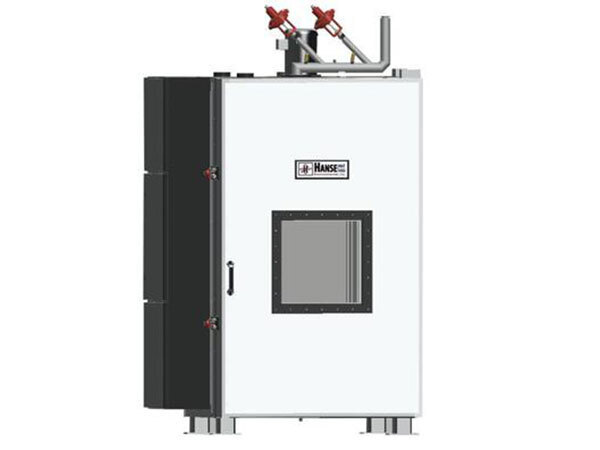
On September 23, 2026, from 10:00 to 11:00, we will host a live online session on HALT & HASS full‑chain practical analysis, exploring how extreme stress testing ensures the reliability of smart manufacturing!
2026-08-10
Use stress profiles under HALT limits to perform 100% screening of production parts, intercepting cold solder joints, marginal components, and process variations before they leave the factory. The supply chain also needs this gate as a failsafe—research on managing substitute parts for discontinued semiconductors shows ECU manufacturers must carry out extensive revalidation to address lifecycle mismatches. Screening profiles can quickly determine whether a replacement part is acceptable.
2026-11-02
With the proliferation of satellites, the “hand‑crafted” approach for individual units can no longer sustain economic viability or meet delivery timelines. The focus of reliability has shifted from “making a single unit perfect” to “ensuring stability across every batch.” Environmental Stress Screening (ESS/HASS) is becoming less an option and more a capacity gate for constellation deliveries — if early failures aren’t screened out, the cost of replenishing the constellation will eat up every penny saved through mass production.
2026-11-02
By exposing coupling defects during the R&D phase, engineers can employ stepped-stress testing: temperature steps reveal thermal design weaknesses, vibration steps uncover structural vulnerabilities, and finally, combined thermal–vibration stress is applied to trigger coupling defects that remain hidden under single‑stress conditions.
2026-10-30