


Biomechanical analysis software such as BOB and ANYBODY excel in the development of advanced intervention and rehabilitation strategies!
Release time:
2025-08-26 17:42
Source:
Biomechanics analysis software has become a core tool in modern rehabilitation engineering, providing data-driven solutions for rehabilitation strategy formulation and robot design through precise simulation of the biomechanical characteristics of the human musculoskeletal system.
Biomechanics analysis software plays an indispensable role in the development of rehabilitation robots. This type of software constructs high-precision human musculoskeletal models to simulate and analyze biomechanical parameters during movement, providing a scientific basis for optimizing rehabilitation strategies. In recent years, BOB ( Biomechanics of Bodies ) and AnyBody and other simulation software have become powerful tools in the field of rehabilitation engineering, helping researchers and clinicians design more effective interventions.
01 Biomechanics software becomes a key technology in the rehabilitation field
Modern rehabilitation medicine is gradually shifting from experience-driven to data-driven approaches, with biomechanics analysis software playing a key role in this transition. By precisely simulating the biomechanical characteristics of the human musculoskeletal system, these software tools provide quantitative bases for rehabilitation strategy formulation and rehabilitation robot design. BOB and AnyBody software can import data collected from motion capture systems such as Vicon 、 Xsens ) to calculate key parameters like joint torque, muscle force, and contact force, thereby assessing functional impairments and formulating personalized training programs.
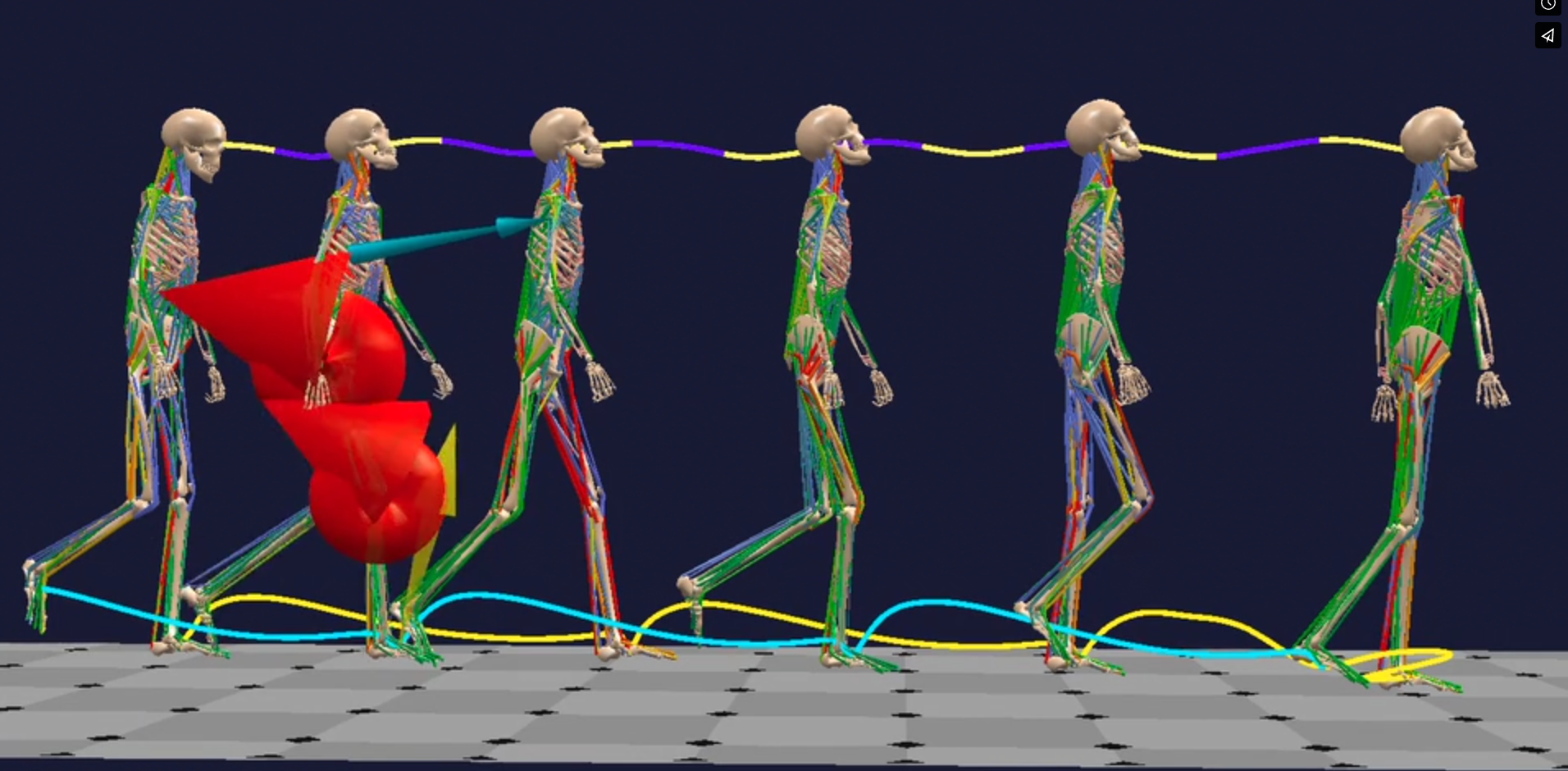
02 BOB Software: Multifunctional Integration and Teaching Research Applications
BOB Biomechanics analysis software is a musculoskeletal simulation modeling software from the UK, BOB The software offers Core 、 EMG 、 Ergo 、 Super(Core/Ergo/EMG) and TEACHING versions. This software supports importing multiple data formats, including C3D files, CALC files, HPF files, MVNX files and BVH files, enabling seamless collaboration with mainstream motion capture devices. BOB Its analysis functions are extensive, capable of processing point positions, / velocity, / acceleration, segment orientation, anatomical trajectories, center of mass position, body energy, / power, velocity vectors, joint angles, joint range of motion, joint torque, ground reaction forces, and various other data. Its multi-object analysis capability and batch processing functions greatly improve research efficiency, especially suitable for simulation modeling needs involving large amounts of motion data.
03 AnyBody Modeling System: Human-Machine Integration and Optimized Design
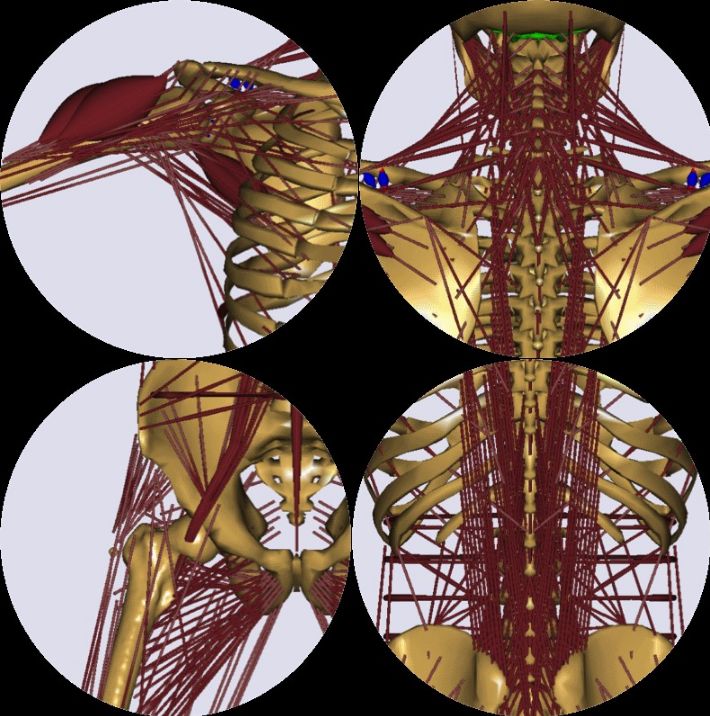
AnyBody The modeling system is another widely used biomechanics simulation software in the field of rehabilitation robot design. This system establishes a complete human - machine musculoskeletal system model and quantitatively analyzes the interaction forces and muscle changes between the walker and the human body through simulation results. A research team from Tianjin University of Science and Technology used AnyBody software to conduct human-machine integration and optimized design of a lower limb walker. They found that after wearing the lower limb walker, the gait on straight paths was basically normal, but joint forces, muscle forces, and muscle length changes showed varying degrees of delay, and some muscle forces exhibited sudden increases. Based on these findings, researchers proposed using surface electromyography (sEMG) feedback to predict human limb movements, thereby reducing walker delay and improving human-machine coordination. Studies show that sEMG has a strong correlation with muscle force, making it feasible to use as a control input signal for recognizing human lower limb movement intentions. sEMG sEMG
04 Integration Applications of Software in Rehabilitation Robot Development
In the field of rehabilitation robot development, biomechanics software applications have achieved significant results. For example, a research team from Dalian Jiaotong University designed a shoulder joint rehabilitation training robot and conducted kinematic and dynamic analysis of the human model and robot arm model in AnyBody software. - The analysis results showed that when the shoulder joint rehabilitation training robot drives the human arm to perform flexion and abduction movements, the strength of the related muscles is within allowable ranges, and the degree of muscle activation can achieve the purpose of shoulder joint rehabilitation training. Similarly, a research paper on Baidu Scholar titled "Coupled Simulation of Human Lower Limbs and Rehabilitation Robots Based on OpenSim " systematically studied high-precision human modeling and forward and inverse dynamics solutions of the human lower limb musculoskeletal model in virtual simulation systems. Researchers used OpenSim software to establish a high-precision human lower limb musculoskeletal model and performed inverse dynamics simulation analysis of typical human bipedal walking based on SimTrack . They obtained muscle force data and also wrote and ran code in Matlab to achieve coupled simulation of human lower limbs and rehabilitation robots, verifying the rationality and correctness of the lower limb rehabilitation robot mechanism design.
05 Application Case: Ankle Joint Rehabilitation Robot Design
The design of ankle joint rehabilitation robots also benefits from biomechanics analysis software. A study published in "Medical Biomechanics" 2023 in year 2 issue 2-PSU/RR designed a parallel ankle joint rehabilitation robot and analyzed the biomechanical characteristics of human muscles. Researchers used numerical discrete search methods to obtain the robot's actual workspace and explored the impact of structural parameter changes on the height of the robot's moving platform. Through AnyBody The software obtains biomechanical responses of the human body such as muscle force and muscle activity, studying the impact of changes in the height of the moving platform on muscle behavior. The research results show that appropriately increasing the initial tilt angle of the fixed-length rod and reducing its length allows the ankle joint rehabilitation robot to have a lower overall height. When the height of the moving platform decreases sequentially 10mm the muscle force and muscle activity involved in human movement both decrease to some extent.
06 Technical Prospects and Future Development Directions
Biomechanical analysis software has broad application prospects in the field of rehabilitation. With the improvement of computing power and continuous refinement of algorithms, the simulation accuracy and computational efficiency of these software will be further enhanced. 2025 Year 5 Month published in " Medical & Biological Engineering & Computing " a study developed an innovative algorithm combining skeletal muscle models and Karush - Kuhn - Tucker conditions ( KKT conditions ) was verified through a four-degree-of-freedom lower limb robot, successfully generating the optimal activation trajectory of the quadriceps femoris ( vasti ) and confirmed the dual application value of this method in medical rehabilitation and sports training. This technological breakthrough proposed a new paradigm for calculating equivalent external forces at the limb endpoint through skeletal muscle models. When the subject needs specific muscles (such as the quadriceps femoris) to generate target contraction force, researchers use the Karush - Kuhn - Tucker conditions to accurately deduce the mechanical vector that needs to be applied to the foot.
With the integration of artificial intelligence and Internet of Things technologies, biomechanical software is moving from laboratories to clinical and home environments. Open architecture and modular design allow BOB and AnyBody platforms to be compatible with various wearable sensors, providing real-time data support for remote rehabilitation and personalized interventions. In the future, such software will not only optimize rehabilitation robot design but also customize digital rehabilitation programs for each patient. They will record data from each training session, dynamically adjust training parameters, and maximize rehabilitation outcomes. All of this heralds a new era of precision and personalized rehabilitation medicine.
Advanced Intervention and Rehabilitation Strategies,Human Motion Biomechanics Analysis,Human Skeletal Muscle Simulation Modeling,BOB Human Biomechanics Analysis Software,ANYBODY Software