


Experts and scholars in the field of rehabilitation robot research and design are exploring the application of BOB human musculoskeletal simulation modeling software. Do you know why?
Release time:
2025-08-14 11:11
Source:
In the field of rehabilitation robot research and development, scientists and engineers have long faced a core challenge: how to accurately simulate the complex biomechanical characteristics of the human body to design rehabilitation devices that truly conform to the natural movement patterns of the human body?
The traditional R&D process relies heavily on physical prototype testing and clinical trials, which are not only time-consuming and costly but also difficult to capture intrinsic mechanical mechanisms such as muscle co-activation and joint load changes. With breakthroughs in biomechanical simulation technology, especially represented by BOB ( Body of Bones ) human skeletal muscle simulation modeling software, a new generation of tools is reshaping the R&D paradigm of rehabilitation robots.
01 Technical Core: BOB How to solve the pain points in rehabilitation robot R&D
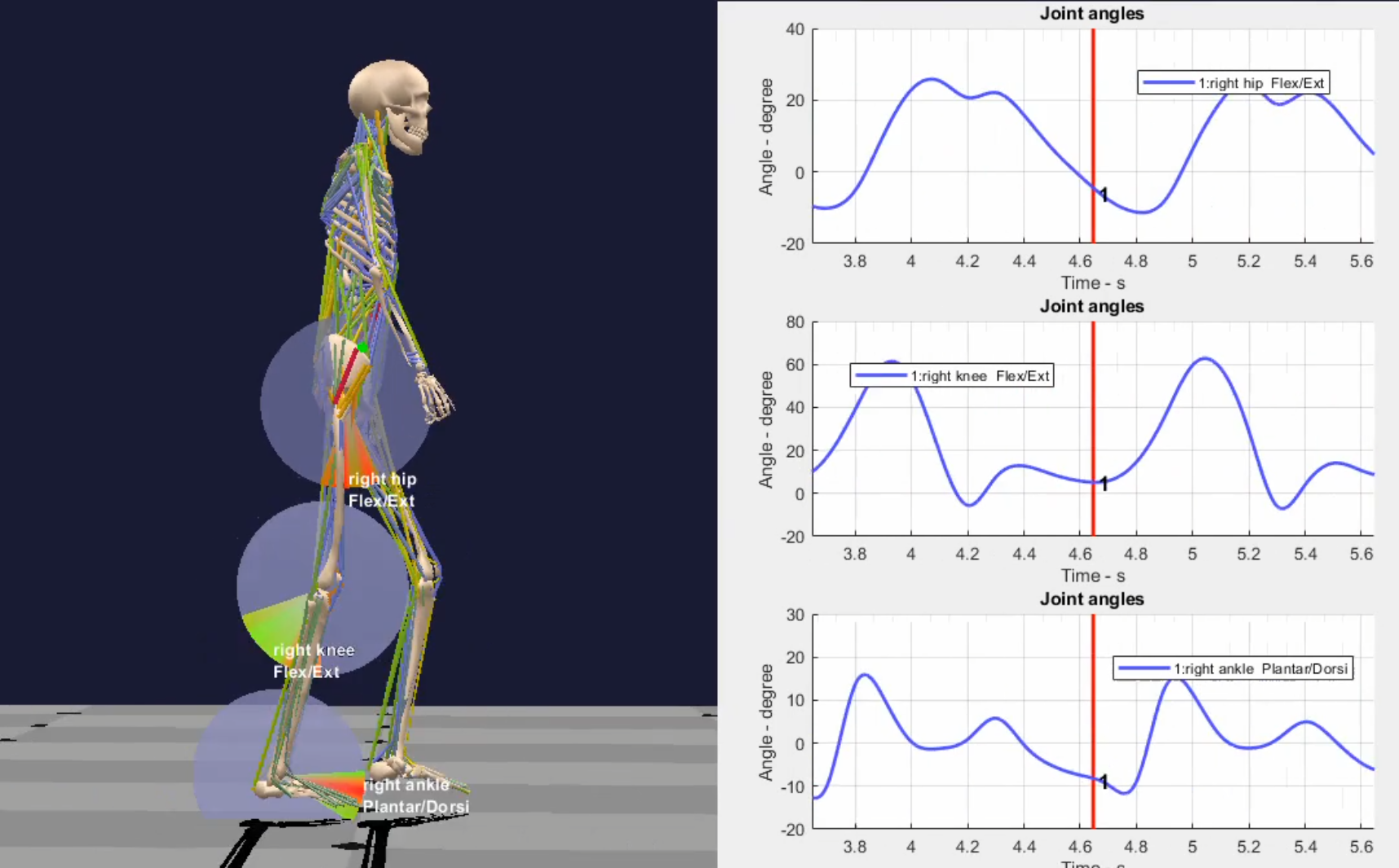
BOB Human skeletal muscle simulation modeling software 's core value lies in its highly engineered biomechanical simulation capability. The software includes 36 bone segments and 666 muscles - muscle-tendon motion units, using sequential quadratic programming to optimize load distribution, accurately calculating joint contact forces, muscle activation timing, and internal load changes.
Compared with the commonly used academic research tool OpenSim , BOB Human skeletal muscle simulation modeling software provides a more intuitive graphical interface and a more complete set of industrial-grade integrated functions. Users can conveniently import motion capture data (in formats such as .c3d、.txt ), adjust skeletal geometric parameters, and add virtual markers to fill in missing data points. This feature greatly facilitates human-machine interaction biomechanical analysis in rehabilitation robot design.
2025 A study published in Journal of NeuroEngineering and Rehabilitation highlighted the value of such simulations. During the development of an enhanced gastrocnemius bionic lower limb exoskeleton ( EGME ), the R&D team predicted the co-activation patterns of biarticular muscle groups through biomechanical simulation, ultimately reducing gastrocnemius activation intensity by 46.4% , and the patient's squatting endurance improved by 7.79 times.
02 From Laboratory to Clinic: Precise Breakthroughs in Personalized Modeling
The core of rehabilitation effectiveness lies in individual adaptability. Traditional generic rehabilitation robots often overlook muscle and skeletal differences among patients, limiting training outcomes. BOB Human skeletal muscle simulation modeling software The personalized modeling capability of
2025 is becoming the key to breaking the deadlock: the software allows engineers to adjust skeletal muscle parameters based on the patient's height, weight, limb segment length, and muscle strength characteristics, even simulating the impact of biomechanical misalignment of limbs. This capability is especially important for complex conditions such as post-stroke hemiplegia. 3 The "Hemiplegic Patient Musculoskeletal Computational Model Establishment Experiment" launched in ChiCTR2500099769 plans to include 1000 stroke patients, collecting multimodal data such as muscle strength and electromyography signals to establish patient-specific models, providing clinical database support for BOB The model will directly drive VR rehabilitation training algorithms and exoskeleton control strategy optimization, achieving a treatment transition from "population average" to "individual precision."
03 R&D Efficiency: A Revolution from Months to Days
In the rehabilitation robot product development process, BOB shows significant efficiency advantages:
- Parameter sensitivity analysis: quickly testing the impact of different design parameters (such as exoskeleton hinge position, drive stiffness) on muscle metabolic cost
- Virtual patient testing: evaluating device adaptability to various body types before manufacturing physical prototypes
- Failure prediction: simulating joint overload risks under extreme conditions
According to Hengzhou Bozhi's 2024 market analysis, using biomechanical simulation tools can shorten the rehabilitation robot design iteration cycle by 60% , and reduce prototype manufacturing costs by 45% . This explains why industry companies such as Xcitex 、 HAS Motion are accelerating integration of BOB into their R&D pipelines. In ankle rehabilitation robot design, researchers established a human-machine coupling simulation model and pre-validated the biocompatibility of the dual virtual motion center mechanism in BOB , avoiding the traditional "design - trial and error - modification" cycle.
04 Market Prospects: Accelerated Integration of Industry, Academia, and Research
The global human biomechanics analysis software market is expanding at a significant growth rate, with rehabilitation applications being one of the main drivers. According to QYR latest statistics, 2023 the Chinese market size has reached several hundred million yuan, and is expected to maintain stable growth before 2030 .
In terms of industry-academia-research collaboration, BOB Human skeletal muscle simulation modeling software shows unique advantages:
- Academic research: free trial strategies help universities verify theoretical models at low cost (applications available at https://www.deanwell.com.cn/technical_support/6.html )
- Clinical translation: direct connection to medical imaging data and clinical evaluation indicators
- Industrial design: STL Format environment import function supports exoskeleton - Integrated design of rehabilitation devices
This integrated ecosystem drives accelerated innovation. For example, the full-body musculoskeletal model developed by Tsinghua University ( MS-Human-700 ) is based on OpenSim , but its 700 muscles - fine modeling concept of tendon units complements the engineering direction of BOB .
05 Future challenges and cross-platform integration
Although BOB has significant advantages, the field of rehabilitation simulation still faces technical demands for cross-software collaboration. Current main challenges include:
- Integration of neural control mechanisms: BOB Muscle recruitment algorithms based on optimization principles need to be integrated with reflex neural models (such as Geyer-Herr models).
- Multiphysics coupling: lack of native support for EMG-driven simulation
- Real-time bottleneck: complex full-body model solving still requires minutes of computation time
Cutting-edge research has begun exploring hybrid frameworks. For example, AnyBody ’s inverse dynamics algorithms combined with BOB ’s optimizers, or using OpenSim ’s reinforcement learning control strategies to drive BOB models. This “leveraging strengths” integration mode will become the mainstream direction for next-generation rehabilitation robot simulation platforms.
With the global population aging intensifying, the demand for intelligent rehabilitation devices is exploding. Industry data shows that using biomechanical simulation tools can shorten the design iteration cycle of rehabilitation robots. 60% , and reduce prototype manufacturing costs by 45%。 BOB The value of software has surpassed that of a mere tool, becoming a translational bridge connecting clinical medicine and robotic engineering. With the Chinese stroke rehabilitation clinical registry trial ChiCTR2500099769 conducted in 2025 years and the construction of a thousand-patient musculoskeletal database, patient-specific modeling will see breakthrough progress. The core competitiveness of future rehabilitation robots will depend on how much of the mysteries of human movement are decoded in the virtual musculoskeletal system.
> When researchers at Zhejiang University debug exoskeleton robots for stroke patients,
> the muscle units flashing on the screen are not only electrical signals, 666 but also the biomechanical code for paralyzed limbs to stand again.
> 更是瘫痪肢体重新站立的生物力学密码。
BOB Human Skeletal Muscle Simulation Modeling Software