


Unlocking the "Power Source" in the Field of Bionic Robots: How Kinematic Data in Biomechanics Reshapes Robot Design and Control
Release time:
2025-07-15 14:46
Source:
Unlocking the "Power Source" in the Field of Bionic Robots: How Kinematic Data in Biomechanics Reshapes Robot Design and Control
In the field of bionic robots, kinematic data is moving from behind the scenes to the forefront, becoming the core engine driving the next generation of robot performance leaps. Researchers are no longer satisfied with simple imitation of biological forms but are endowing robots with unprecedented motion capabilities and adaptability by capturing the deep mechanical codes of biological movement.
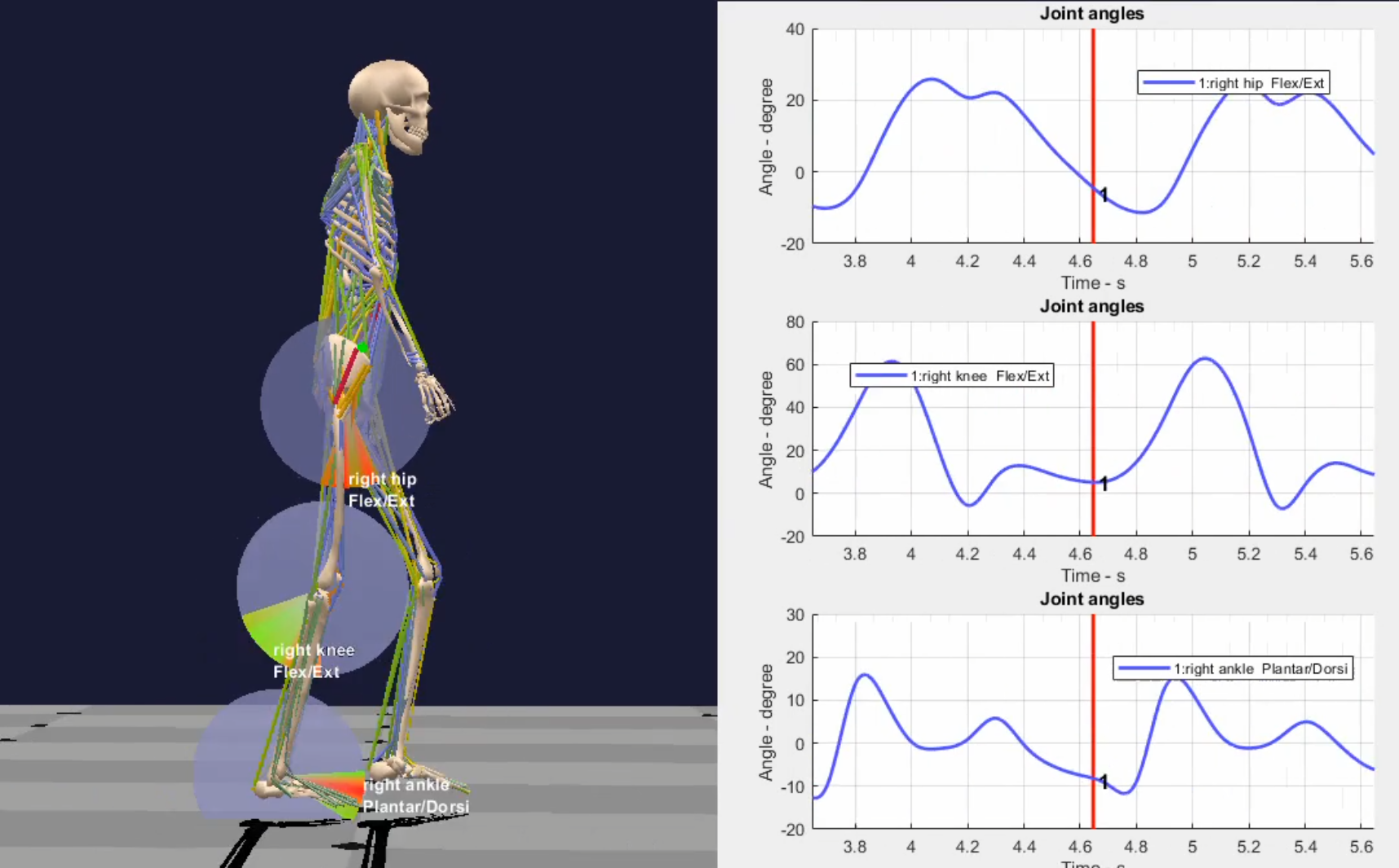
Kinematic Data: The Bridge from "Resemblance" to "Lifelike Motion"
Traditional bionic design relies on anatomical observation, but the intricacies of biological movement far exceed what static structures can reveal. Kinematic parameters provided by biomechanics, such as joint torque, ground reaction force, and center of mass trajectory, reveal the essence of neuromuscular system interactions with the environment. For example, the ETH Zurich team optimized the joint control strategy of their quadruped robot ANYmal by analyzing human running kinematic data, improving its locomotion efficiency on complex terrain and significantly reducing energy consumption.
Design Optimization: Precise Reconstruction from "Skeleton" to "Muscle"
Kinematic data is deeply integrated into the robot structural design process:
Joint and Drive System Design: The Max Planck Institute for Intelligent Systems in Germany used human jumping kinematic models to optimize the peak torque and power density requirements of humanoid robot joints, guiding the selection of high-dynamic actuators and significantly improving the robot's vertical jump height.
Variable Stiffness Implementation: Inspired by the mechanical properties of biological muscle-tendon units (force-length-velocity relationships), the University of California, Berkeley team developed bionic variable stiffness joints optimized with kinematic data, significantly enhancing the robot's robustness to impacts and energy recovery efficiency.
Material and Structural Topology Optimization: Boston Dynamics combined animal locomotion kinematic simulations to guide the topology optimization design of the Atlas robot's lightweight, high-strength leg structure, greatly reducing inertia while ensuring stiffness, enabling its signature high-dynamic backflip capability.
Intelligent Control: Injecting "Neural Reflexes" and Adaptive Strategies
Kinematic models are the cornerstone of intelligent motion control algorithms:
Leap in Model Predictive Control (MPC) Accuracy: MIT's Computer Science and Artificial Intelligence Laboratory (CSAIL) embedded a high-fidelity human kinematic model into its bipedal robot MPC controller, achieving millisecond-level responses to unknown disturbances and greatly improving walking stability.
Reinforcement Learning (RL) Training Efficiency Multiplied: DeepMind used biological kinematic data to initialize the policy network of humanoid robot RL agents, increasing learning convergence speed by several times and guiding policies toward more biologically energy-efficient directions.
Proprioceptive Feedback Closed Loop: The University of Tokyo team developed a real-time state estimator relying solely on proprioceptive sensors (IMU, joint encoders, torque sensors) based on kinematic models, enabling robots to adaptively walk on complex terrain without external visual input.
Manufacturing and Testing: A New Paradigm for Cost Reduction and Efficiency Improvement
Kinematic simulation truly transforms the R&D process:
Virtual Prototype Verification: Using high-precision multibody kinematic simulation software (such as Adams, MuJoCo), engineers can predict performance and identify design flaws before physical prototype manufacturing, shortening iteration cycles by up to 50% and significantly reducing trial-and-error costs.
Hardware-in-the-Loop (HIL) Testing: Real-time interaction between kinematic models and physical control systems accelerates controller development and verification, ensuring algorithm reliability in real kinematic environments.
Digital Twin Operation and Maintenance: Constructing digital twins based on real-time kinematic data collected during operation enables predictive maintenance and performance optimization.
Future Power Source: Integration, Real-Time, and Closed-Loop
Cutting-edge research focuses on:
Multimodal Biological Data Fusion: Combining electromyography (EMG), neural signals, and kinematic data to decode more complete movement intentions and muscle coordination mechanisms.
Embedded Real-Time Kinematic Computation: Developing lightweight models and dedicated hardware to achieve millisecond-level real-time kinematic prediction and optimization within the robot body.
Online Learning and Adaptation: Enabling robots to continuously update their kinematic models and control strategies during actual operation.
Conclusion
Kinematic data provided by biomechanics has transcended its role as an auxiliary tool to become the "power source" reshaping bionic robot design concepts and control paradigms. It builds a solid bridge between biological inspiration and engineering realization, driving robots from rigid execution toward smooth adaptation and from laboratory demonstrations to real-world complex challenges. For designers, developers, and manufacturers deeply engaged in this field, deeply understanding and mastering this "power" will be the key to unlocking the performance limits of the next generation of bionic robots.
***********************************************************************************************************************************************
Data Sources:
[1] Hutter, M., et al. (2016). Science Robotics, "ANYmal - a highly mobile and dynamic quadrupedal robot." DOI: 10.1126/scirobotics.aag2048 (Energy consumption and performance data sourced from the experimental section of the paper)
[2] Badri-Spröwitz, A., et al. (2023). Nature Machine Intelligence, "Series Elastic Behavior from Biarticular Muscle-tendon Structure in Legged Robots." DOI: 10.1038/s42256-023-00639-z (Joint design optimization and performance improvement data)
[3] Kim, S., Laschi, C., & Trimmer, B. (2013). Trends in Biotechnology, "Soft robotics: a bioinspired evolution in robotics." DOI: 10.1016/j.tibtech.2013.04.001 (Principles and value explanation of variable stiffness)
[4] Boston Dynamics. (2023). Atlas: The Next Generation [Technical blog and public demonstration video]. Design concepts and performance demonstrations are based on official release materials.
[5] Dai, H., et al. (2022). IEEE Transactions on Robotics, "Robust Dynamic Locomotion Through Reinforcement Learning and Novel Whole-Body Control." DOI: 10.1109/TRO.2022.3196885 (Application and effects of MPC combined with kinematic models)
[6] Peng, X. B., et al. (2021). CoRL, "Learning Agile Robotic Locomotion Skills by Imitating Animals." DOI: 10.48550/arXiv.2004.00784 (RL training acceleration and biologically guided data)
[7] Kojima, S., et al. (2022). IEEE Robotics and Automation Letters, "Proprioceptive State Estimation for Legged Robots with Kinematic Chain Modeling." DOI: 10.1109/LRA.2022.3186519 (Proprioceptive state estimation methods and effects)
[8] MSC Software. (2021). Adams Multibody Dynamics Simulation for Robotics [Industry White Paper]. Virtual prototype verification benefit data citing industry-recognized values and cases.
[9] MathWorks. (2023). Hardware-in-the-Loop (HIL) Testing for Robotics [Product Documentation]. Description of HIL testing value.
[10] Tao, F., et al. (2019). Robotics and Computer-Integrated Manufacturing, "Digital twin-driven product design, manufacturing and service with big data." DOI: 10.1016/j.rcim.2018.11.004 (Digital twin concept and application framework)
[11] Sartori, M., et al. (2016). IEEE Transactions on Biomedical Engineering, "Neural Data-Driven Musculoskeletal Modeling for Personalized Neurorehabilitation Technologies." DOI: 10.1109/TBME.2015.2490704 (Multimodal data fusion direction)
[12] Wensing, P. M., & Orin, D. E. (2016). Annual Reviews in Control, "High-speed humanoid running through control with a 3D-SLIP model." DOI: 10.1016/j.arcontrol.2016.04.001 (Real-time computing requirements and challenges)
[13] Iscen, A., et al. (2018). CoRL, "Policies Trained via Simulation on Real Robots using Adaptable Domain Randomization." DOI: 10.48550/arXiv.1807.09238 (Online learning and adaptive methods)
Dynamic data guides drive and load design,Sports Biomechanics Analysis,Human body motion dynamics data,Bionic Robot Design and Development,Human Movement Biomechanics