


How does kinematic data drive structural design innovation in bionic robots?
Release time:
2025-07-14 10:27
Source:
Introduction
In today's rapidly advancing technology, bionic robots have become a hot topic. Especially when we talk about Kinematic Data Guiding Structural Design it is even more exciting. Through in-depth study of human movement, scientists can extract biomechanical data to provide valuable references for the design of bionic robots.
The Mystery of Human Movement
The human body is a complex and exquisite mechanical system. Every action, from walking to running, is the result of the coordinated work of numerous muscles, bones, and joints. In this process, kinematic data, such as joint angles, muscle forces, and their timing, play a crucial role.
Acquisition of Biomechanical Data
So, how do we obtain this kinematic data? Through high-tech motion capture systems, researchers can accurately record various parameters of the human body during movement. This data not only helps us understand the mechanisms of motion but also provides a solid foundation for the design of bionic robots.
Application of Kinematic Data in Guiding Structural Design
In the design and manufacturing process of bionic robots, kinematic data plays a core guiding role. It acts like a precise "blueprint," transforming abstract biological movements into feasible mechanical structures. Its application spans the entire process of design, optimization, and validation, specifically reflected in the following aspects:
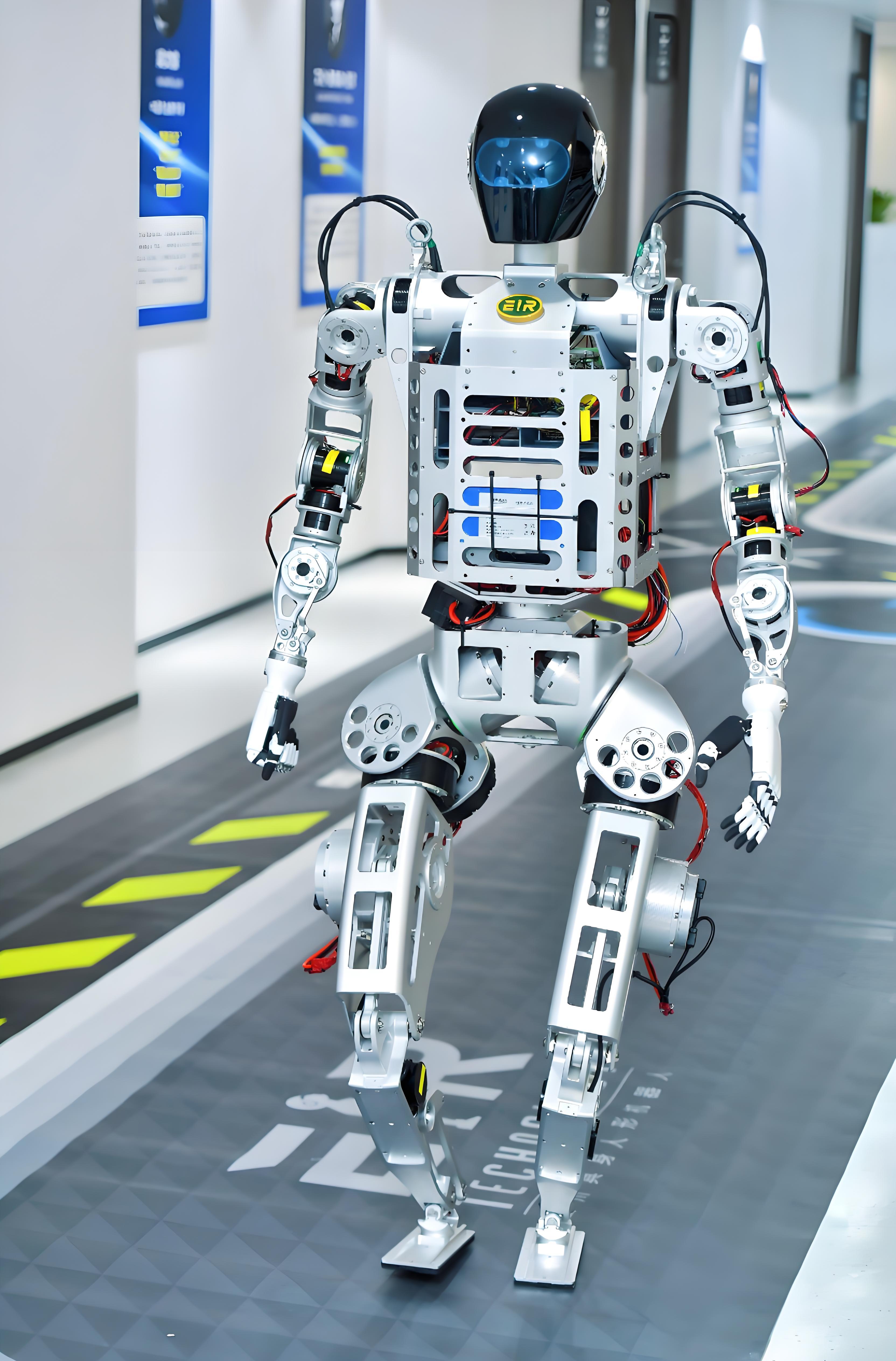
Defining Workspace and Joint Range of Motion:
Objective: The spatial area (workspace) reachable by the end limbs (such as hands, feet) of the biological model the robot needs to mimic (such as humans, animals), as well as the rotational/movement range of each joint.
Application: By forward kinematic analysis of biological motion data or target trajectories, calculate the spatial boundaries reachable by the end effector and the minimum and maximum angles/displacements required for each joint.
Guiding Design: Directly determines:
Joint Type Selection: Choice of rotary joints, prismatic joints, universal joints, etc.
Joint Range of Motion Design: Limit design of mechanical structures, bearing selection, and avoidance of internal interference.
Link Length: Influences the size and shape of the workspace.
Overall Size: Ensures the robot structure can accommodate the required range of motion.
Optimizing Mechanism Configuration:
Objective: Select the most suitable joint configuration (such as serial, parallel, hybrid) and link layout to efficiently and accurately achieve the target motion.
Application: Inverse kinematics analysis is used to calculate the joint angle combinations required to achieve specific end poses. By analyzing inverse solutions of numerous target poses (obtained from biological motion capture data):
Evaluating Singularities: Avoid robot singular configurations near commonly used working postures (where joint velocities tend to infinity or certain degrees of freedom are lost).
Evaluating Dexterity/Operability: Choose configurations with high joint motion efficiency and control accuracy within common working areas.
Avoiding Joint Limit Conflicts: Ensure that the joint angle combinations required by the target trajectory are within the designed physical range and do not cause link collisions.
Guiding Design: Determines the number, type, spatial arrangement order of joints, and the relative length and shape of links to achieve optimal motion performance and avoid motion interference.
Precise Design of Joint Drives and Transmissions:
Objective: Select appropriate actuators (motors, hydraulic cylinders, pneumatic muscles, etc.) and transmission mechanisms (gears, belts, linkages, etc.) for each joint.
Application: Kinematic analysis combined with target trajectories (velocity, acceleration curves):
Calculate Joint Velocity/Angular Velocity: Map end velocity requirements to joint space through inverse kinematics differentiation (Jacobian matrix).
Calculate Joint Acceleration/Angular Acceleration: Further calculate joint acceleration requirements.
Calculate Load Inertia and Torque: Combine dynamic models (although dynamics are more core, kinematics are the foundational input) and link mass distribution to estimate the maximum and continuous torque/force required by joints.
Guiding Design:
Actuator Selection: Power, torque/force, and speed range must meet the peak and continuous demands calculated by kinematics.
Transmission Ratio Design: Optimize transmission ratio to match actuator characteristics with joint speed/torque requirements, achieving efficient energy conversion and precise control.
Transmission Mechanism Selection: Choose appropriate types based on spatial constraints, efficiency, precision, backlash requirements, etc. (e.g., harmonic drives for high precision and compact spaces).
Bearing and Support Structure Design: Must withstand calculated loads (forces, torques).
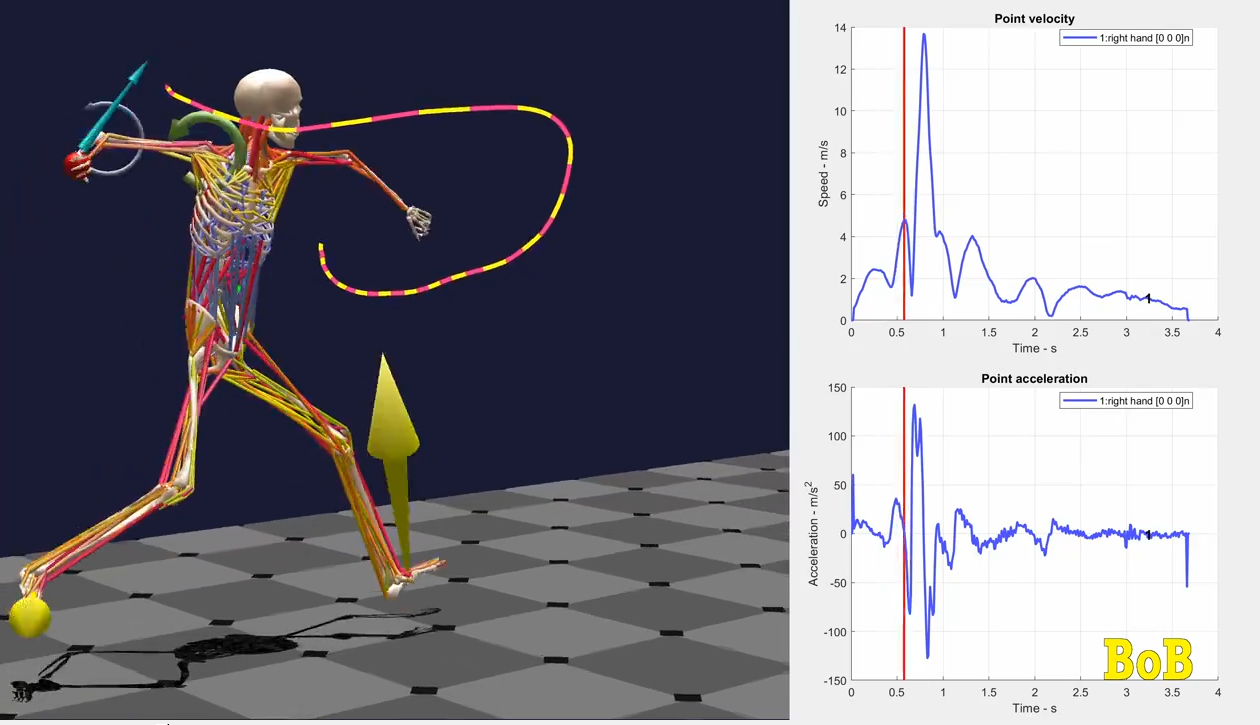
Predicting and Avoiding Motion Interference and Collisions:
Objective: Ensure that throughout the robot's range of motion, its own links, actuators, cables, etc., do not collide with each other or the environment.
Application: Use kinematic models for motion simulation. Input target joint trajectories or end trajectories to calculate the real-time position and posture of all links in space.
Guiding Design:
Geometric Shape Optimization: Modify link shapes, add slots, holes, etc., to leave space for adjacent components or cables.
Cable/Piping Routing Planning: Ensure they are not pulled or squeezed during motion.
Shell/Protective Cover Design: Design reasonable shapes while ensuring freedom of movement.
Installation Position Adjustment: Optimize the positions of actuators and sensors.
Guiding Sensor Layout:
Objective: Arrange sensors (encoders, IMUs, force sensors, vision cameras, etc.) at key positions to effectively perceive states and control.
Application: Understand the dependency between the kinematic chain and the end pose.
Guiding Design:
Joint encoder: Directly measures joint angles and is the basis for implementing closed-loop position/velocity control.
End sensor: Installed on the end effector to directly measure its pose or interaction forces with the environment.
IMU installation: Consider its position on the kinematic chain to accurately estimate attitude and compensate for motion.
Verify design feasibility and performance:
Goal: Evaluate whether the design can accomplish the intended tasks before physical manufacturing.
Application: Digital twin simulation based on the kinematic model. Input the desired task trajectory (from biological data or task requirements) to simulate the robot's motion process.
Guiding Design:
Expose design flaws: Detect issues such as insufficient workspace, singularities, joint limit conflicts, and motion interference in advance.
Evaluate performance metrics: Check if end positioning accuracy, repeatability, maximum speed/acceleration, etc., meet requirements.
Optimize trajectory: Optimize joint or end trajectories in simulation to make them smoother, more efficient, and obstacle-avoiding.
In summary, kinematic data is the bridge connecting biological motion goals and physical mechanical structures:
Quantify requirements: Convert biological motion capabilities (range, speed, trajectory) into specific, measurable engineering parameters (joint angle range, speed, workspace).
Configuration decisions: Directly determine core structural elements such as the number, type, layout of joints, and link dimensions.
Basis for drive selection: Provide key speed and torque requirement data for the selection and design of actuators and transmission systems.
Foundation for geometric obstacle avoidance: A prerequisite for motion simulation, prediction, and avoiding physical interference.
Design verification tool: Verify design feasibility and performance in advance through simulation to reduce trial-and-error costs.
Therefore, in the early stage of bionic robot structural design, in-depth and detailed kinematic analysis is an essential step. It lays a solid foundation for subsequent dynamic analysis, detailed mechanical design, material selection, control algorithm development, ensuring that the final manufactured robot can effectively and reliably mimic the motion capabilities of the target biological organism.
Successful cases of bionic robots
In this field, there are many successful cases worth mentioning. For example, a company developed a quadruped bionic robot that successfully simulated the running posture of a wolf using kinematic data. This robot can not only quickly traverse complex terrain but also maintain good balance, truly a "showstopper"!
Future prospects
With continuous technological advancement, Kinematic Data Guiding Structural Design the application prospects are undoubtedly bright. In the future, bionic robots will become more intelligent and capable of executing complex tasks more precisely. At the same time, we also look forward to more interdisciplinary cooperation to promote innovation and development in this field.
Conclusion
In summary, kinematic data plays an indispensable role in bionic robot design. Through in-depth analysis of human motion, we can not only improve robot performance but also open up more application scenarios. Let us look forward to how future bionic robots will change our lives!
Kinematic Data Guides Structural Design,Bionic Robot Design,Sports Biomechanics Analysis