


Enhancing Occupational Safety Protection Levels through Human Motion Biomechanics Analysis
Release time:
2025-07-04 16:37
Source:
Introduction
In a logistics warehouse, worker Lao Zhang bends down, attempting to lift a heavy box. In the past, this action often caused soreness and discomfort in his lower back. However, now he wears a lightweight sensor that precisely captures every bending angle, muscle contraction during exertion, and even changes in spinal pressure, providing real-time feedback to the management platform. When the screen displays a "lumbar load approaching warning value" alert, Lao Zhang immediately adjusts his posture, switching from bending over to squatting with bent knees, and the familiar pressure in his lower back disappears.
Behind this is a glimpse of the deep application of human motion biomechanics analysis technology in occupational safety. The International Labour Organization (ILO) 2023 report "Global Assessment of Safety and Health at Work" shows that musculoskeletal disorders (MSDs) account for an astonishing proportion of all work-related diseases worldwide—over one-third (34%)—and are one of the main causes of worker disability and premature exit from the labor market. For example, in China's manufacturing and construction industries, repetitive physical labor and poor posture have long troubled tens of millions of frontline workers.
Peering into the Human "Black Box": From Intuition to Data-Driven Decisions
Human motion biomechanics focuses on using mechanical principles and methods to precisely analyze the forces and moments borne by bones, muscles, and joints during activity, as well as the resulting movement patterns. It acts like a sophisticated decoder, unlocking the complex "black box" of human movement.
The German Social Accident Insurance Institution's Institute for Occupational Safety and Health (IFA) revealed through precise laboratory simulations that when workers lift heavy objects with a bending posture exceeding 25 degrees, the pressure on their lumbar intervertebral discs can soar to more than seven times that of an upright posture. This study clearly identifies that long-term repetitive excessive lumbar load is a key biomechanical factor leading to serious occupational lower back pain such as herniated discs.
Traditional safety protection often relies on experience and broad regulations (such as simple weight limits). Biomechanical analysis provides irrefutable quantitative evidence, accurately pinpointing the root causes of risk:
Posture Risk Visualization: Through motion capture systems, every working posture of a worker can be precisely reconstructed and analyzed. The system can automatically identify high-risk postures such as excessive bending, prolonged arm elevation above the shoulder, and strong trunk twisting, issuing real-time warnings.
Muscle Load Measurement: Surface electromyography (sEMG) technology acts like a "stethoscope" for muscles, non-invasively monitoring the activation level and fatigue state of specific muscle groups. When certain muscles work continuously at high intensity or show signs of fatigue, the system issues alerts, prompting workers to rest or rotate tasks, effectively preventing muscle overuse injuries.
Joint Force Calculation: Using complex biomechanical models combined with motion data and external loads (such as the weight of objects being lifted), it is possible to estimate key mechanical indicators inside joints (such as lumbar intervertebral discs and knee joints), including compressive and shear forces. This enables the setting of safety load standards that conform to human tolerance limits.
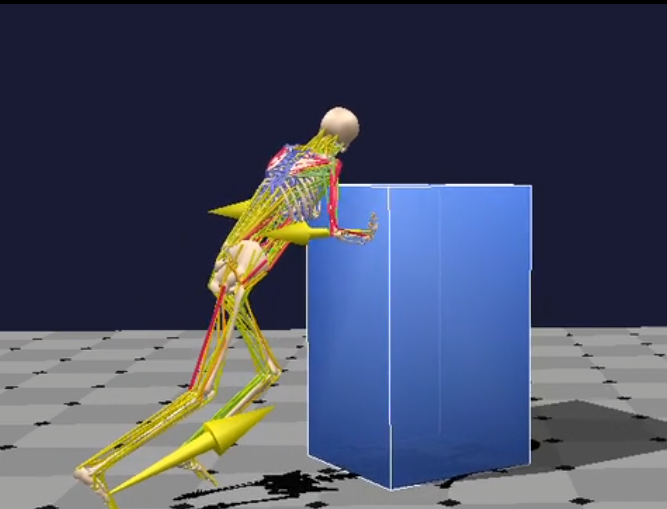
Taking Root: Technology Safeguarding Worker Safety
Theory is rapidly transforming into a practical force for safety protection:
Equipment Optimization: Based on biomechanical analysis data, companies can precisely improve tool and workstation design. For example, optimizing work surfaces according to operating height and arm movement range significantly reduces shoulder and neck strain; designing tool handles that fit natural human grip and force curves lowers the risk of hand tendonitis; introducing height-adjustable platforms or mechanical arms for positions requiring frequent bending.
Scientific Training: Saying goodbye to empty slogans, biomechanical data injects soul into safety operation training. Through real-time feedback from motion capture systems, workers can visually see the differences between their movements and standard safe models, correcting bad habits specifically. For example, after XCMG Group introduced a biomechanics-based intelligent training system on some assembly lines, combined with other safety measures, their internal annual report showed a nearly 25% significant reduction in musculoskeletal injury reports caused by improper posture in related sections within two years.
Precise Person-Job Matching: In specific high-risk positions (such as heavy lifting and high-altitude precision work), biomechanical assessments can be used to select employees whose physical conditions (such as strength, flexibility, coordination) better match job requirements, or to customize personalized protection and fitness enhancement programs for on-the-job employees, reducing injury risks from the source.
The Future is Here: Intelligent Sensors and AI-Driven Deep Protection
The wave of technology surges endlessly. More miniaturized, low-cost inertial measurement unit (IMU) sensors are being embedded in workwear and even safety helmets, enabling all-day, unobtrusive motion monitoring. Combined with the powerful analytical capabilities of artificial intelligence (AI), the system can not only identify known risk patterns but also deeply learn from massive data to proactively discover potential new risk points and optimization opportunities, continuously advancing the protection frontier.
The Grand View Research market analysis report predicts that the global workplace safety sector (including wearable technology, AI analysis platforms, etc.) will maintain strong growth over the next decade, with market size expected to reach tens of billions of dollars by 2030. This fully confirms the huge potential and industry consensus of high-tech safety solutions represented by biomechanics.
A senior researcher at the China Academy of Safety Science and Technology pointed out: "Human motion biomechanics analysis anchors occupational safety protection from the experiential 'gray area' precisely onto the scientific foundation of 'data-driven' methods. It reveals the mechanical essence of labor injuries, making preventive measures targeted and effective. This is an important leap toward intrinsic safety."
When Lao Zhang and his coworkers finish their day and walk out of the workshop with ease, the once constant lower back pain has become history. Human motion biomechanics analysis is quietly reshaping the work environment, shifting safety protection from passive response to proactive prediction, from experiential judgment to scientific precision. At the intersection of technology and humanity, the health and dignity of every worker are being solidly safeguarded like never before.
Posture Analysis,Joint Force Calculation,Muscle strength distribution,BOB Human Biomechanics Analysis Software