


Let's focus on the analysis of the characteristics of DIC strain measurement based on simulation models!
Release time:
2025-07-14 10:14
Source:
Introduction
In modern engineering technology, Digital Image Correlation (DIC) technology has gradually become the mainstream method for strain measurement. Especially when combined with simulation models, it shows unique advantages. This article will explore the characteristics of DIC strain measurement based on simulation models and focus on analyzing the direct comparison between simulation results and measured data and its importance.
Basic Principles of DIC Technology
DIC technology captures images of an object during the loading process and uses image processing algorithms to analyze displacement changes between images, thereby calculating strain. This method's non-contact nature and high accuracy make it widely used in material testing and structural health monitoring.
Construction of Simulation Models
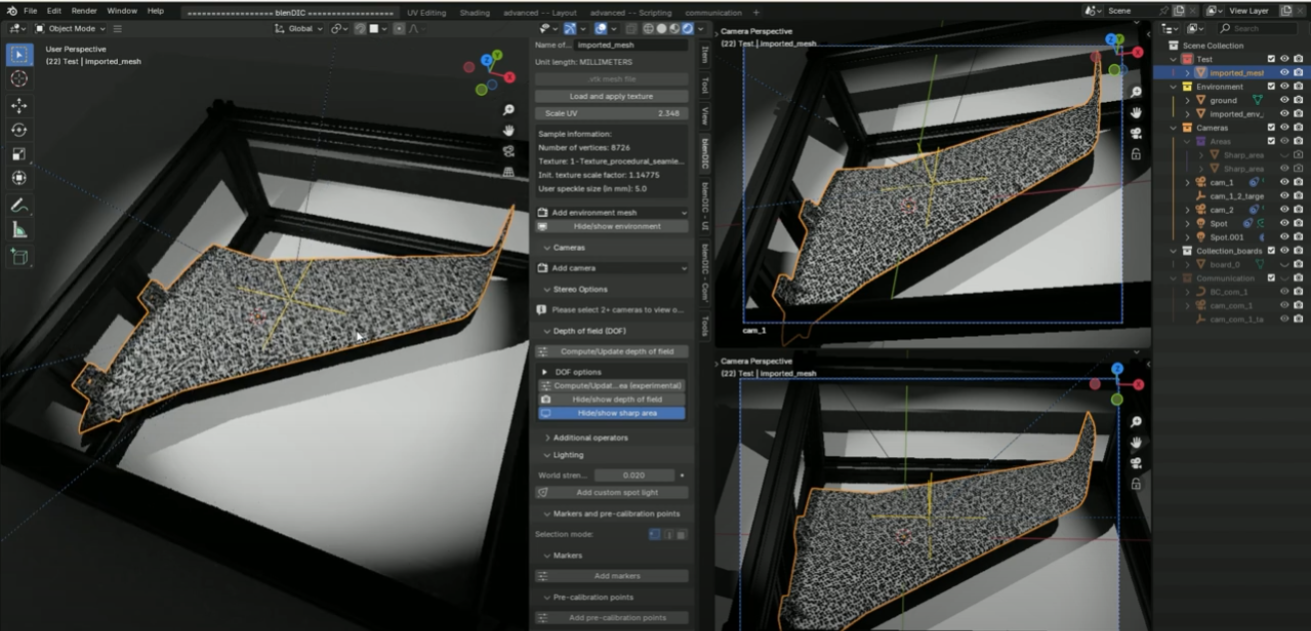
To better understand material behavior under different conditions, engineers often build simulation models. These models use numerical simulation to predict material behavior, especially providing important reference data for strain measurement. By directly comparing simulation results with measured data, researchers can verify the accuracy of the models and improve the reliability of tests.
Importance of Direct Comparison Between Simulation Results and Measured Data
Directly comparing simulation results with measured data not only helps identify shortcomings in the simulation model but also provides a basis for subsequent optimization. For example, when there is a large deviation between the simulation model's predictions and measured data, engineers need to reassess the model's assumptions and parameter settings. Conversely, if the two are highly consistent, the model can be more confidently applied in practical engineering.
Characteristics of DIC Strain Measurement
DIC strain measurement based on simulation models has the following significant characteristics:
- High Accuracy: Compared with traditional measurement methods, DIC technology can achieve higher spatial resolution and measurement accuracy.
- Real-time Capability: Based on simulation models, DIC can provide immediate feedback on strain results, enabling real-time monitoring.
- Adaptability: Under different materials and loading conditions, DIC technology can be flexibly adjusted to meet various testing requirements.
Case Study
Taking a tensile test of a certain material as an example, a corresponding simulation model was established to predict the strain distribution of the material under different loads. During the test, DIC technology was used to record strain data in real time and compare it with simulation results. Ultimately, the agreement between simulation and measured data reached over 95%, providing strong support for the material's service life evaluation.
Future Prospects
With continuous advancements in computing power and image processing technology, DIC strain measurement based on simulation models is expected to be applied in more fields. In the future, we can look forward to more intelligent strain monitoring systems that can automatically optimize simulation models and provide accurate strain data in real time.
Conclusion
In summary, DIC strain measurement based on simulation models has great potential, and through the direct comparison between simulation results and measured data it can significantly improve measurement accuracy and reliability. It is hoped that this article can provide valuable references for research and applications in related fields.
Direct comparison between simulation results and measured data,DIC Strain Measurement