


Application of DIC Technology in Composite Material Strain Measurement to Enhance Adaptability of Complex Structures
Release time:
2025-07-04 15:16
Source:
Introduction
In the field of modern engineering, composite materials have attracted widespread attention due to their excellent performance. However, accurately measuring the strain of these materials, especially in applications involving complex structures, remains a challenge. This article focuses on the application of Digital Image Correlation (DIC) technology based on finite element simulation models in strain measurement of composite materials, and how it enhances adaptability to complex structures.
Overview of DIC Technology
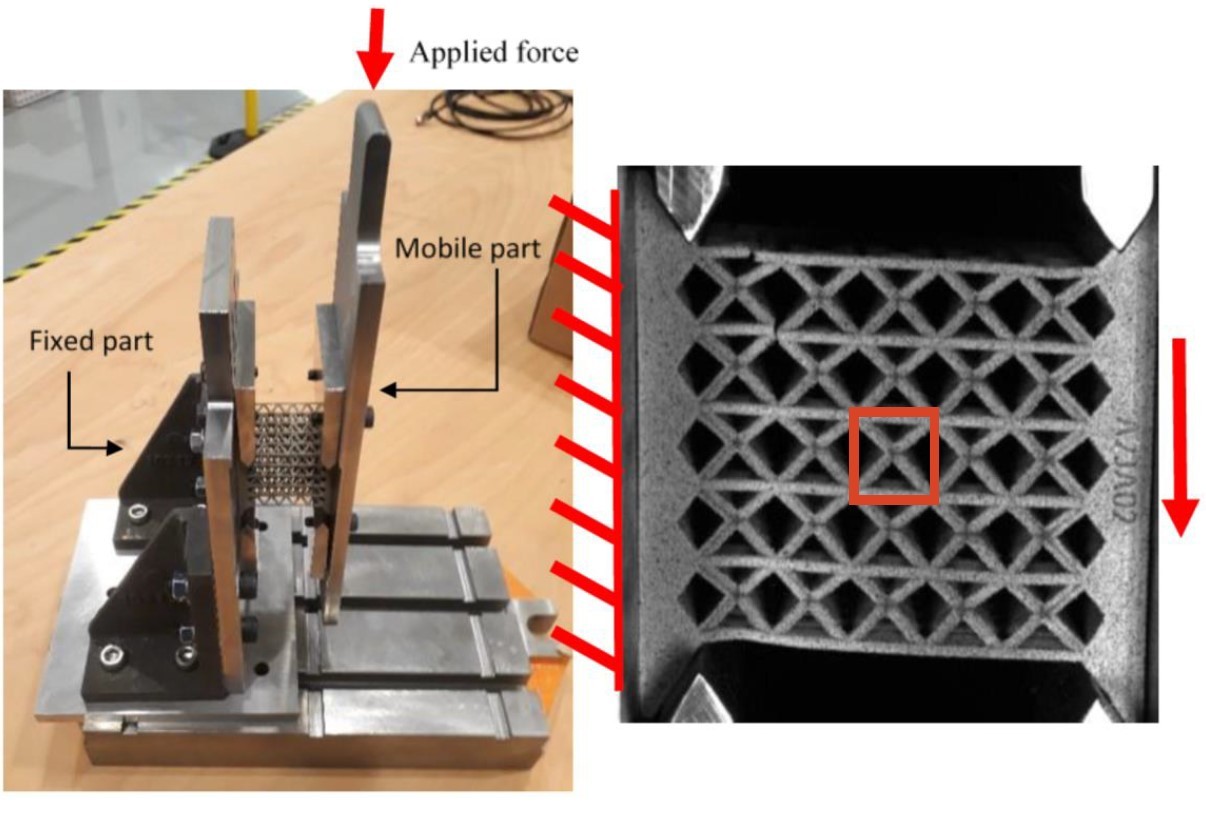
Digital Image Correlation (DIC) is a non-contact optical measurement technique that measures the deformation of an object's surface by analyzing a series of images. Its core lies in tracking points on the surface and calculating their displacement under different states to derive strain. The advantage of this technology is its ability to provide high-resolution, full-field strain measurements, making it especially suitable for analyzing complex structures.
Role of Finite Element Simulation Models
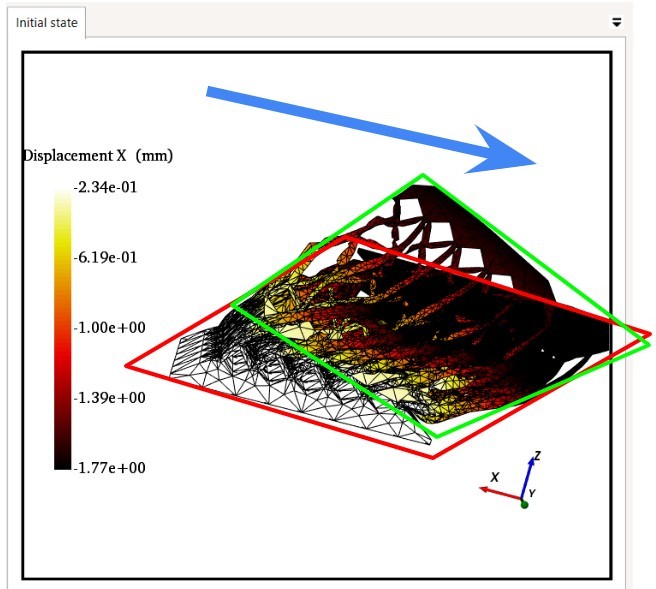
Finite Element Simulation Models (FEM) are important tools for analyzing the behavior of complex materials. By establishing models, the material's response under different loads can be simulated on a computer. Combined with DIC technology, these simulation models can provide more accurate boundary and initial conditions, helping researchers better understand the behavior of composite materials. For example, during tensile tests of composite materials, FEM can predict strain distribution, while DIC can verify the accuracy of these predictions.
Application Case Analysis
In a certain study, researchers used DIC technology to measure the strain of a new type of composite material. By combining it with finite element simulation models, researchers were able not only to monitor the material's deformation in real time but also to analyze the adaptability of complex structures under different stress states. The results showed that the application of DIC technology greatly improved measurement accuracy and provided an important basis for further optimizing material design.
Significance of Complex Structure Adaptability
Complex structure adaptability, which refers to a material's ability to respond under complex environments or loads, directly affects its application in real-world engineering. In fields such as aerospace and automotive, improving the adaptability of composite materials to complex structures can effectively enhance product safety and reliability. The combination of DIC technology and finite element simulation models undoubtedly provides strong support for achieving this goal.
Future Prospects
With continuous technological advancement, the application prospects of DIC technology in the field of composite material strain measurement are broad. In the future, we can expect higher measurement accuracy, faster computation speeds, and more intelligent analysis tools. This will not only enhance adaptability to complex structures but also promote innovative development across the entire engineering field.
Conclusion
In summary, the application of DIC technology based on finite element simulation models in composite material strain measurement marks an important leap in measurement technology. It not only improves measurement accuracy but also provides a powerful tool for enhancing adaptability to complex structures. It is believed that in the near future, this technology will bring transformation to more fields.
Complex Structure Adaptability,DIC Strain Measurement,Simulation Results DIC Verification