


The Wisdom of Noise Control: Effective Application of Active Noise Cancellation Technology and Equipment
Release time:
2025-06-30 10:35
Source:
Introduction
From the roaring car engine compartments and shopping mall ventilation ducts to deep-sea vessels, noise pollution is increasingly eroding our living environment and work efficiency. Traditional "passive noise reduction" relies on soundproof materials and is often powerless against low-frequency noise. Today, Active Noise Control (ANC) technology, with its precise counteraction of sound waves, is opening new paths to silence in various engineering fields.
Automobile Engines: Practical Breakthroughs in Low-Cost ANC
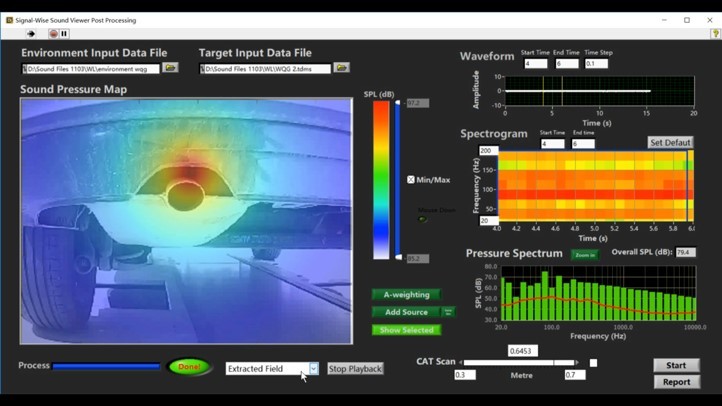
Traditional automotive noise reduction mainly uses passive methods such as silent tires and soundproof cotton, but these are limited in effectiveness against the high-temperature, high-pressure environment and complex low-frequency noise inside engine compartments. The team led by Tang Jianfeng at Shanghai University of Engineering Science designed an active noise control device suitable for engine compartments, with core innovations in cost-effectiveness and ease of installation. The system uses micro MEMS microphones resistant to 260°C high temperatures (measuring approximately 6.15mm×3.76mm×1.65mm) to capture noise and emits inverse sound waves through high-temperature resistant waterproof speakers for cancellation. The device features a magnetic suction cable design, allowing installation inside the hood without damaging the original vehicle structure, greatly reducing maintenance difficulty. This "retrofit" solution provides an economically feasible option for upgrading noise reduction in existing vehicles. In the field of automotive noise control, SOUNDVIEWER The sound viewer can be used for visual monitoring of engine noise, helping to accurately locate noise sources and provide a basis for formulating noise reduction solutions.
Building Ventilation: ANC Tackling "Low-Frequency Stubborn Problems"
Low-frequency noise in ventilation ducts is difficult to block with traditional soundproof materials (PNC technology) due to long wavelengths and strong penetration. Wang Haozhu from the Affiliated Experimental Middle School of Beijing Normal University experimentally verified the effectiveness of ANC technology in duct noise reduction. The designed device consists of noise simulation speakers, noise reduction speakers, pickup microphones, and an STM32 main control board. The system collects noise in real time, generates inverse sound wave signals through Fourier Transform (FFT), and outputs them. Experimental data shows duct noise significantly reduced from 98.4 decibels to 99.1 decibels. This achievement provides new ideas for noise control in shopping malls and residential central air conditioning systems, especially suitable for low-frequency bands where PNC technology fails. SONOCAT On-Site Sound Absorption Measurement Equipment Can be used to measure the performance of sound-absorbing materials inside ventilation ducts, providing data support for evaluating noise reduction effects.
Shipbuilding and Military Industry: Hybrid Systems Defending "Deep Sea Silence"
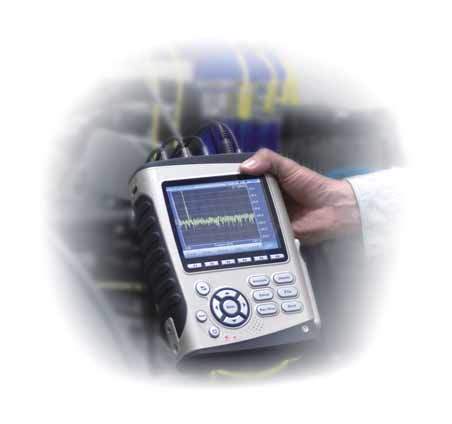
Ship vibration noise directly affects navigation stealth, equipment accuracy, and crew comfort. Mao Jiayin and others from China Shipbuilding and Ocean Engineering Design Institute pointed out that single passive vibration isolation (such as rubber pads and floating raft isolation) is prone to resonance in certain frequency bands, while active control (ANC) technology can precisely suppress low-frequency line spectrum noise. Research shows that a hybrid system combining elastic supports and active electromagnetic dampers can achieve over 40 decibels of broadband noise reduction. For example, using a "double-layer vibration isolation device" to place the power unit and gearbox on the same floating frame, and compensating displacement with a high-elastic coupling, can significantly block vibration transmission to the hull. British and American nuclear submarines have successfully applied such technology to enhance stealth. COCO80/90 The equipment can be used for noise collection and analysis on ships, providing accurate noise data for optimizing hybrid system design.
Future: Advancing with Intelligence and Material Innovation
Technical challenges remain. Automotive ANC needs to further improve adaptability under variable engine conditions; duct systems require integration of high-precision external ADCs to optimize signal processing; the shipbuilding field is exploring polymer-based damping coatings (such as polyurethane foam) and smart controllable materials to electrically adjust damping parameters, achieving efficient vibration reduction over wider temperature ranges and complex surfaces.
Active noise control technology is moving from laboratories to industrial blue oceans. Whether making family cars quieter, buildings more livable, or protecting the "deep sea silence" of major national equipment, this "acoustic shield" against noise is reshaping our sound environment with intelligence.
> References
> [1] Tang Jianfeng et al. Research on the Design of Active Noise Control System for Automobile Engines.
> [2] Wang Haozhu. Application of Active Noise Control Technology in the Design of Exhaust Duct Noise Reduction Devices. "Electronics Technology" 2024(09).
> [3] Mao Jiayin et al. Analysis of Ship Structural Vibration Excitation Sources and Control Technology. "Ship Engineering" 2025(04).
Active Noise Cancellation Technology and Devices,Noise Control,Noise Detection,Industrial Noise Control