


Key Elements of CMM Inspection Process Automation: PMI Annotation Inspection and Repair
Release time:
2025-06-25 11:00
Source:
Introduction
In modern manufacturing, automation has become an essential path to improving production efficiency and product quality. Especially in the CMM (Coordinate Measuring Machine) inspection process, how to achieve automation has become a focus of industry attention. In this process, PMI Annotation Inspection and Repair plays a crucial role.
What is PMI Annotation?
PMI (Product Manufacturing Information) annotation refers to geometric features and annotation information directly marked on 3D models. These annotations provide necessary information for production and inspection, ensuring that products meet design requirements. However, the accuracy and completeness of annotations directly affect the efficiency and results of CMM inspection.
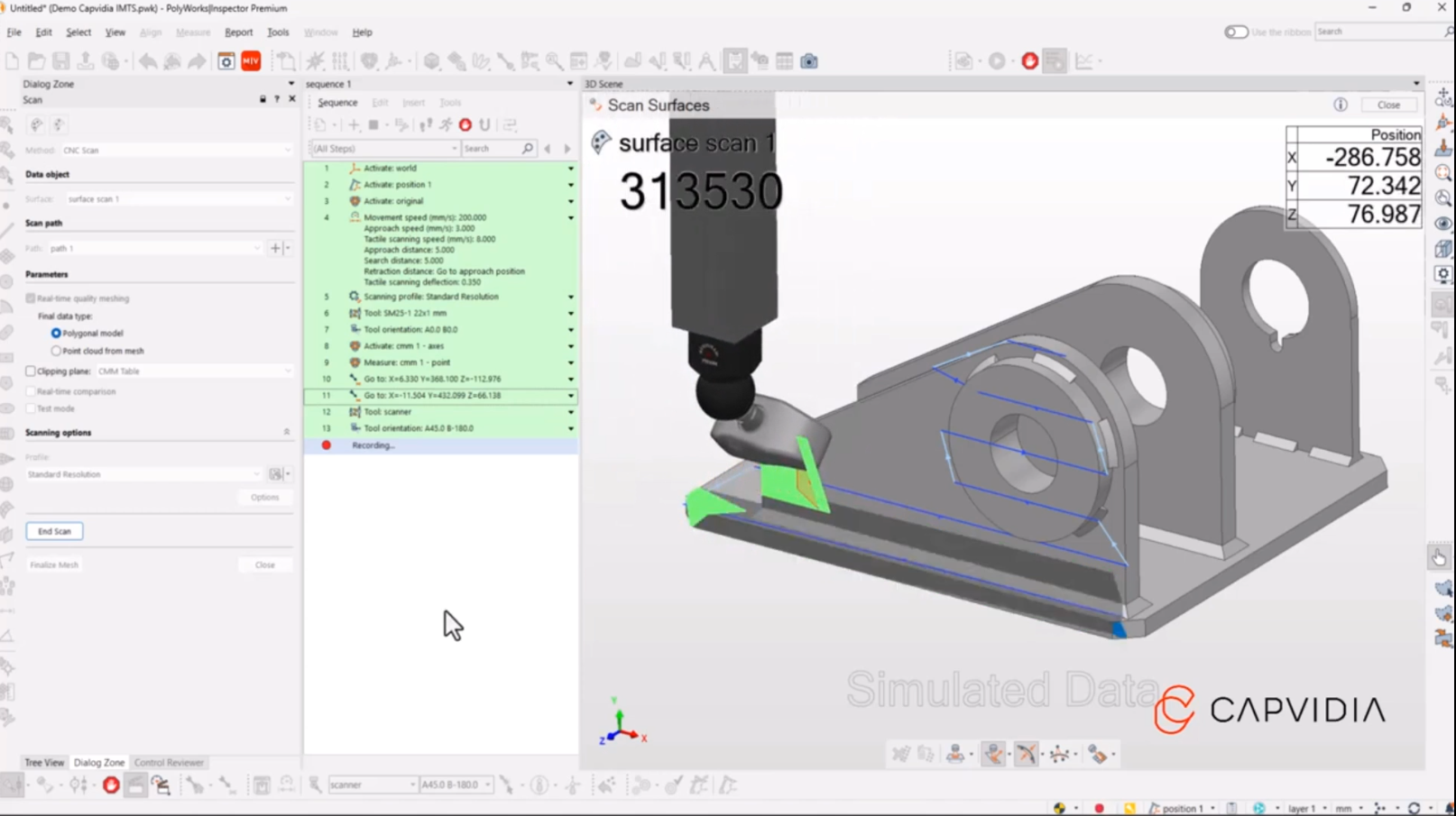
The Importance of PMI Annotation Inspection and Repair
Before implementing CMM inspection, it is necessary to first perform PMI annotation inspection and repair on the model. This process is like maintaining a car, ensuring that every detail is problem-free so it can run smoothly on the road. Through inspection, errors in annotations, missing parameters, or inconsistent units can be identified, preventing bigger issues during subsequent inspections.
How to Perform PMI Annotation Inspection?
In automating the CMM inspection process, adding PMI (Product Manufacturing Information) annotations to existing CAD models must follow a structured process: first, enable the MBD module in CAD software (such as NX, SolidWorks), use tools like dimensions, geometric tolerances, and datum symbols to annotate key inspection features, ensuring data completeness and compliance with ASME/ISO standards, or use MBD model management software (such as MBDVidia ) to check, repair, or edit PMI annotations; then optimize annotation layout through view management to avoid visual overlap. After adding, export in compatible formats such as STEP AP242, QIF, or 3D PDF for direct parsing by CMM software (such as PC-DMIS or CHECKMATE). When repairing existing PMI, verify the association between annotations and geometric features, supplement missing tolerances or correct conflicting data, ultimately achieving PMI-driven automated inspection, reducing manual intervention and improving accuracy. The entire process emphasizes standardization, readability, and seamless integration with CMM systems.
Automation Steps
The main steps to achieve automation of the CMM inspection process include:
- Preparation: Develop measurement plans, import MBD models, and automatically complete CMM program design.
- Data Collection: Automatically collect measurement data through CMM equipment to improve efficiency.
- Real-time Feedback: Compare measurement results with design requirements in real time to promptly identify issues.
- Intelligent Analysis: Use data analysis tools to deeply analyze inspection data and provide improvement suggestions.
Technical Support
Technical support is crucial in achieving automation. Advanced technologies such as AI and machine learning can help us better perform PMI annotation inspection and repair. For example, by training models, the system can automatically identify common annotation errors and propose repair suggestions. This not only reduces the workload of manual inspection but also improves inspection accuracy.
Future Outlook
With technological development, automation of the CMM inspection process will become increasingly widespread. In the future, we may see more intelligent solutions, even achieving fully unmanned inspection systems. PMI annotation inspection and repair will also continue to evolve, becoming an indispensable part of automated inspection processes.
Conclusion
In the pursuit of an efficient and precise manufacturing environment, doing a good job of PMI Annotation Inspection and Repair is the key to achieving automation of the CMM inspection process. Through reasonable process design and technological application, we can not only improve production efficiency but also ensure product quality, bringing greater competitive advantages to enterprises.
PMI Annotation Inspection and Repair,CMM Measurement Automation,MBDVidia