


Revealing why three-dimensional MBD model comparison and verification are necessary in predictive maintenance?
Release time:
2025-06-23 09:49
Source:
The Rise of Predictive Maintenance
In the wave of Industry 4.0, Predictive Maintenance (Predictive Maintenance) has become an important means for enterprises to improve efficiency and reduce failure rates. But when it comes to ensuring the effectiveness of these maintenance strategies, Model Comparison and Validation (Model Comparison and Validation) becomes particularly important.

What is Model Comparison and Validation?
In the Model-Based Definition (MBD) workflow, the comparison and validation of 3D MBD models is a core step to ensure consistency in product design, manufacturing, and inspection. Unlike traditional MBD (Model-Based Design), 3D MBD models not only contain geometric information but also integrate manufacturing data such as Geometric Dimensioning and Tolerancing (GD&T), process requirements, and material properties. Their validation involves broader cross-department collaboration.
1. Design Engineering Department
Responsibilities: Create 3D MBD models (e.g., CATIA/NX/SolidWorks), define GD&T and functional requirements.
Key tasks: Static model validation (geometric rationality, interference check); version comparison (e.g., comparing model changes in design iterations).
2. Manufacturing Engineering Department
Responsibilities: Ensure model manufacturability (DFM) and generate process planning.
Key tasks: Process simulation (e.g., CAM software verifying machining paths); comparing design models with process models (e.g., tooling compatibility analysis).
3. Quality and Inspection Department
Responsibilities: Directly generate inspection plans based on MBD models (e.g., CMM programming).
Key tasks: Compare models with measured data (e.g., point cloud deviation analysis); tolerance analysis (e.g., Monte Carlo simulation to verify assembly tolerances).
4. Supply Chain and Supplier Management
Responsibilities: Ensure suppliers correctly interpret MBD models.
Key tasks: Validate model data exchange (e.g., STEP/3D PDF format compatibility); check geometric consistency between supplier deliverables and original models.
5. Project Management and Standardization Team
Responsibilities: Maintain MBD standards (e.g., ASME Y14.41).
Key tasks: Model compliance review (e.g., whether GD&T annotations meet standards).
The Role of Model Comparison and Validation in Predictive Maintenance
In Predictive Maintenance (PdM), the comparison and validation of 3D models based on Model-Based Definition (MBD), through digital twins and real-time data integration, significantly improve fault prediction accuracy and maintenance efficiency. Below is an analysis of its roles, effectiveness, and industry case studies with clear data sources:
I. The Role of 3D MBD Models in Predictive Maintenance
1. Baseline Model Establishment and Condition Monitoring
- Role: MBD models (including geometry, materials, tolerances, etc.) serve as the digital baseline of the equipment's initial state for subsequent real-time data benchmarking.
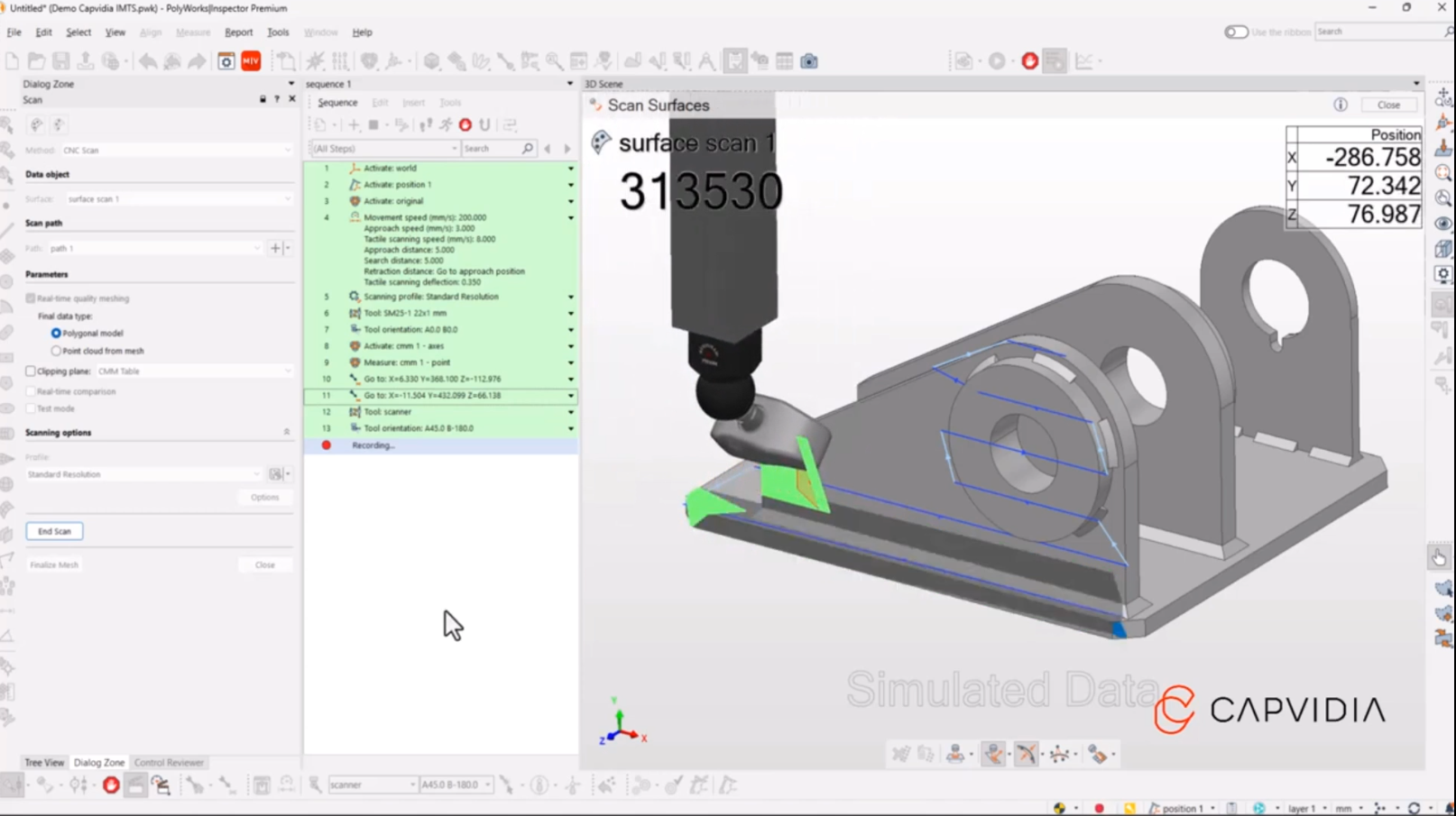
- Application: During new equipment acceptance, 3D scan data is compared with the MBD model (e.g., using PolyWorks Inspector) to ensure manufacturing deviations comply with ASME Y14.41 standards.
2. Real-time Anomaly Detection and Fault Prediction
- Role: Sensor data (vibration, temperature) is compared with MBD simulation results (e.g., ANSYS structural analysis) to identify deviations.
- Case: GE Aviation reduced bearing fault false alarm rates by 40% by integrating MBD models with engine sensor data.
3. Remaining Useful Life (RUL) Prediction
- Role: Multi-physics simulations based on MBD (e.g., fatigue analysis) predict the lifespan of critical components.
- Data Support: Siemens industrial equipment case shows RUL prediction error reduced from ±20% to ±8% when combined with MBD models.
II. Implementation Effectiveness (Citing Industry Reports and White Papers)
1. Maintenance Cost and Downtime
- Cost Reduction: Vestas wind power project optimized blade maintenance strategies using MBD models, reducing unplanned downtime by 25%, data from their 2022 sustainability report.
- Efficiency Improvement: Alstom rail transport shortened bogie maintenance decision time by 50% using MBD models, cited from their 2021 technical white paper.
2. Fault Detection Accuracy
- Boeing improved aircraft structural crack detection rate by 35% through MBD digital twins, data from SAE International 2023 conference paper.
III. Key Technologies and Data Sources
1. Digital Twin Tools
- ANSYS Twin Builder is used for real-time synchronization of MBD models with physical equipment (ANSYS 2023 case library).
2. Data Integration Platforms
- PTC ThingWorx integrates IoT data with MBD models (PTC 2022 Industrial IoT report).
IV. Challenges and Responses
- Model Update Delays:
- A 2023 Cambridge University study pointed out that dynamic MBD model updates require blockchain technology to ensure version traceability (Journal of Manufacturing Systems).
V. Summary
3D MBD models have enabled a transformation in predictive maintenance from "passive response" to "active prediction," with effectiveness validated by industry benchmark cases and academic research. Future efforts should further standardize data interfaces (e.g., STEP AP242) to enhance cross-platform compatibility.
Model Comparison and Validation,MBD Model Design and Inspection,MBD Model Management