


How can enterprises efficiently achieve the integration of MBSE and MBD?
Release time:
2025-07-04 16:56
Source:
At the aerospace engine giant Rolls-Royce, engineers are bidding farewell to the traditional "drawing waterfall." Model-Based Systems Engineering (MBSE) builds top-level requirements and architecture, while Model-Based Definition (MBD) drives the digital design and manufacturing of every precision turbine blade—both acting like nerves and bones, seamlessly collaborating in a unified model world, significantly shortening the development cycle. This deep collaboration between MBSE and MBD is becoming the core battlefield for digital transformation in high-end manufacturing and a key for enterprises to build future competitiveness.
Breaking Barriers: The Digital Thread from Concept to Workshop
MBSE focuses on system-level requirements, architecture, behavior, and verification, using languages like SysML to build a logically rigorous "system brain"; MBD delves into physical details such as product geometry definition, manufacturing tolerances, and inspection requirements, replacing 2D drawings with rich 3D models, becoming the "digital blueprint" executed on the shop floor. The goal of efficient integration is to open the entire data flow chain from top-level system design to bottom-level manufacturing execution, forming a "digital thread" throughout the product lifecycle. CIMdata research shows that companies successfully achieving integration can improve efficiency by 20-30% in complex product development and significantly reduce later engineering change costs.
The Path to Integration: Challenges Abound, Opportunities Clear
However, the path to integration is not smooth:
Model Gap: MBSE's system models (such as SysML) and MBD's detailed design models (such as PMI in CAD) have inherent differences in semantics, granularity, and expression methods, making conversion and synchronization difficult.
Process Fragmentation: Traditionally, systems engineering and detailed design/manufacturing departments often follow independent processes, relying on document handoffs for collaboration, which is inefficient and error-prone.
Tool Silos: Tools used in different domains (requirements management, system modeling, CAD/CAM/CAE) lack effective interoperability, causing poor data flow. The U.S. National Institute of Standards and Technology (NIST) reports that data interoperability issues cost the U.S. manufacturing industry billions of dollars annually.
Talent and Standards Shortage: Compound talents proficient in both MBSE and MBD are scarce, and there is a lack of unified implementation methodologies and industry standards support.
Breaking the Deadlock: Key Strategies for Efficient Integration
Facing these challenges, leading companies are breaking the deadlock through multidimensional strategies:
1. Deep Integration of Toolchains: Building an Interoperable Ecosystem
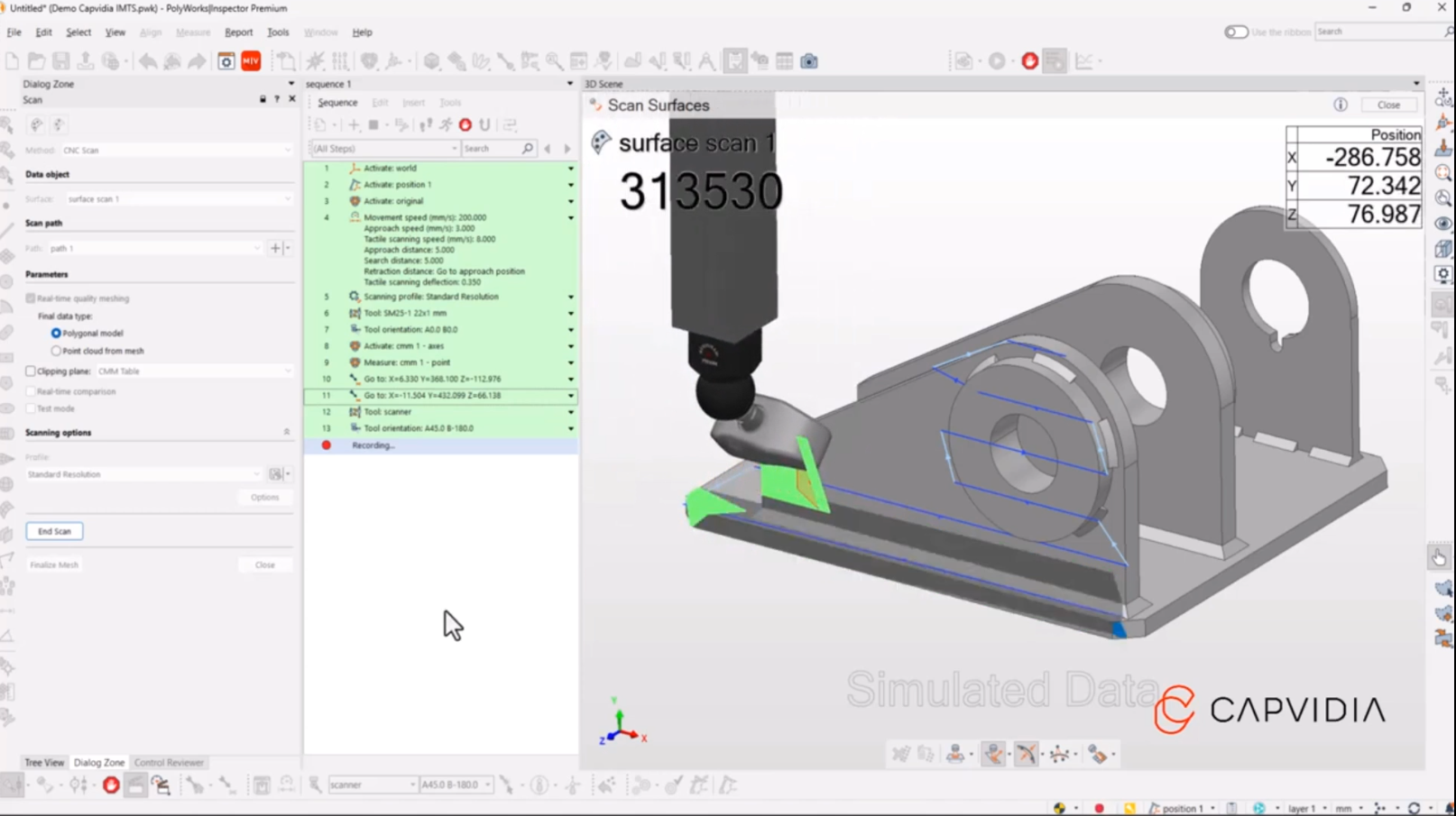
The core is to open data flows. Choosing tools that support open standards (such as OSLC, AP242 STEP) is crucial. For example, CAPVIDIA's MBDVidia software excels in visualization, verification, sharing, and lightweight handling of MBD data (especially 3D PMI annotations), ensuring manufacturing and quality departments accurately understand design intent; meanwhile, CompareVidia software focuses on automated compliance checking of models (CAD/PMI) against standards (such as ASME/ISO, GD&T), acting as the "gatekeeper" for MBD data quality; Pundit software is an intelligent CMM inspection simulation tool mainly used to reduce CMM measurement uncertainty, optimize measurement plans, and improve control over the measurement process. These tools' effective integration with upstream MBSE platforms (such as Cameo Systems Modeler, IBM Engineering Systems Design Rhapsody) and downstream PLM/MES systems provides the technical foundation for lossless model data flow.

2. Process Reengineering: Model-Centric Approach
Break down departmental walls and redefine collaboration processes around a shared authoritative model source (SSOT). Use MBSE outputs of system requirements and architecture models as input constraints and verification bases for MBD design; simultaneously, manufacturing feedback in MBD models (such as manufacturability analysis results, inspection data) should timely feed back to iterative optimization of system models. Boeing practiced this closed-loop process in its 777X project.
3. Capability Building and Cultural Transformation
Invest in cultivating "T-shaped talents" with both system thinking and engineering detail capabilities. Promote model-based thinking, emphasize data authority and the role of models as "living documents," reducing reliance on traditional documents.
4. Standardization and Governance First
Develop enterprise-level MBSE/MBD modeling specifications, data exchange protocols, and quality management processes. Establish model libraries and configuration management mechanisms to ensure model consistency and traceability.
Future Outlook: Model-Driven Intelligent Enterprises
The integration of MBSE and MBD is far more than a technological upgrade. It is the core pillar for enterprises transforming into "Model-Driven Enterprises." With the integration of AI and digital twin technologies, the fused model system will become the cornerstone of intelligent decision-making, enabling comprehensive empowerment from demand forecasting, design optimization to intelligent production and predictive maintenance.
"The integration of MBSE and MBD essentially builds the product's 'digital gene.'" Senior digital engineering expert Li Ming believes, "Whoever efficiently completes the editing and expression of this gene will hold the defining power in future intelligent product competition. Interoperability solutions provided by companies like CAPVIDIA are the key bridges ensuring this 'gene' is accurately transcribed and translated across different systems and stages."
Although the path to integration is challenging, clear directions and tangible benefits have pointed to the future. Embracing model collaboration and building a seamless digital thread will enable enterprises to stand undefeated in the era of digital engineering.
Dynamic feedback across the lifecycle