


A must-read for mattress R&D and performance evaluation personnel: How does surface pressure measurement enhance mattress development and performance assessment?
Release time:
2025-06-13 14:47
Source:
A must-read for mattress R&D and performance evaluation personnel: How does surface pressure measurement enhance mattress development and performance assessment?
Introduction: The key to mattress comfort—precise pressure measurement
In the process of mattress R&D and performance evaluation, surface pressure distribution is an important indicator for measuring comfort, support, and healthy sleep. Excessively high or low pressure may lead to poor blood circulation, muscle fatigue, and even affect sleep quality. Therefore, how to accurately measure and analyze the pressure distribution on the mattress surface has become a core concern for industry R&D personnel.
SPI (Sensor Products Inc.), as a global leader in pressure measurement solutions, offers the innovative Tactilus® pressure sensing system, providing the mattress industry with high-precision surface pressure measurement tools to help companies optimize product design and enhance user experience. This article will explore the key role of surface pressure measurement in mattress R&D and introduce how SPI empowers industry innovation through advanced technology.
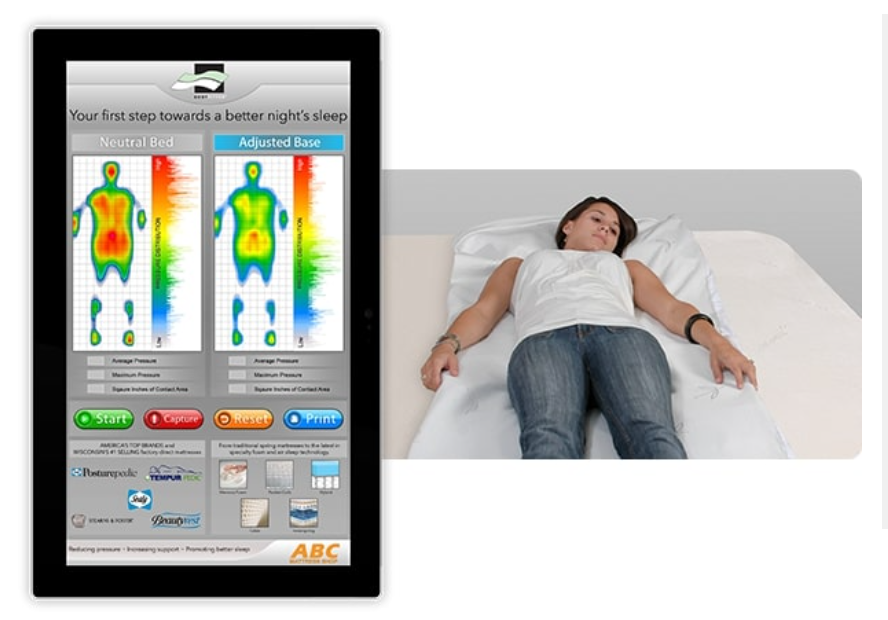
1. Why must mattress R&D focus on surface pressure measurement?
1. Optimize support and improve sleep comfort
The core function of a mattress is to provide proper support, keeping the human spine in its natural curve. Traditional R&D relies on subjective testing (such as manual trial sleeping), but this method is difficult to quantify data, limiting product optimization. SPI's Tactilus® system can collect pressure distribution data in real time, accurately identifying pressure concentration areas (such as shoulders and hips), helping engineers adjust material hardness and zoning design to optimize support performance.
2. Prevent health issues and reduce sleep discomfort
Long-term exposure to excessive pressure may cause muscle soreness, poor blood circulation, and even pressure ulcers (especially for the elderly and long-term bedridden patients). Through SPI's high-resolution pressure sensing technology, R&D personnel can accurately assess pressure distribution for different body types and sleeping postures, optimizing mattress design to reduce health risks.
3. Enhance product competitiveness and meet market demands
Consumers have increasing requirements for mattress comfort and health attributes. Precise pressure data can help companies:
- Verify product claims (such as "ergonomically designed")
- Optimize differentiated designs (such as zoned support, smart adjustable mattresses)
- Shorten R&D cycles and accelerate product launch
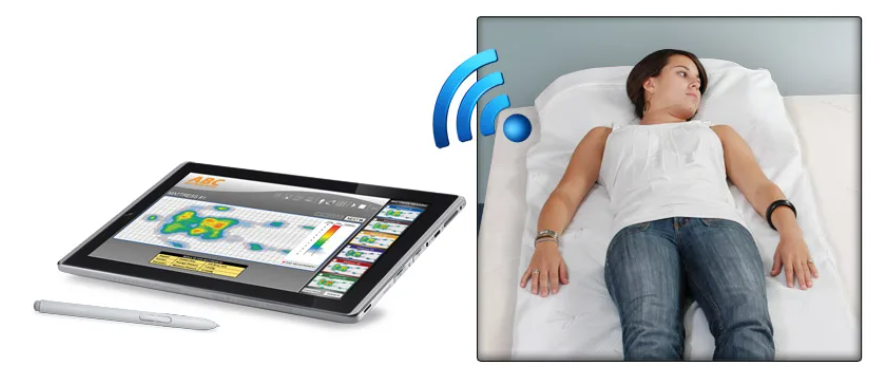
2. SPI Tactilus ® How does it assist mattress pressure measurement?
SPI Tactilus ® The mattress pressure measurement system is specially designed for sleep product R&D, featuring the following core advantages:
1. High precision and high resolution sensing
- Uses ultra-thin flexible sensors that conform to the mattress surface without affecting natural sleeping posture
- Measures pressure range from 0.1 to 200 PSI, covering different mattress hardness requirements
- Up to 100 Hz sampling rate to capture dynamic pressure changes (such as turning over, adjusting posture)
2. 3D pressure visualization analysis
- Real-time generation of pressure heat maps, visually displaying pressure distribution
- Supports calculation of key parameters such as peak pressure, average pressure, and contact area
- Allows comparison of pressure differences between different materials and structural designs to assist decision-making
3. Suitable for various testing scenarios
- Static tests (lying on back, side sleeping)
- Dynamic tests (turning over, sitting up)
- Long-term monitoring (evaluating mattress durability)
4. Data-driven R&D optimization
- Combined with SPI software, data can be exported in Excel, MATLAB, and other formats for statistical analysis
- Supports integration with FEA (Finite Element Analysis) to simulate pressure distribution for users of different body types
3. Case study: How SPI helps mattress companies improve product performance?
Case 1: Zoned support optimization for an international mattress brand
This brand used the SPI Tactilus ® system to test pressure distribution for users of different weights during the development of zoned spring mattresses and found insufficient lumbar support in the original design. By adjusting spring density and material combinations, lumbar pressure was reduced by 15%, significantly improving user satisfaction.
Case 2: Hardness adjustment of memory foam mattresses
A memory foam mattress manufacturer found some users reported an "excessive sinking feeling." SPI pressure tests showed that under high temperatures, material softening led to decreased support. The manufacturer improved the formula accordingly, ensuring stable performance across different temperatures.
4. Future trends: Integration of smart mattresses and pressure sensing
With the rise of smart mattresses, real-time pressure monitoring has become a new trend. SPI's sensing technology can be integrated into smart systems to achieve:
- Sleep posture monitoring (identifying supine, side, prone positions)
- Dynamic support adjustment (such as electric zoned adjustment)
- Health data analysis (such as turning frequency, pressure change trends)
Conclusion: A new era of data-driven mattress R&D
Surface pressure measurement has become a core part of mattress R&D, and the SPI Tactilus ® system, with its high precision, ease of use, and data analysis capabilities, is helping companies worldwide create more comfortable and healthier sleep products. For mattress R&D and performance evaluation personnel, mastering advanced pressure measurement technology will be key to enhancing product competitiveness.
Mattress Evaluation,Mattress Research and Development,Surface Pressure Measurement,SPI Tactilus,Sleep Comfort,Stress Distribution Analysis,Smart Mattress