


Exploring the Advantages of Virtual Strain Gauge Substitution Based on Grid Model Digital Image Correlation Technology
Release time:
2025-06-11 11:35
Source:
Introduction: A New Era of Strain Measurement
In the fields of engineering and materials science, accurate strain measurement is crucial. Traditional strain measurement methods, such as strain gauges, are widely used but have certain limitations. With technological advancements, grid-based Digital Image Correlation (DIC) technology has gradually emerged as an ideal alternative to virtual strain gauges.
Introduction to Digital Image Correlation (DIC) Technology
DIC technology is a non-destructive optical measurement method that calculates strain by analyzing changes in the surface images of objects. This process utilizes high-resolution cameras and advanced image processing algorithms to provide real-time strain data under dynamic loads and complex conditions.
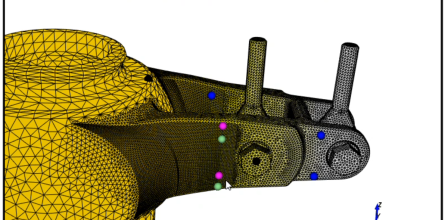
Advantages of Virtual Strain Gauge Replacement
So, why is grid-based DIC technology considered a wise choice for replacing virtual strain gauges? Let's analyze it step by step.
1. High Accuracy and High Resolution
Firstly, DIC technology can achieve extremely high measurement accuracy. The accuracy of traditional strain gauges is often affected by installation location, environment, and other factors, whereas DIC technology, through image processing, can obtain higher resolution to ensure the reliability of measurement results.
2. No Direct Contact Required
Secondly, DIC is a non-contact measurement technique, meaning no additional load or interference is applied to the measured object during the measurement process. This is especially important in testing fragile materials or complex structures, avoiding damage caused by traditional methods.
3. Multi-Dimensional Strain Measurement
Furthermore, DIC technology can measure strain in multiple dimensions simultaneously. For complex engineering structures, especially those operating under multi-axial loads, DIC provides more comprehensive data support.
4. Real-Time Data Acquisition
In addition, DIC can capture the deformation process of objects in real time. This feature allows engineers to respond immediately during testing and adjust experimental settings to obtain better data.
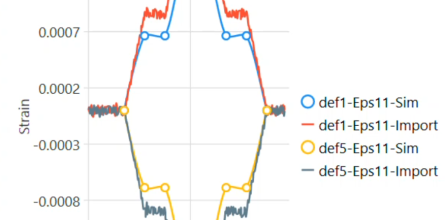
Practical Application Cases
In aerospace, civil engineering, mechanical manufacturing, and other fields, the application of DIC technology has achieved significant results. For example, in aerospace, researchers use DIC technology to monitor the strain of aircraft wings to ensure safety during flight.
Conclusion: Future Trends in Strain Measurement
In summary, grid-based Digital Image Correlation technology, as a solution for virtual strain gauge replacement, demonstrates many advantages. From high-precision measurement results to non-contact applications, this technology not only advances strain measurement but also brings more possibilities to the engineering field. Looking ahead, DIC technology will undoubtedly play a unique role in more areas.
Virtual Strain Gauge Replacement,Grid-based DIC,Simulation Results Verification,Simulation Model Optimization