


Want to know how to automatically extract PMI from 2D drawings to quickly generate bubble charts?
Release time:
2025-05-15 15:38
Source:
Introduction
In modern manufacturing, the efficiency of design and production is crucial. Imagine how exciting it would be if we could easily convert PMI (Product Manufacturing Information) from 2D drawings into machine-recognizable 3D PMI! The "automatic generation of balloon diagrams" is one of the goals we aim to achieve.
Definition and Role of PMI
PMI, or Product Manufacturing Information, typically includes dimensions, tolerances, annotations, etc. Traditionally, these are marked on 2D drawings, but modern manufacturing prefers using PMI within 3D models to achieve digital manufacturing. This information is vital for smooth production processes. If the quality of PMI information cannot be guaranteed, the produced products may fail to meet expected quality standards, potentially causing significant economic losses. Therefore, ensuring the accuracy and recognizability of PMI is very important.
Challenges from 2D to 3D
Converting PMI from 2D drawings to 3D PMI is not a simple task. Firstly, traditional conversion methods are often time-consuming, labor-intensive, and prone to errors. Secondly, manual data entry is inefficient and may lead to data loss or mistakes due to human factors. At this point, the technology of automatically generating balloon diagrams becomes especially important.
MBDVidia Software The Balloon2D feature in MBDVidia is specifically designed to extract PMI from 2D drawings. Its core advantage lies in automatically capturing annotations: using AI-driven algorithms to recognize dimensions, tolerances, datums, and other markings in 2D engineering drawings, generating a machine-readable Bill of Characteristics (BoC), supporting subsequent automated inspection plans, reports (such as AS9102 FAI, PPAP, etc.), and workflows.
MBDVidia software itself supports multiple workflows: it accommodates 2D, 3D, or hybrid modes, adapting to different companies' digital transformation processes. For example, drawing-centric companies can retain existing workflows while gradually transitioning to MBD.
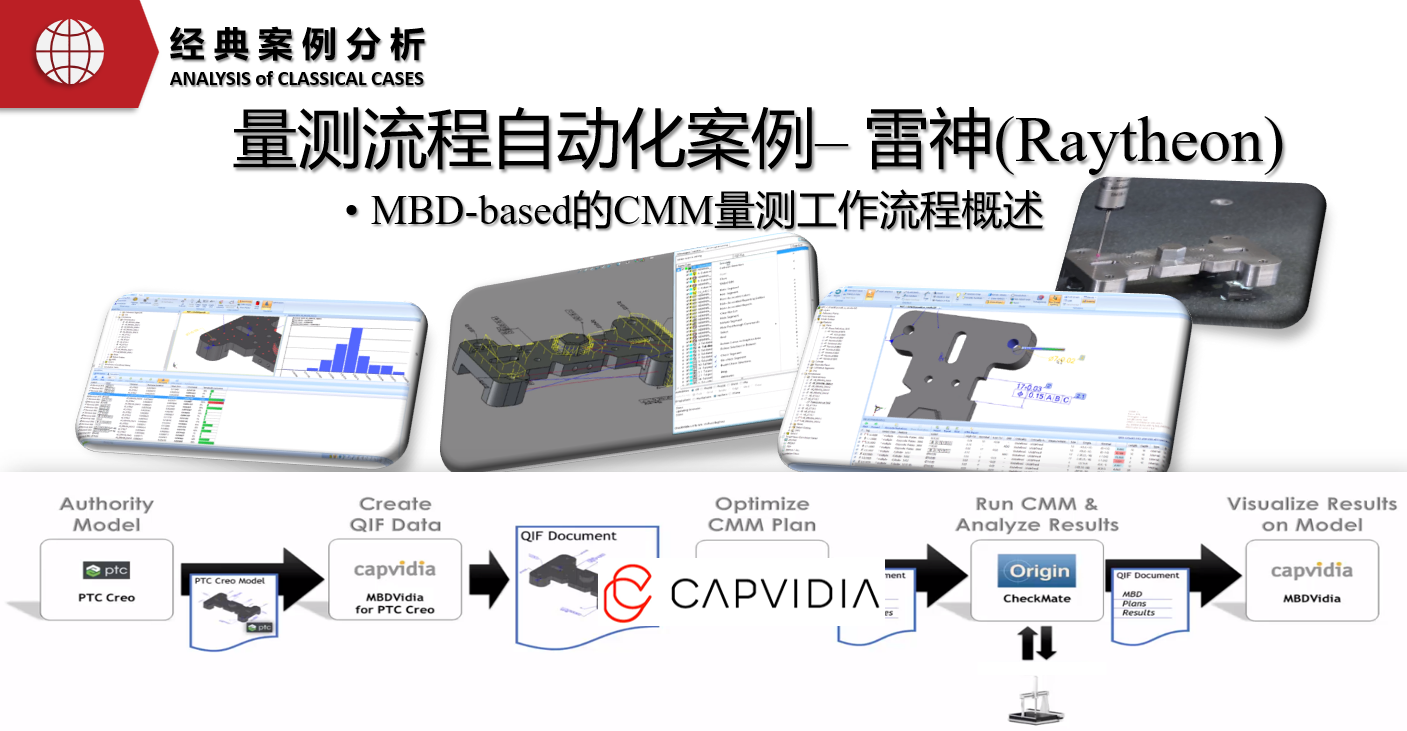
Seamless Integration of 3D PMI: MBDVidia Software Supports adding PMI to existing 3D CAD model files (using MBDConnect for Creo, the generated BoC can be directly linked to the 3D model). Through MBDVidia's True MBD functionality, semantic PMI embedding is achieved, ensuring automation in downstream manufacturing and inspection processes (such as CAM/CMM).
Practical Application Case
A manufacturing company facing complex production demands decided to introduce automatic balloon generation technology. They primarily use the PTC CREO software system. After evaluating cost-effectiveness, they chose to install the MBD plugin for PTC CREO, namely MBDConnect for Creo. Using the plugin, they quickly linked PMI information from 2D drawings to 3D models and automatically generated BoC, FAI, and inspection plans. As a result, production efficiency improved significantly, and losses caused by information errors were greatly reduced. This successful case fully demonstrates the great potential of automatic balloon generation in actual production!
Future Outlook
With continuous technological advancement, the technology for automatic balloon generation will become more mature. In the future, more intelligent tools may help us optimize design and production processes. We can look forward to a time when converting PMI from 2D drawings into machine-recognizable 3D PMI becomes simpler, more efficient, and possibly fully automated. This will bring a new revolution to the manufacturing industry!
Conclusion
In summary, automatic balloon generation is not only an effective means to solve the challenge of converting PMI from 2D drawings but also an important part of promoting intelligent development in manufacturing. Through continuous innovation and practice, we have reason to believe that the future manufacturing industry will be more efficient and precise.
Automatically generate bubble chart