


The ingenious use of bubble chart software: MBDVidia software helps you easily master the skill of automatically generating bubble charts from 2D drawings
Release time:
2025-05-14 13:45
Source:
Introduction: The Charm of Automatic Bubble Chart Generation
By automatically generating customizable numbered bubble charts from 2D drawings, enterprises can achieve an efficient closed loop of "data-process-decision," promoting design standardization, lean production, and intelligent management, ultimately gaining an edge in the Industry 4.0 competition. This technology is not just a tool upgrade but a key engine driving the engineering field from experience-driven to data-driven.
Why Automatically Generate Bubble Charts from 2D Drawings?
Currently, using technology to automatically recognize annotations from 2D drawings and generate customizable numbered bubble charts is significantly important in engineering design, manufacturing, construction, and operation & maintenance, mainly reflected in the following aspects:
1. Improve Design Review and Collaboration Efficiency
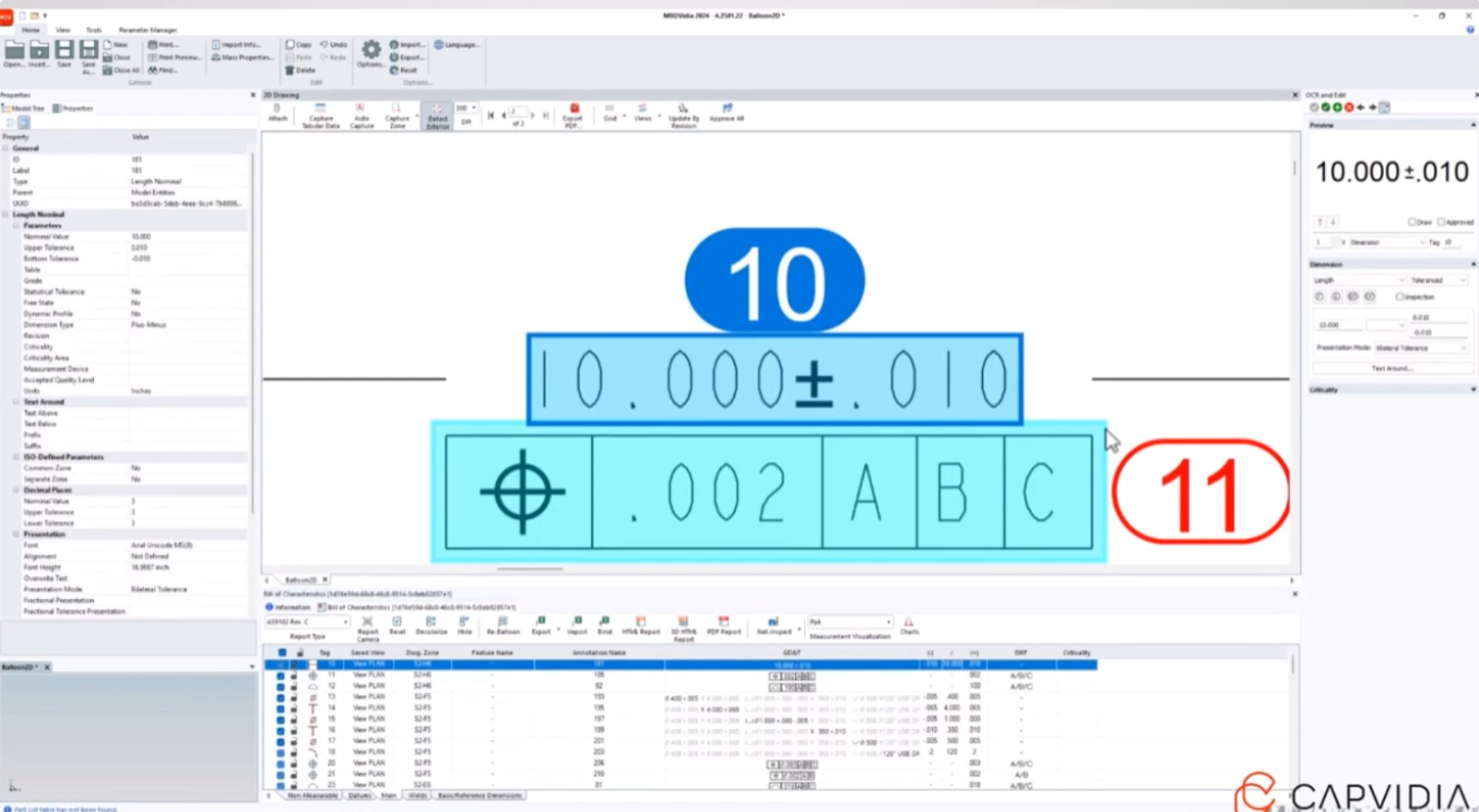
- Automation replaces manual annotation: In traditional design reviews, engineers need to manually extract annotation information (such as dimensions, tolerances, part numbers, etc.) from drawings and generate bubble charts, which is time-consuming and error-prone. Through AI-driven OCR (Optical Character Recognition) and image analysis technology, the system can automatically recognize annotation content and link it to the corresponding positions on the drawing, generating standardized bubble charts with efficiency improvements of over 80%.
- Support cross-team collaboration: Customizable numbering rules (such as "project code-part type-sequence number") can adapt to the specifications of different departments or enterprises, ensuring consistent interpretation of the same drawing by design, manufacturing, and quality inspection teams, reducing communication ambiguities.
Application Scenario: In automotive manufacturing, design teams and suppliers need to quickly transmit part drawing information. Automatically generated bubble charts can directly link to the BOM (Bill of Materials), accelerating supply chain collaboration.
2. Ensure Data Accuracy and Traceability
- Eliminate human annotation errors: When manually inputting annotation numbers, duplication, omission, or format errors may cause production accidents (such as part mismatches). Automated systems use rule engines to verify the uniqueness and logical consistency of numbers, significantly reducing error rates.
- Full lifecycle traceability: Custom numbering can embed version numbers, timestamps, or responsible person information, supporting full-link traceability from design, production to operation. For example, in the construction industry, bubble chart numbering linked with BIM (Building Information Modeling) databases can track component status in real time.
Technical Support: Combining NLP (Natural Language Processing) technology to analyze annotation semantics, distinguishing key parameters (such as "tolerance ±0.1mm") from non-key descriptions, ensuring precise extraction of core data.
3. Accelerate Digital Transformation and Intelligent Upgrades
- Connect drawing data with digital twins: Automatically generated numbered bubble charts can be directly imported into CAE simulation software or PLM (Product Lifecycle Management) systems, providing structured input for digital twin models and shortening simulation verification cycles.
- Support AI-driven design optimization: Structured annotation data can be used to train AI models to predict design defects or recommend optimization plans. For example, in PCB (Printed Circuit Board) design, the system analyzes annotation patterns from historical drawings to automatically identify high-frequency failure points and generate optimization suggestions.
Industry Case: In the aerospace field, Airbus uses automated annotation recognition technology to quickly convert thousands of aircraft structural drawings into input data for digital twin models, supporting fatigue life simulation analysis.
4. Flexibility and Scalability to Handle Complex Engineering Scenarios
- Adapt to multiple types of drawings and annotation standards: The system can adapt to annotation styles in mechanical drawings, architectural floor plans, electrical schematics, and other fields through pre-trained models, supporting multilingual annotation recognition (such as mixed Chinese-English annotations).
- Dynamically respond to change requests: When design changes occur, custom numbering rules can automatically adjust bubble chart labels, for example, retaining original numbering logic in incremental updates to avoid global re-annotation.
Cutting-edge Progress: Combining generative AI (such as Diffusion models), the system can intelligently complete missing annotations or infer ambiguous markings, further reducing dependence on the completeness of original drawings.
5. Cost Control and Sustainable Development
- Reduce reliance on human resources: Automated annotation technology can replace inefficient repetitive labor, allowing engineers to focus on high-value tasks (such as innovative design and problem diagnosis).
- Lower drawing management costs: Digital bubble charts combined with annotation databases replace traditional paper drawing archives, reducing physical storage space requirements while supporting fast retrieval and reuse.
Economic Benefits: According to McKinsey research, automation in drawing processing in manufacturing can reduce engineering management costs by 15%-30% and shorten product time-to-market by over 20%.
Advantages of BALLOON 2D Bubble Chart Software
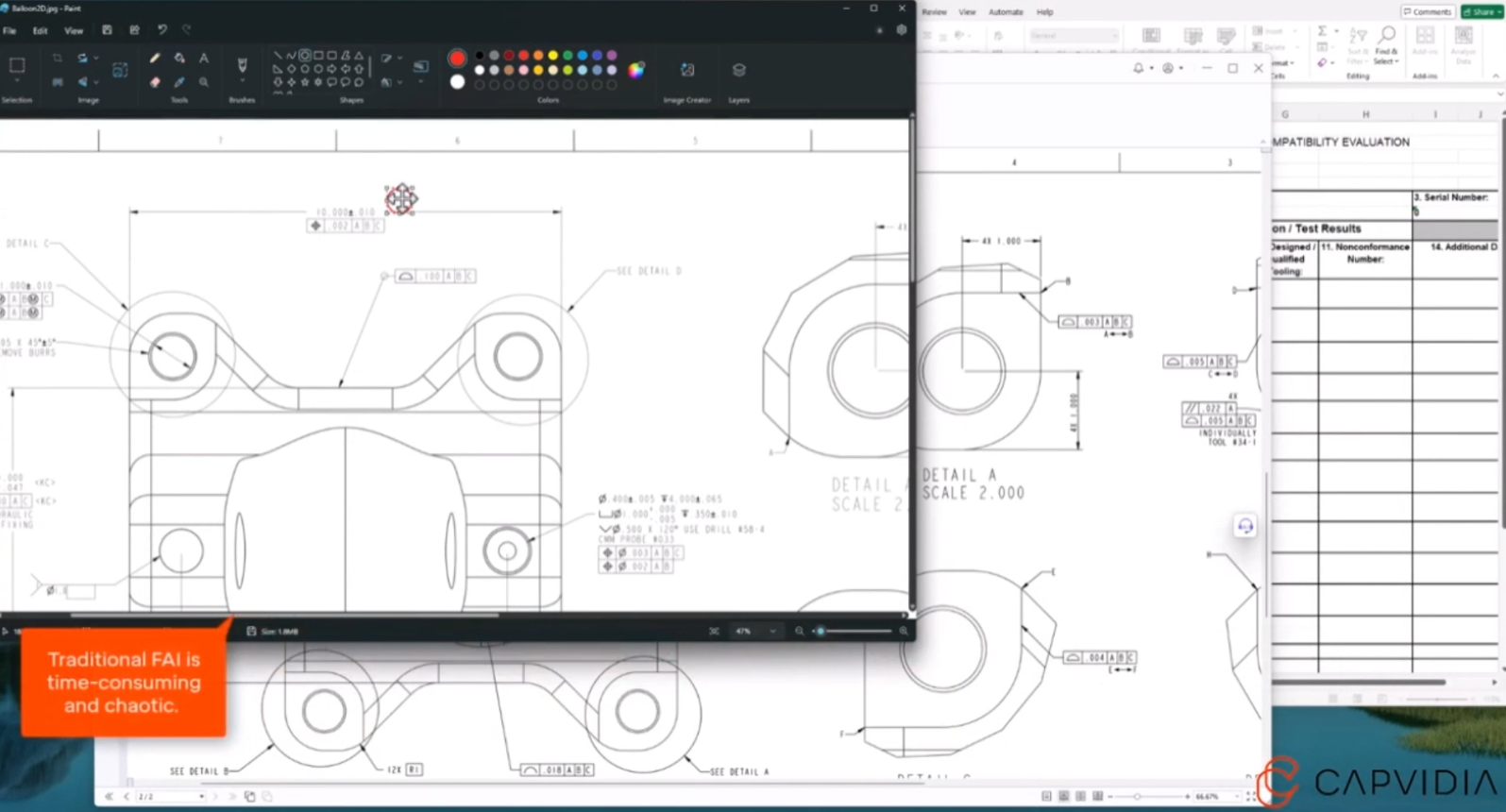
Balloon2D automatic annotation bubble chart software captures annotations from 2D engineering drawings and converts them into machine-readable feature lists for automated inspection plans, reports, and workflows (such as AS9102, FAI, PPAP), and can output to PDF, HTML, Excel, and Net-Inspect.
Frequently Asked Questions
During the use of bubble chart software some problems are inevitable. Below are some common questions and their solutions:
- Q: What if the drawing format is not supported?
A: It is recommended to convert the drawing to a format supported by the software before importing; generally, PDF format files are supported. - Q: What if the generated bubble chart is inaccurate?
A: When using bubble chart software, you must ensure its accuracy, so test and compare several options.
Conclusion: Make Design More Efficient
Overall, bubble chart software not only has the efficiency of bubble chart generation been improved, but the possibility of errors has also been greatly reduced. For every designer, this is undoubtedly a powerful assistant. What are you waiting for? Try it now and make your work easier and more enjoyable!
Balloon2D Software