


Solving the Climate Failure Problem of Automotive Components: Construction of a Reliability Model for Test Chambers
Release time:
2025-08-13 13:56
Source:
Introduction: The Climate Failure Challenges of Automotive Components
In modern automotive manufacturing, climate change poses significant challenges to the reliability of automotive components. Especially under extreme climate conditions, the performance and lifespan of components are often severely affected. This phenomenon is known as "climate failure," which not only impacts the consumer experience but also causes substantial economic losses to automakers. Therefore, effectively solving this problem has become an urgent issue for industry experts.
The Importance of Multi-Physics Coupling Testing
Multi-physics coupling testing, which simultaneously considers the effects of multiple physical fields (such as temperature, humidity, pressure, etc.) on the performance of materials and components, can more comprehensively evaluate the behavior of automotive parts under various climate conditions. Through this method, engineers can detect potential failure modes earlier and take corresponding measures to reduce the risk of faults.
The Role of Test Chambers
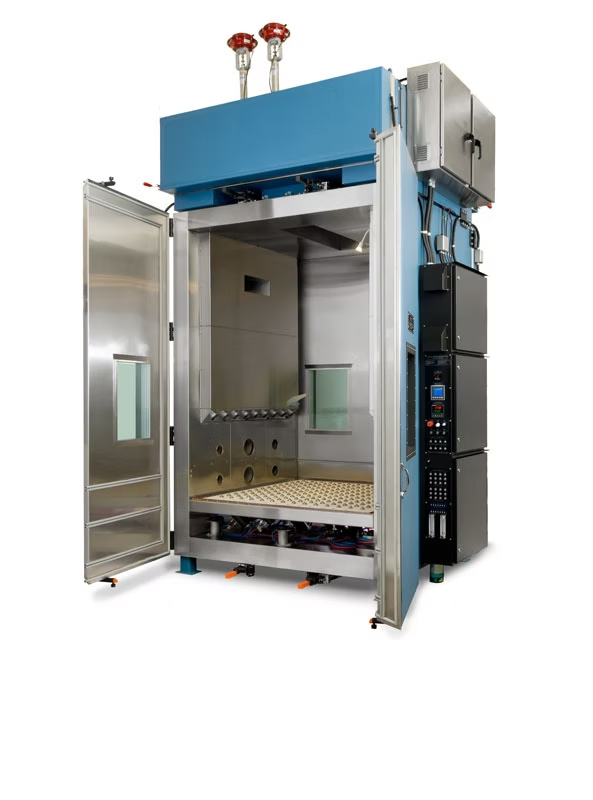
Test chambers, as important tools for multi-physics coupling testing, can simulate real environments under different climate conditions. Their design and reliability directly affect the effectiveness of the tests. Therefore, building a highly reliable test chamber model is particularly important.
Constructing Test Chamber Reliability Models Based on Poisson Process and Fault Tree Analysis
When constructing reliability models for test chambers, the method based on Poisson process and fault tree analysis has gradually gained attention. The Poisson process helps quantify the probability of failure occurrences, while fault tree analysis systematically identifies and evaluates potential failure modes.
Specifically, the Poisson process acts as a "clock for failure occurrences," predicting the number of possible failures within a certain time frame through statistical methods. Fault tree analysis, using a tree diagram format, unfolds various factors that may cause failures layer by layer, allowing us to clearly see the relationships and impacts among these factors.
Practical Applications
In practical applications, we can collect historical data to build Poisson process models and then calculate the failure rates of test chambers under different environmental conditions. Meanwhile, fault tree analysis helps identify key factors affecting test chamber reliability, such as component aging and material fatigue. For example, in the automotive industry, environmental reliability test chambers precisely simulate extreme climate conditions (such as high temperature and high humidity ( 60℃/90%RH ), low temperature and dry ( -40℃/10%RH ) and temperature-humidity cycling), effectively verifying the environmental adaptability and lifespan performance of components (such as in-vehicle sensors, ECU , power batteries, sealing materials, etc.). Taking new energy batteries as an example, the test chamber can simulate charge-discharge cycles from -40℃~85℃ , exposing the risk of low-temperature capacity degradation, while combining multi-stress coupling tests such as vibration and salt spray (following 40% ISO 16750 GB/T 2423 、 standards), to detect defects like material aging, seal failure, or circuit short circuits in advance. 等标准),提前发现材料老化、密封失效或电路短路等缺陷148 Its core advantage lies in improving verification efficiency 50% and enhancing data accuracy 30% , significantly reducing real vehicle failure rates (for example, a certain automaker reduced warranty rates in tropical markets through damp heat aging tests 52% ). 27 However, traditional equipment still faces challenges such as insufficient uniformity ( 30% dead zones exist in the space " dead corners ” "), temperature and humidity control deviations ( ±2℃/±5%RH leading to 30% test distortion) and bottlenecks in multi-physics coupling technology. 510 Among current mainstream equipment, HANSE ’s VTC series test chambers, with high-precision temperature variation control (liquid nitrogen proportional valve) and composite stress loading capabilities (temperature, humidity, vibration), have become one of the important tools for automotive electronics + testing. HALT/HASS测试的重要工具之一。
Future Outlook: Intelligence and Data-Driven Approaches
Looking ahead, with the development of artificial intelligence and big data technologies, the method of constructing test chamber reliability models based on Poisson process and fault tree analysis will become more intelligent and precise. Through real-time data monitoring and analysis, we can not only detect failures promptly but also perform predictive maintenance, thereby further enhancing the reliability of automotive components.
Conclusion: Jointly Addressing Climate Failure
In summary, solving the climate failure challenges of automotive components depends on in-depth research and application of multi-physics coupling testing. By constructing test chamber reliability models based on Poisson process and fault tree analysis, we can more effectively identify and respond to potential climate risks, contributing to the sustainable development of the automotive industry. Let us look forward to a future where vehicles can operate safely and stably under all climate conditions.
Reliability Model of Test Chamber Based on Poisson Process and Fault Tree Analysis,Environmental Reliability Testing,Reliability Test Chamber,HANSE,Automotive Parts Testing