


Non-contact DIC strain measurement system as an efficient solution for dynamic strain measurement of composite materials
Release time:
2025-08-13 14:42
Source:
Digital image correlation technology is breaking through measurement bottlenecks in extreme environments, providing key data support for the development of next-generation aerospace materials. In the design of hot-end components of next-generation aero engines, ceramic matrix composites ( CMC ) have become key materials due to their excellent high-temperature performance and low density. However, CMC they are prone to oxidation and volatilization in high-temperature steam environments and must be protected by environmental barrier coatings ( EBC ). Traditional measurement methods such as four-point bending tests require pre-cracks and additional reinforcement plates, which are complex to operate and tend to underestimate fracture energy, becoming a technical bottleneck restricting R&D efficiency.
01 Breaking tradition - precisely capturing interfacial mechanical behavior
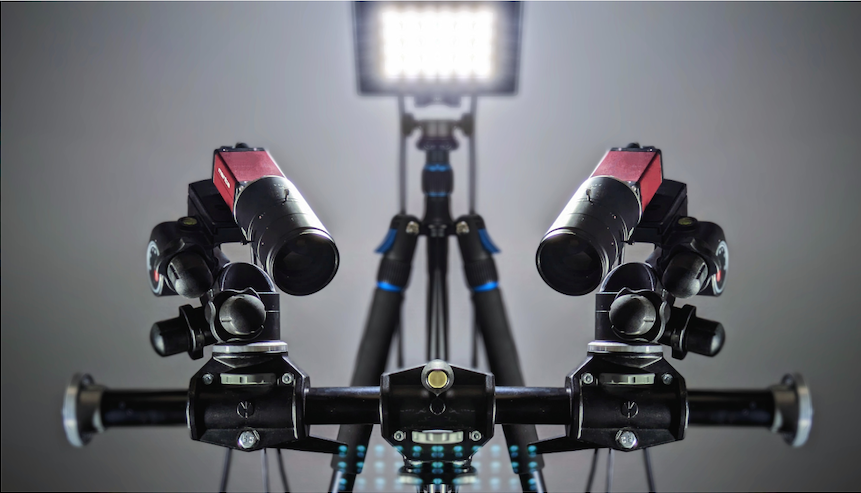
To address CMC/EBC the challenge of measuring interfacial fracture energy, Bertrand and other researchers proposed in 2025 a simplified four-point bending test method. This method combines EikoTwin DIC digital image correlation technology and stereo correlation technology, requiring no pre-cracks or reinforcement plates. The research team conducted four-point bending tests using a servo-hydraulic testing machine at a loading rate of 0.25 mm/min . Two visible light cameras recorded the test process, displacement fields were measured through stereo correlation technology, and a local finite element model was established to identify crack length. This method successfully achieved CMC/EBC stable propagation of interfacial cracks and accurately measured interfacial fracture energy, providing key data for the reliability design of hot-end components of aero engines.
02 Dynamic measurement - reveals material high-speed response mechanisms
In the field of dynamic load measurement, Professor Zhang Chao's team from Northwestern Polytechnical University recently published research in the International Journal of Impact Engineering establishing a high strain rate tensile test method based on an electromagnetic Hopkinson bar for two-dimensional triaxial woven composites ( 2DTBCs ). This method combines high-speed photography and digital image correlation ( DIC ) technology, achieving for the first time tensile loading and measurement under high strain rate conditions. The study found that high loading rates accelerate damage evolution: under both quasi-static and dynamic loads, axial specimens mainly fail by axial fiber bundle fracture, while the damage mode of transverse specimens changes significantly with increasing rate. 2DTBC Zhang Chao's team pointed out: "The strengthening of matrix and interface properties under high strain rates leads to a shift in damage mode from free-edge failure to fiber bundle fracture failure."
张超团队指出:“高应变率下基体和界面性能的强化导致损伤模式由自由边失效向纤维束断裂失效转变。”
03 Extreme environments - Technological breakthroughs in high-temperature measurement
Measuring mechanical behavior of materials under high-temperature conditions has always been a challenge in experimental mechanics. 2025 In 4 a certain month and year, verification experiments conducted by R&D personnel from a leading domestic equipment company showed that the high-temperature DIC measurement system maintained high accuracy under extreme conditions. The experiment used a high-temperature DIC measurement system, and in the elastic stage, DIC the measurement results deviated from traditional extensometers by ≤ 1.2% ; in the plastic stage, the deviation was ≤ 2.8% ; even in the critical stage before fracture, despite local speckle blurring caused by high-temperature white fog, the maximum deviation was only 3.5% . This technology solves the problems of speckle material melting and red light interference suppression in high-temperature environments, providing a reliable tool for material performance evaluation of hot-end components in aero engines.
04 Technological evolution - DIC Core advantages of measurement
DIC As a non-contact modern optical measurement technology, this technology features simple optical paths, good environmental adaptability, and a wide measurement range, and has been widely applied in the characterization of material mechanical properties. Compared with traditional measurement methods, DIC strain gauges only collect point strain, while DIC this technology collects full-field strain; when specimens approach strength limits, strain gauges may be damaged, but as long as the specimen surface speckles remain intact, DIC data collection can continue.
2018 Comparative experiments in DIC a certain year showed that, measurement errors compared with strain gauges ranged between 5%-10%, and DIC this technology can simultaneously collect displacements and strains in all directions at a point or region, an advantage not possessed by extensometers and strain gauges.
05 Application prospects, multi-field measurement solutions
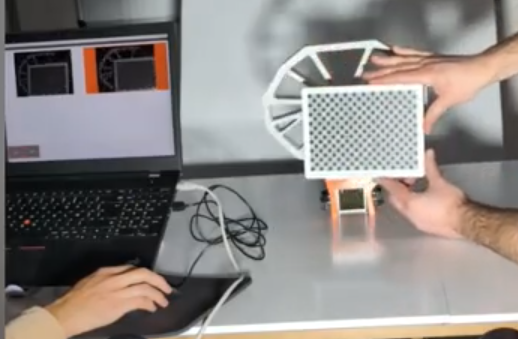
With technological development, DIC measurement systems can now cover measurement areas from millimeters to meters, and control software supports a maximum acquisition frame rate of 10 ten thousand fps, achieving macro-scale measurements from micro-nano to hundreds of meters. In a patent disclosed in 2025 a certain year, CN119618813A a strain rate tensile testing system for materials combined high-speed cameras and DIC technology, capable of achieving strain rates of 101 ~ 102s-1 filling the testing gap between material servo testing machines and traditional Hopkinson bars.
The system accelerates a large mass block to a predetermined speed using a motor, impacting the anvil connected to the specimen for tensile loading, and measures stress using Hopkinson bars combined with multi-point waveform separation technology. DIC By measuring deformation, highly reliable stress is obtained. - Strain curve.
The performance of aerospace composite materials under dynamic loads determines flight safety. Research from Northwestern Polytechnical University shows that under high-speed impact, the back surface temperature of two-dimensional triaxial woven composites can reach as high as 120 ° C , and the temperature rise region is strongly correlated with the fiber bundle fracture region.
With the continuous improvement of optical strain measurement equipment accuracy in high-temperature and high-speed environments, EikoTwin DIC engineers can accurately capture the entire mechanical behavior of materials from the elastic stage to the moment of fracture. This data is driving the next generation of aerospace materials toward being lighter, stronger, and more durable.
EikoTwinDIC Strain Measurement System,Composite Material Strain Measurement,DIC Strain Measurement,DIC Based on Simulation Model