


Application of MBD Technology in Industrial Manufacturing: How to Define Data Exchange Requirements and Standards
Release time:
2025-07-16 10:38
Source:
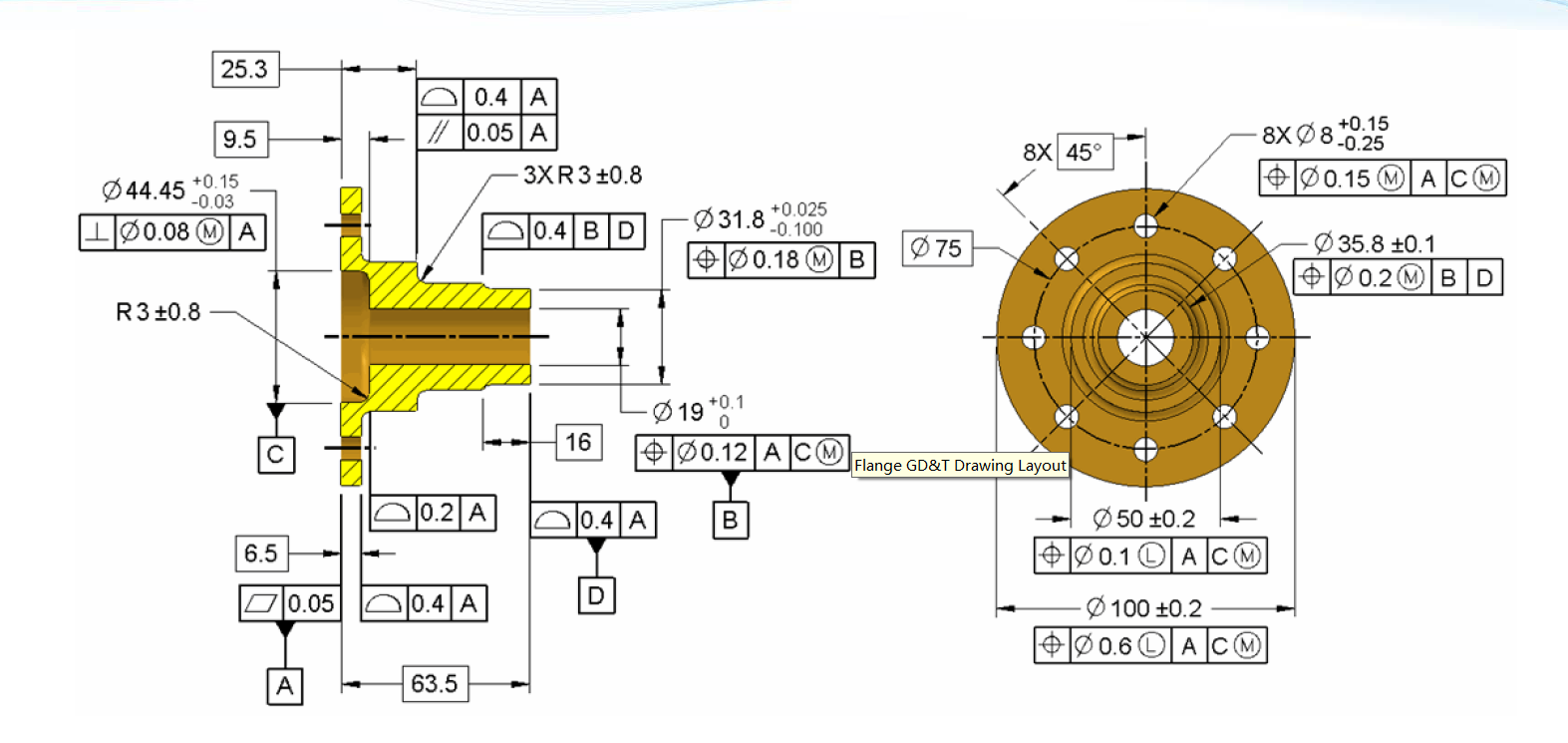
In the wave of digital manufacturing, model-based definition ( MBD ) technology is fundamentally changing the traditional product development process. By embedding product manufacturing information such as dimensional tolerances ( GD&T ), material specifications, and process requirements ( PMI ) directly into 3D CAD models, MBD it achieves seamless integration of design, manufacturing, and inspection. However, ensuring the integrity and accuracy of these critical data during cross-system and cross-platform transmission has become a core challenge in the industry. Newly released group standards and cutting-edge research provide a technical foundation for building a reliable data exchange system.
1. Standardization of Data Exchange: The Key to Breaking Information Silos
2025 The standard "T/DISA 1101 — Data Model and Exchange" (Guangdong Digital Society) released in the year 2025 MBSE was the first to systematically regulate MBD the expression and exchange mechanisms of data. This standard clearly requires:
1. Structured Data Model: Defines logical models for requirements, functions, architecture, simulation, and verification data to ensure semantic consistency (Chapters 5-9 );
2. Neutral File Format: Supports XML/JSON and other formats to package data, achieving cross-platform compatibility (Chapters 6.6、7.5 and others);
3. Traceability: Establishes bidirectional mapping links among requirements, - design, - and verification to ensure traceability of data sources (Chapter 10 Data Exchange Requirements) [1] 。
> The standard points out: " Unified system analysis and design information asset data model to achieve efficient MBSE industrial software application development and integration with platforms. [1]
This framework solves the problem of information loss caused by fragmented data formats in traditional processes, providing foundational support for digital manufacturing. PMI 信息丢失问题,为数字化制造提供了底层支撑。
2. Quality Control of 3D Models: The Core Challenge of PMI Transmission
MBD The integrity of information in models directly affects manufacturing quality. Research shows two major pain points: PMI 信息的完整性直接影响制造质量。研究表明,当前存在两大痛点:
1. Data Integrity Loss
Key information is easily lost during the lightweighting process. PMI For example, in aerospace manufacturing cases, unoptimized MBD models often suffer from data redundancy during process design, leading to a 70% decrease in browsing efficiency [2]. 70%[2]。
2. Cross-System Comparison Difficulty
STEP files, although a universal format, have complex nested levels (including 2997 various keywords), making it difficult for traditional methods to efficiently verify geometric and PMI consistency. [3] 。
Solutions (taking the model quality management system product of CAPVIDIA company as an example): MBD 模型质量管理系统产品为例):
- Intelligent Verification Tools: such as MBDVIDIA can automatically check PMI annotation compliance, integrate quality inspection result information, and generate neutral QIF format files;
- Difference Comparison Engine: COMPAREVIDIA quantifies changes between model versions through algorithms to prevent change omissions; GD&T Detection Closed-Loop Verification:
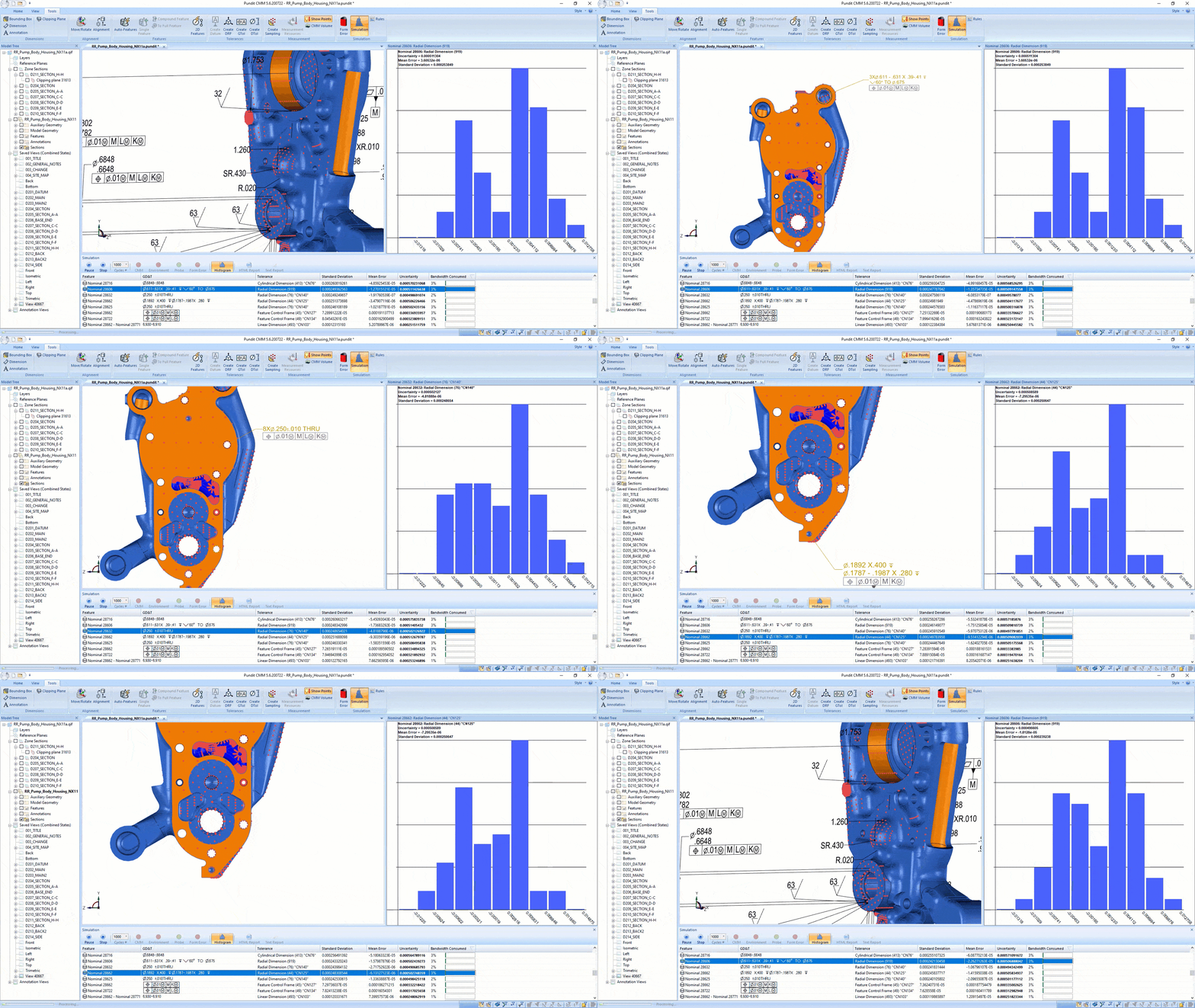
- PUNDIT software simulates CMM inspection paths to verify measurability in advance. 检测路径,提前验证 PMI 可测量性。
3. Breakthroughs in Cutting-Edge Technology: From Data Compression to Intelligent Verification
1. Lightweighting Technology Ensures Efficient Transmission
For large assembly models, adaptive Huffman lossless compression algorithms can compress data volume to 7% a fraction of the original size while retaining all PMI information. Experiments show that after lightweighting a certain aerospace component:
- The triangular mesh data compression rate reached 73%;
- and model loading speed increased by 5 times;
- Browsing fluency in process design software significantly improved. [2] 。
2. New Paradigm for Deep Parsing of STEP Files Lawrence Livermore National Laboratory proposed
Tensor ( STEP STEP Tensor ) technology, which ... STEP File converted to 2997 × 2997 Matrix structure:
- Quantify model differences through keyword connection frequency;
- Support multi-dimensional comparison such as geometry and material properties;
- Computational efficiency improved compared to traditional feature recognition methods 90%[3] 。
4. Industry Practice Path: Building a Full-Chain Quality Defense Line
Based on standards and technological breakthroughs, enterprises can build a three-layer protection system:
1. Design end
Follow — Establish logical data models, using MBDVIDIA software tools to verify PMI integrity;
2. Transmission end
Use lightweight compression technologies (such as Huffman coding) to reduce data distortion risk;
3. Manufacturing end
Through COMPAREVIDIA software tools to verify consistency between manufacturing models and design benchmarks, then use software simulates software for closed-loop feasibility evaluation and detection.
Conclusion
MBD Technology is moving from " 3D annotation " towards " a fully digital product mainline. " With the implementation of — standards and the maturity of technologies such as tensor and intelligent lightweighting, manufacturing enterprises are expected to fully connect the data chain of STEP process " design, - inspection. - In the future, model-based enterprises ( " MBE ) will no longer rely on paper documents but will drive intelligent manufacturing closed loops with high-quality, traceable, and self-verifying data streams. MBD References
[1] T/DISA 1101
Data Models and Exchange Data Model and Exchange" (Guangdong Digital Society) released in the year 2025 Guangdong Digital Society MBSE , 2025. . [2] Li Hui et al.
Research on Model Lightweight Technology for Digital Process Design Mechanical Manufacturing and Automation . , 2025, 54(1):143-145. MBD [3] Ojal N, et al. A universal method to compare parts from STEP files. Journal of Intelligent Manufacturing, 2022, 33:2167-2178. . 机械制造与自动化, 2025,54(1):143-145.
[3] Ojal N, et al. A universal method to compare parts from STEP files. Journal of Intelligent Manufacturing, 2022,33:2167-2178.
Clarify data exchange requirements and standards,PMI Inspection,MBD Technology,3D CAD Model