


Skillfully use sound source localization technology to develop efficient noise control plans
Release time:
2025-06-25 11:40
Source:
With the acceleration of urbanization and industrial development, noise pollution has become increasingly prominent, seriously affecting residents' quality of life and health. How to accurately identify noise sources and formulate scientific governance plans has become an important topic in the field of environmental protection. In recent years, the rapid development of sound source localization technology has provided efficient solutions for noise control. Through advanced acoustic imaging equipment, noise sources can be quickly pinpointed, aiding precise noise reduction.
Current Status and Challenges of Noise Pollution Control
According to data from the World Health Organization (WHO), long-term exposure to noise environments exceeding 55 decibels may lead to cardiovascular diseases, hearing loss, and psychological problems. In China, traffic noise, industrial noise, and construction noise are the main pollution sources. However, due to the complexity of noise propagation and the dispersion of noise sources, traditional monitoring methods often struggle to accurately locate sources, resulting in low governance efficiency. For example, in an industrial park with numerous pieces of equipment, noise sources are difficult to identify, and relying solely on manual inspection is time-consuming and labor-intensive; traffic noise from urban elevated bridges affects nearby residents, but traditional methods cannot accurately distinguish noise contributions from different vehicles or road sections. At this time, the application of sound source localization technology becomes particularly important.
Mainstream Sound Source Localization Equipment and Applications
Currently, there are several mature sound source localization devices on the market, widely used in industries such as manufacturing, transportation, and construction. These devices are based on microphone arrays and acoustic imaging technology, capable of capturing noise signals in real time and calculating the location of noise sources, forming visualized sound field distribution maps.
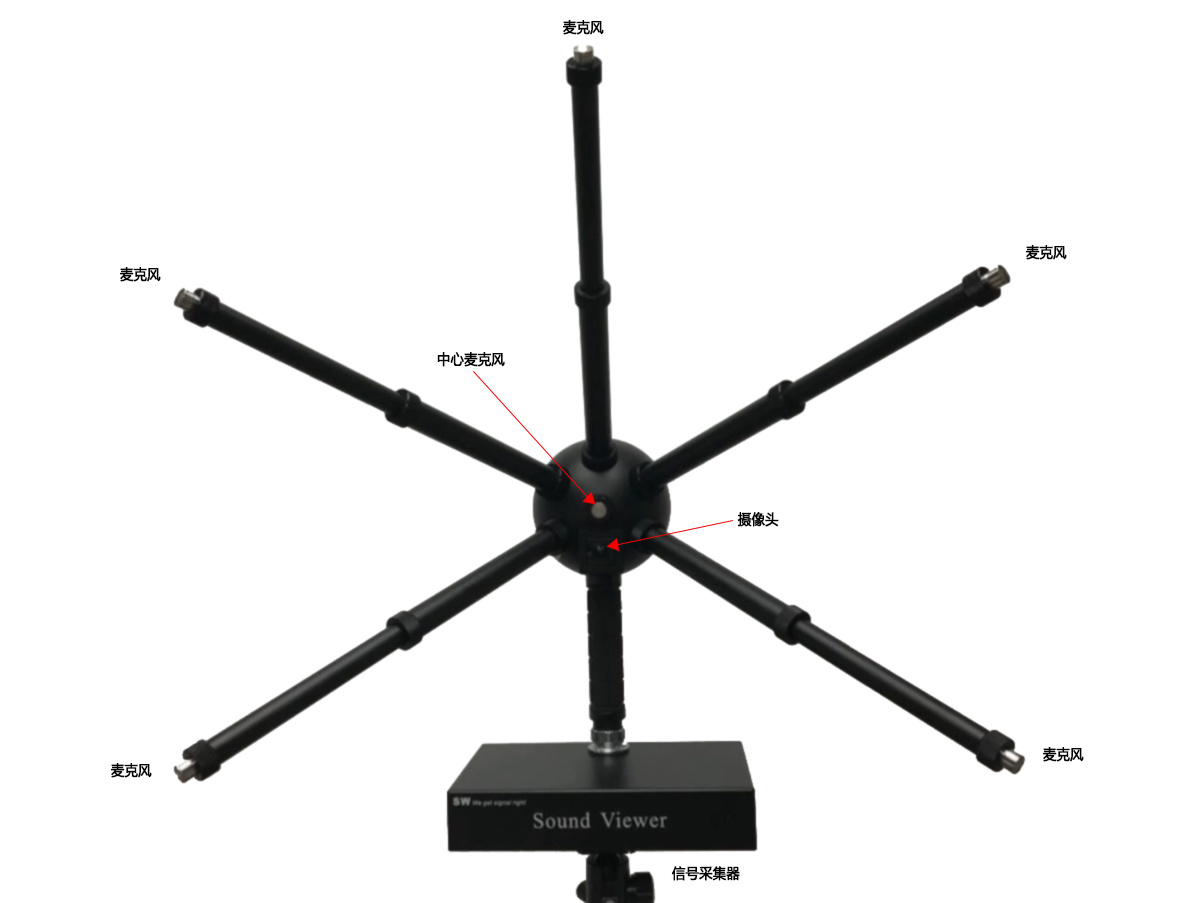
1. SoundViewer (Acoustic Camera)
SoundViewer is a comprehensive noise detection and analysis system launched by Signal-Wise in the United States. Since the development of the first generation in 2015, it has undergone several updates and finally completed version 6.0 in 2021. SoundViewer is suitable for detecting and analyzing almost all airborne sound, structural sound, and aerodynamic noise in engineering applications, as well as for sound source localization.
2. SONOCAT (Multifunctional On-site Sound Absorption Measurement Device)
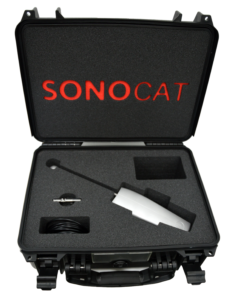
SonoCat is a set of multifunctional spherical microphone arrays (see the figure below). It consists of a spherical array made up of eight MEMS microphones for measurement. From the measurement results, it can obtain the sound volume (sound pressure level), 3D sound intensity vector, and surface material sound absorption coefficient at the measurement point. SonoCat supports two working modes: single-point measurement and scanning measurement. In single-point measurement mode, the 3D sound intensity vector at the point can be measured to locate the sound source; through scanning mode, the average sound absorption coefficient of the measured surface material can be obtained. SonoCat connects to a computer or tablet via USB cable, and with SonoCat software, noise problems can be monitored, recorded, and analyzed directly on-site.
3. Bruel & Kjaer's Acoustic Camera
The acoustic camera from Denmark's B&K company is widely used in the automotive and aerospace fields, helping engineers optimize product noise performance. For example, in automotive NVH (Noise, Vibration, and Harshness) testing, the system can accurately locate abnormal noise sources, improving noise reduction efficiency.
4. Siemens' Simcenter Sound Camera
Siemens' Simcenter Sound Camera combines a high-resolution microphone array with AI algorithms, suitable for industrial equipment condition monitoring. For example, in factories, the system can monitor noise changes in motors, gearboxes, and other equipment in real time to predict potential faults.
5. FLIR's Si124 Industrial Acoustic Imager
FLIR's Si124 is a portable acoustic imaging device mainly used for gas leak detection and electrical equipment fault diagnosis. Its advantage lies in simultaneously capturing visible light and acoustic images, facilitating rapid on-site diagnosis.
Practical Applications of Sound Source Localization Technology
1. Industrial Noise Control
In factory environments, noise generated by mechanical equipment operation is often mixed and superimposed. Through sound source localization systems, engineers can quickly identify major noise sources, such as abnormal vibrations from a fan or pump, and take targeted measures such as sound insulation, vibration reduction, or equipment replacement. For example, an automobile manufacturing plant successfully reduced workshop noise by more than 10 decibels after using an acoustic camera, significantly improving the working environment for workers.
2. Traffic Noise Analysis
Urban traffic noise control has always been a challenge, especially in areas such as elevated bridges and expressways. Sound source localization technology can distinguish noise contributions from different lanes and vehicle types, helping traffic management departments optimize the design of sound barriers or adjust traffic flow. For example, a city deployed acoustic imaging equipment along a main road and found that heavy trucks were the main noise source. Subsequently, through traffic restriction policies, nighttime noise in surrounding communities decreased by 6 decibels.
3. Construction Noise Management
Noise complaints at construction sites are frequent, but traditional monitoring can only provide decibel values and cannot identify specific noise sources. After adopting sound source localization technology, regulatory authorities can track noise distribution from equipment such as pile drivers and concrete mixers in real time, urging construction parties to adjust working hours or install soundproof covers to reduce the impact on residents.
Future Outlook: Intelligent Noise Control
With the development of artificial intelligence and big data technologies, sound source localization systems are moving towards intelligence. For example, combined with machine learning algorithms, they can predict noise change trends and automatically optimize noise reduction plans; the application of Internet of Things technology can achieve linked control of noise monitoring and governance.
Experts say that in the future, sound source localization technology will be more closely integrated with urban planning and environmental protection regulations, promoting the popularization of the "smart noise reduction" model. For example, during the planning stage of new residential areas, acoustic simulations can predict noise impacts and optimize layouts in advance.
Conclusion
Noise control is a long-term project, and sound source localization technology provides a scientific basis for precise noise reduction. Through the application of advanced equipment such as SOUNDVIEWER, SONOCAT, B&K acoustic cameras, Simcenter Sound Camera, and FLIR Si124, environmental protection departments and enterprises can efficiently identify noise sources, formulate targeted measures, and achieve a win-win situation for economic, social, and environmental benefits. In the future, with continuous technological upgrades, noise pollution control will become more intelligent and efficient, contributing to the construction of green cities.
Sound Source Localization Technology