


Exploring the Application of Tactilus® Film Sensors in Prosthetic Comfort Assessment
Release time:
2025-06-17 17:41
Source:
In recent years, with the rapid development of prosthetic technology, improving the comfort of prosthetic wear has become a research hotspot. Traditional evaluation methods rely on subjective feedback and lack objective data support, while the introduction of the Tactilus® film sensor has brought new possibilities to this field. This sensor system can accurately measure the pressure distribution at the interface between the prosthesis and the residual limb, providing a scientific basis for optimizing prosthetic design. This article will explore the application value and latest research progress of the Tactilus® film sensor in prosthetic comfort evaluation.
Challenges in Prosthetic Comfort Evaluation
Prosthetic comfort directly affects the quality of life of users, but the evaluation process faces many challenges. Traditional methods mainly rely on questionnaires and clinical observations. For example, a study published in Prosthetics and Orthotics International pointed out that more than 40% of amputees reduce daily use due to prosthetic discomfort. However, subjective feedback is easily influenced by individual differences and is difficult to quantify and analyze.
In addition, uneven pressure distribution at the residual limb-prosthesis interface may cause skin damage, pain, and even ulcers. A report from the U.S. National Institutes of Health (NIH) shows that about 30% of lower limb prosthesis users need frequent prosthesis adjustments due to pressure-related issues. Therefore, developing objective and precise pressure measurement technology is crucial.
Technical Advantages of the Tactilus® Film Sensor*
Tactilus® is a high-resolution flexible pressure sensor array that can monitor the pressure distribution of contact surfaces in real time. Its advantages include:
1. High-precision measurement: sensor density can reach 4 per cm², capable of capturing subtle pressure changes.
2. Flexible adaptation: ultra-thin design (<1mm) ensures no impact on the original structure of the prosthesis when worn.
3. Dynamic monitoring: supports real-time data collection during daily activities such as walking and sitting.
Compared with traditional single-point pressure sensors, Tactilus® can provide a more comprehensive pressure map, helping engineers identify high-pressure areas and optimize prosthetic load-bearing design.
Practical Application Cases
1. Pressure Optimization of Lower Limb Prostheses
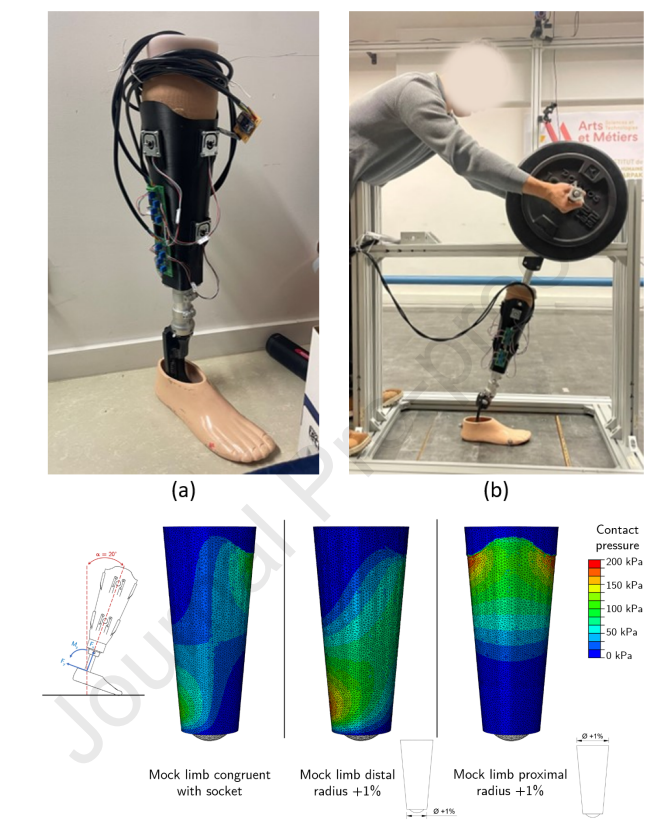
In 2022, a team from the Technical University of Munich in Germany used Tactilus® to evaluate the prosthetic fit of 10 amputees. The study found that the average pressure at the tibial tuberosity of traditional prostheses reached 200 kPa, far exceeding the safety threshold (<100 kPa). Based on sensor data, the research team adjusted the padding material, reducing peak pressure by 35% and significantly improving comfort.
2. Contact Stress Analysis of Upper Limb Prostheses
A study at the Rehabilitation Institute of Chicago in the United States used Tactilus® to monitor the grip pressure of myoelectric prosthetic hands. Data showed that pressure concentration in the fingertip area could cause skin wear in long-term users. By optimizing the thickness distribution of silicone liners, pressure unevenness was reduced by 28%.
Future Prospects
Although Tactilus® shows great potential in prosthetic evaluation, challenges remain, such as durability testing for long-term wear and large-scale clinical validation. In the future, combining artificial intelligence (AI) for automatic pressure data analysis may become a trend. For example, machine learning algorithms can predict the optimal pressure distribution under different activities to achieve personalized prosthetic customization.
Conclusion
The Tactilus® array sensor provides an objective and precise solution for prosthetic comfort evaluation, helping to improve the quality of life for amputees. With further technological optimization, this sensor is expected to become a standard tool for prosthetic research and clinical fitting, promoting rehabilitation engineering to a higher level.
Tactilus® Series Sensors,Surface Pressure Dynamic Measurement