


How much do you know about rehabilitation medicine assessment and intervention based on sports biomechanics?
Release time:
2025-06-12 10:55
Source:
Introduction
Three-dimensional gait analysis systems are quietly transforming rehabilitation medicine, as scientists uncover the deep secrets of human movement through these technologies.
In the sports medicine laboratory at Peking University Third Hospital, a patient two years post anterior cruciate ligament reconstruction is walking in a gait analysis area equipped with infrared cameras. These cameras work in coordination with force plates hidden beneath the floor, capturing subtle changes in each step of the patient.
Researchers, observing the streaming data on the screen, discovered a key phenomenon: although the knee joint mechanics of the patient have largely returned to symmetry, abnormal mechanical characteristics remain in the hip and ankle joints.
This finding breaks the traditional "knee joint-centered" rehabilitation concept, revealing the impact of cross-joint compensation mechanisms on the lower limb mechanical chain, providing critical biomechanical evidence for optimizing long-term postoperative rehabilitation management.
01 The Technological Revolution in Rehabilitation Medicine
Sports biomechanics analysis is reshaping modern rehabilitation medicine. This discipline originated from the treatment and rehabilitation of injuries in professional athletes, with Beijing Sport University establishing the first sports rehabilitation program in China in 2004.
Today, it has expanded from the professional sports field to public health management.
In the field of bone and joint injury rehabilitation, mechanical stimulation (i.e., exercise rehabilitation) has been proven to be the most important regulatory factor for bone-tendon interface injuries. Professor Hongbin Lv's team at Xiangya Hospital, Central South University, found that the gradient transition structure of the bone-tendon interface is difficult to regenerate after injury.
Different forms of mechanical stimulation have varying effects on its recovery. These findings have contributed to the preliminary formation of exercise rehabilitation treatment standards for bone-tendon interface injuries.
With technological advances, biomechanical assessment tools such as three-dimensional gait analysis have become core instruments in modern rehabilitation medicine. By precisely quantifying gait parameters, joint angles, and moments, clinicians can develop personalized rehabilitation plans to maximize the restoration of patients' motor functions.
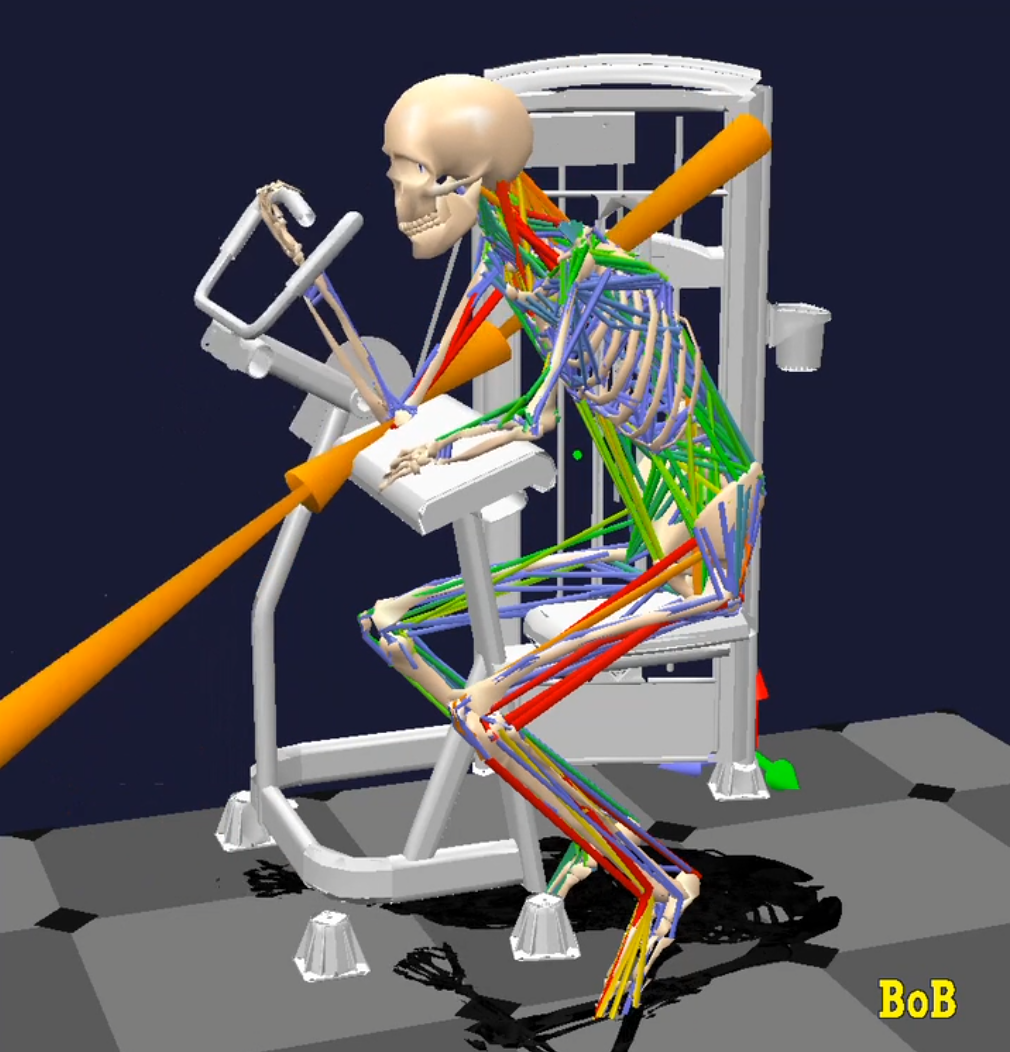
02 Core Technology: The Synergistic Application of BOB and BTS
Beijing Qiaoze Technology Co., Ltd., as a key domestic supplier of biomechanical technology and equipment, has introduced advanced tools such as the BOB human biomechanics analysis software and the BTS optical motion capture system, promoting the precise development of rehabilitation medicine research in China.
The BOB software, developed on the MATLAB platform and recognized by the MathWorks Connections program, excels in handling multi-source data: it can easily import motion capture data in formats like C3D and BVH, as well as inertial measurement data from Delsys HPF and Xsens MVNx. The software offers extensive analysis functions, including calculations of joint angles, joint range of motion, joint torque, ground reaction forces, and joint contact forces. For researchers, BOB has a short learning curve and is supported by a large online video library, enabling users to master operational skills with ease.
The BTS system constructs a complete biomechanical data acquisition environment. It consists of multiple components: the SMART-DX EVO infrared optical motion capture system offers high resolution and accuracy, maintaining stable operation even under strong outdoor light. The P-6000 three-dimensional force plate records the three components of ground reaction forces and the center of pressure coordinates. Notably, the FreeEMG300 wireless surface electromyography system, with electrodes weighing only 7.5 grams, eliminates traditional cable constraints, allowing patients to perform motion capture naturally. All devices synchronize signals through the SMARTAnalyzer software, generating comprehensive reports containing kinematic and kinetic data.
03 Clinical Applications and Breakthrough Discoveries
At the forefront of research, these technologies are bringing revolutionary insights to rehabilitation medicine. Professor Yingfang Ao's team at Peking University Third Hospital used multibody dynamics modeling technology to systematically elucidate the three-dimensional spatial dynamic characteristics of patients two or more years after anterior cruciate ligament reconstruction for the first time.
The study found no significant bilateral differences in knee flexion-extension moments two years post-surgery, but abnormal forces in the anterior-posterior direction and rotational moments persisted in the hip and ankle joints.
This breakthrough has prompted a shift in rehabilitation concepts: the research team recommends extending the ACLR rehabilitation period to more than two years post-surgery and establishing a multidimensional intervention program that includes hip strength training and ankle motor control training.
In the field of bone tumor rehabilitation, a team from the University of California, Los Angeles applied three-dimensional gait analysis to evaluate the effects of proximal femoral tumor resection combined with abductor muscle-tendon tension reconstruction. Results showed that although patients' hip and knee kinematic parameters changed, key indicators such as walking speed and stride length did not differ significantly from healthy controls, and patients could walk independently without assistive devices. Additionally, SF-36 quality of life assessments indicated that patients scored above the US norm in physical function and bodily pain dimensions, providing important information for preoperative counseling.
04 New Guardians of Public Health
The application of sports biomechanics analysis has expanded from major injury rehabilitation to the correction of common postural problems. For the widespread issue of kyphosis, sports rehabilitation offers effective solutions based on biomechanical principles. Since kyphosis originates from changes in spinal physiological curvature, traditional verbal reminders to "straighten the back" have limited effect and may even cause lumbar compensation, leading to increased lumbar curvature and rib flaring as secondary problems. Professional intervention programs include: using foam rollers to release back soft tissues and restore spinal flexibility; performing cat stretches, thoracic rotation, and other stretching exercises; combined with breathing to train deep muscle strength. Each exercise typically involves 15 or more repetitions per set, completing 3-5 sets, followed by targeted relaxation.
With the nation's increasing emphasis on the physical fitness of primary and secondary school students, the popularization of sports rehabilitation knowledge in public health management is becoming increasingly important. Experts recommend: thorough warm-up before exercise, maintaining correct posture; choosing sports suitable for age and physical condition; and training under professional guidance.
05 Future Directions and Challenges
Despite significant progress in sports biomechanics within rehabilitation medicine, many challenges remain. Professor Hongbin Lv points out that although research on mechanical and neural regulation of bone-tendon interface injury repair has achieved certain results, deeper mechanisms remain to be explored.
Recent studies have discovered a special mechanically responsive stem cell in the bone-tendon interface, providing new directions for future research. The team plans to use these cells as a breakthrough to explore the most beneficial mechanical stimulation schemes for bone-tendon interface regeneration.
Simultaneously, they are studying the communication mechanisms between the brain and the peripheral bone-tendon interface.
From a technical perspective, multimodal data fusion will become a development trend. Integrating and analyzing multi-source information such as motion capture, electromyography signals, and medical imaging can build more accurate personalized digital models, enabling precise customization of rehabilitation plans.
With companies like Beijing Qiaoze Technology continuously introducing advanced technologies, rehabilitation medicine in China is entering a new era of **quantitative assessment and precise intervention**. From professional athletes to the general public, from major injury rehabilitation to common posture correction, sports biomechanics analysis is bringing more scientific and efficient rehabilitation solutions to various populations. Researchers are turning their attention to more microscopic fields. The team at Xiangya Hospital of Central South University recently discovered a special type of stem cell at the bone-tendon interface—these cells respond to different mechanical stimuli, providing new directions for exploring optimal rehabilitation plans. Meanwhile, research from the University of California, Los Angeles, has challenged traditional understanding: patients undergoing proximal femoral tumor resection with innovative surgical techniques showed no significant differences in gait parameters compared to healthy controls and could walk independently without assistive devices.
With the popularization of technologies such as BOB analysis software and BTS capture systems, rehabilitation medicine is undergoing a silent revolution. Three-dimensional gait laboratories are no longer exclusive to top hospitals, and quantitative biomechanical indicators are gradually becoming the standard basis for formulating rehabilitation plans. From professional athletes to the general public, a new era of precise rehabilitation has arrived.
Optimize rehabilitation treatment plan,BOB Human Biomechanics Analysis Software,Motion Capture System