


So this is how surface pressure measurement is done during tire performance testing!
Release time:
2025-06-11 10:59
Source:
SPI electronic skin unveils the secret of tire ground contact, precise pressure measurement reshapes new safety standards
At the moment when the black rubber tread contacts the cold road surface, thousands of invisible pressure points are writing the fate of vehicle safety and performance.
At the test site, a test vehicle equipped with special tires slowly passes by. The screen in front of the engineer displays a colorful real-time pressure distribution map — the pressure changes of every square centimeter of tire-ground contact are presented with precise values. This SPI-Tactilus surface pressure measurement system, known as "electronic skin," is changing the traditional mode of tire performance testing.
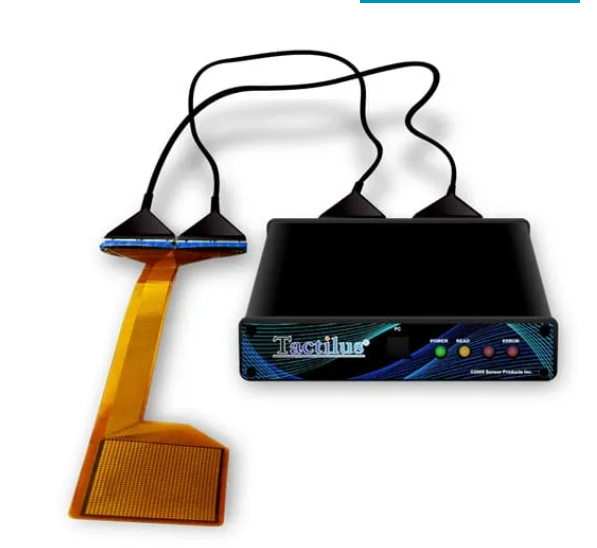
"Previously, we relied on experience to guess the ground contact characteristics, now we can quantify them precisely." A tire test engineer pointed to the dense sensor array on the screen spaced every 2mm, saying, "The pressure distribution in the tire-ground contact area is a key factor determining vehicle braking, handling, and wear, but it has long been difficult to measure accurately.
01 The invisible threat of tire pressure
In the field of vehicle safety, a startling statistic has been repeatedly verified: 70% of tire blowout accidents are related to incorrect tire pressure. The safety risks caused by abnormal tire pressure far exceed ordinary drivers' awareness — when tire pressure falls below the standard by 1.5 BAR, braking distance significantly increases; and if a single tire loses air, the vehicle will noticeably pull to one side after just 15 meters.
Traditional detection methods have obvious limitations. A professional test revealed that when tire pressure is between 2.0-3.0 BAR, even forcefully kicking the tire, testers "do not feel any abnormality in the tire at all."
Even original factory tire pressure monitoring systems mostly use cost-driven "indirect" methods, judging tire pressure abnormalities only through wheel speed differences, unable to provide precise tire pressure values.
Damage caused by abnormal tire pressure is gradual and hidden. When tire pressure is too low, the tire sidewall deforms more severely, and long-term use is like repeatedly "kneading dough," causing premature aging and cracking of the sidewall; when tire pressure is too high, it causes abnormal wear in the center of the tread, shortening service life.
"People pay attention to tread depth but neglect the importance of pressure distribution," a safety expert pointed out, "Uneven ground contact pressure can increase braking distance by several meters, which often determines whether an accident can be avoided."
02 Principle of electronic skin technology
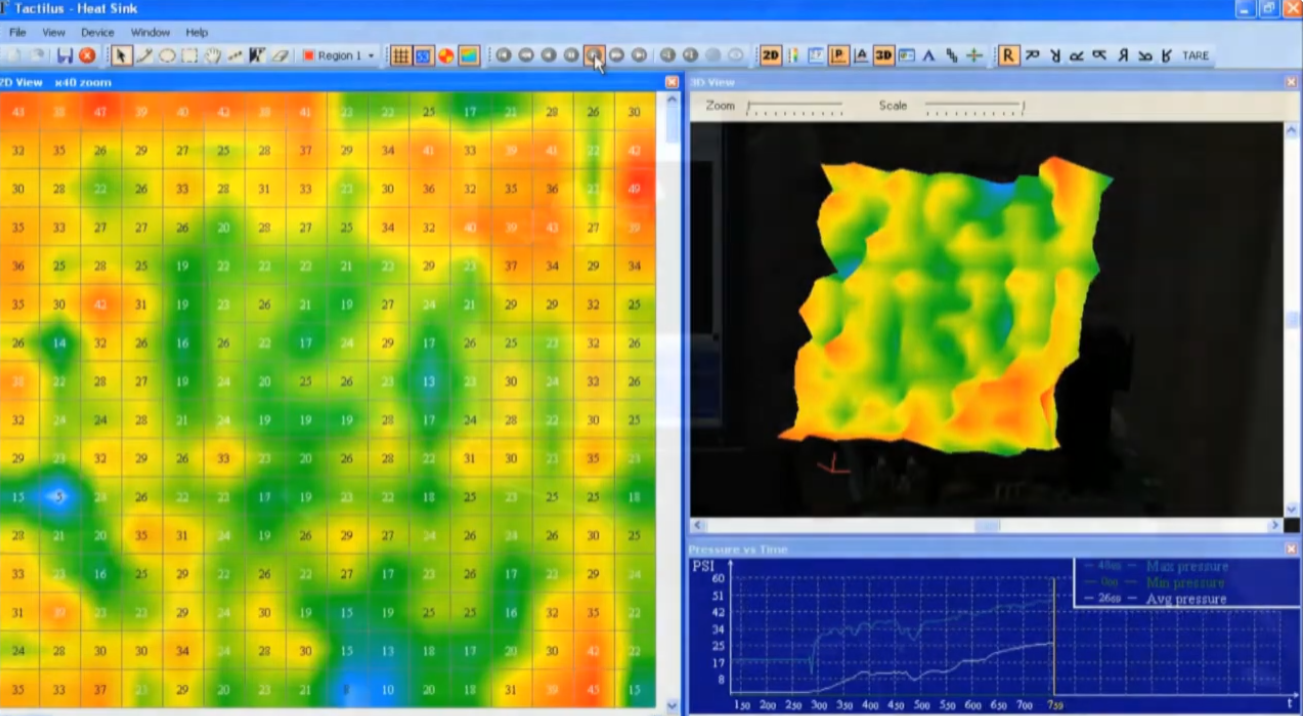
The core of the SPI-Tactilus system is a pressure-sensitive pad thinner than paper, with a pressure sensor every 2mm on its surface, forming a matrix network of up to 16,384 independent sensing points. When this "electronic skin" is placed between the tire and the ground, it can capture microscopic pressure changes at the contact interface in real time.
Measurement accuracy is not affected by electromagnetic interference, temperature, or humidity changes. The system communication speed reaches up to 1000 frames per second, sufficient to accurately record dynamic pressure changes during vehicle driving.
The accompanying Windows analysis software converts massive data into intuitive images: a gradient color spectrum from blue, green, yellow to red displays the pressure distribution from minimum to maximum in real time, with data streams accurate to four decimal places output synchronously.
"It's like installing a microscope on the test platform," a developer using the system described, "We can clearly see pressure concentration at the edges of tread blocks, which previously could only be inferred theoretically."
03 Pressure mapping changes tire testing
At the R&D centers of leading tire manufacturers, SPI-Tactilus has become a standard tool for evaluating new tire performance. During testing, engineers fix special strip-shaped pressure pads on the road surface, and the vehicle drives over at different speeds, with the system generating a complete ground contact pressure map.
Real test data revealed key findings: at standard tire pressure (front tires 2.3 BAR), the tire tread fully contacts the ground with uniform pressure distribution; when tire pressure drops below 1.5 BAR, pressure values in the shoulder area rise sharply, about 35% higher than standard, explaining why insufficient tire pressure accelerates shoulder wear.
More detailed analysis can capture phenomena undetectable by traditional methods. For example, under cornering conditions, pressure peaks at the outer tread sensor points can be 2.8 times higher than the inner side; after slight tread block design adjustments, pressure distribution uniformity improved by 40%, corresponding to a 2.1-meter reduction in actual vehicle braking distance.
"Every color change point guides design improvements," the tire development manager showed a set of comparison images, "Optimized pressure distribution improved wet braking performance by 15%, directly relating to safety margins in emergencies."
04 Cross-industry applications drive technological innovation
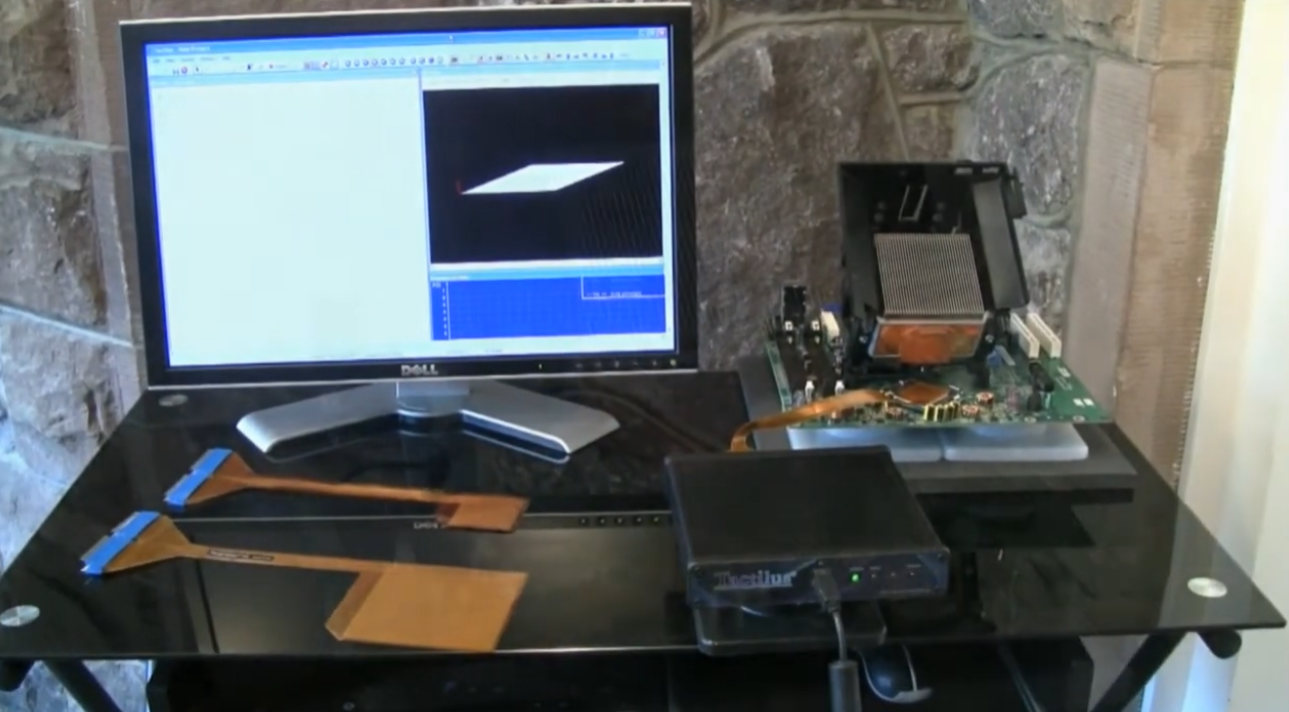
Surface pressure measurement technology's value far exceeds tire testing. In automotive manufacturing, the same SPI-Tactilus system is used to optimize door seal pressure distribution to ensure waterproof and dustproof performance; improve seat design for reasonable pressure distribution during sitting; and even adjust seatbelt locking force to enhance comfort while ensuring safety.
Applications in the medical field are equally remarkable. Dentists use miniature pressure pads to measure patients' bite force distribution, providing a basis for precise restoration; rehabilitation institutions use larger pressure pads to analyze wheelchair users' contact with cushions to prevent pressure ulcers.
Food industry research reveals the value of microscopic pressure control. A team from Northeast Agricultural University found that adding 0.15% winter wheat ice-structuring protein reduced the surface roughness of soy protein isolate gels from 8.99nm to 5.20nm, significantly improving the texture of frozen foods. This discovery offers new ideas for material surface treatment.
05 The future path of precise measurement
With the development of autonomous driving technology, data on tire-road interaction becomes more critical. The high torque output unique to electric vehicles presents new characteristics in tire pressure distribution, requiring more precise testing methods.
SPI's latest Nano-Polymer Core series sensors use a nanomaterial core, achieving new heights in resolution; the Ultra High Density Spatial Resolution solution meets the extreme precision requirements of R&D scenarios.
Technology adoption faces cost challenges. Currently, a complete tire pressure distribution testing system still costs tens of thousands of dollars but is gradually decreasing with advances in electronic technology. Domestic manufacturers have begun offering similar solutions, such as the adaptation scheme launched by Beijing Qiaoze Technology.
"From experience-based judgment to data-driven decisions is an inevitable technological advancement," an expert from the Society of Automotive Engineers summarized, "When we can 'see' the precise pressure distribution, we open a new dimension for optimizing product performance. Safety begins with precise control of every square millimeter."
Global competition in tire technology is shifting towards the microscopic level. Engineers at Germany's Continental Group optimize winter tire tread block design using pressure distribution cloud maps, improving ice braking performance by 11%; Japan's Bridgestone improves pressure transmission efficiency by adjusting the tread rubber compound, successfully reducing rolling resistance by 8%.
With continuous improvements in sensor accuracy, future tire pressure mapping will extend to extreme conditions—from icy roads at minus 40°C to desert environments at 70°C. The massive data collected is training AI models to predict tire performance degradation curves at different wear stages, providing more precise warnings for safe driving.
Note: The above data partly comes from online sources. If there are any discrepancies, please contact us for timely corrections. Thank you!
Tire Performance Testing,Surface Pressure Measurement