


The Key Application of Noise Maps in Creating Quiet Community Projects
Release time:
2025-06-10 09:54
Source:
Introduction: The Trouble of Noise
In the fast-paced urban life, noise is ever-present, becoming an unavoidable nuisance in our daily lives. From car horns to the roar of construction sites, noise not only affects our mood but also poses health risks. To improve living environments, more and more communities are beginning to introduce Noise Maps this tool.
What is a Noise Map?
A noise map is a tool that visualizes noise distribution. Through data analysis and Geographic Information Systems (GIS), it provides residents with a comprehensive view of noise pollution. These maps usually use color coding to display noise levels in different areas, making it easy to understand at a glance.
Advantages of Noise Maps
- Intuitiveness: Simple and easy to understand through color changes.
- Data Support: Based on real noise monitoring data, highly reliable.
- Decision Basis: Provides effective governance references for governments and communities.
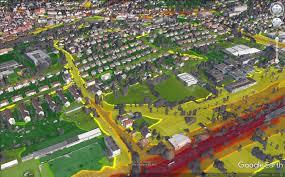
How to Use Noise Maps to Build Quiet Communities?
So, how exactly can we use Noise Maps to create quiet communities? We can start from the following aspects:
1. Assess the Current Situation
First, obtain the current noise map of the community and its surroundings to evaluate noise sources and their impact on residents. This step is fundamental; only by understanding the current situation can targeted improvement measures be formulated.
2. Develop Management Measures
Using the noise map to identify areas with high noise levels, community managers can formulate targeted management measures. For example, restricting construction times and setting noise emission standards.
3. Encourage Green Spaces
Green spaces and vegetation within the community can effectively absorb noise. Therefore, using Noise Maps analysis results, increase green areas by planting trees and shrubs to create a quiet natural environment.
4. Strengthen Resident Participation
Utilize noise maps to carry out activities involving residents, encouraging everyone to pay attention to noise issues. Through community meetings, promotional materials, and other methods, raise residents' environmental awareness and enhance community cohesion.
Case Sharing: Successful Experience of a Community
In a certain city's community, by introducing Noise Maps the living environment was successfully improved. Community managers first collected noise monitoring data and formulated a detailed noise control plan. Then, by increasing green spaces, restricting high-noise activities, and conducting resident outreach, they ultimately achieved noise reduction, with residents expressing satisfaction.
Conclusion: Action is Key
Noise maps provide us with a scientific and efficient tool to combat noise pollution. However, maps alone are not enough; the key lies in action. Let us work together, using Noise Maps to build quieter and more comfortable community environments!
Noise Map,Tranquil Community,Noise Simulation Prediction