


DIC Strain Measurement Technology in Diverse Applications of Structural Health Monitoring
Release time:
2025-05-27 13:39
Source:
Introduction: The Importance of Structural Health Monitoring
In the field of modern construction and engineering, Structural Health Monitoring (Structural Health Monitoring, SHM) has become increasingly important. It not only enhances the safety of structures but also extends their service life. Especially in critical areas such as bridges, buildings, and aviation, precise monitoring technology is indispensable. Among various monitoring technologies, Digital Image Correlation (DIC) strain measurement technology is favored for its efficiency and accuracy.
Overview of DIC Technology
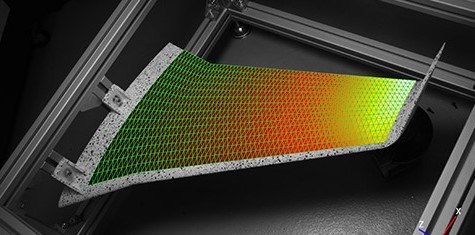
DIC is a non-contact strain measurement technology that uses digital image processing to analyze the deformation of an object's surface. By capturing images of the object before and after loading, DIC can accurately calculate surface displacement and strain. This technology not only avoids measurement errors that may occur in traditional methods but also enables real-time monitoring; with technological updates, there are now new DIC strain measurement systems based on mesh models, such as EikoTwin DIC Strain Measurement System 。
Application of DIC in Bridge Monitoring
As an important transportation facility, the safety of bridges cannot be ignored. By applying Structural Health Monitoring technology, especially DIC, engineers can obtain strain data of bridges in a timely manner. For example, during regular bridge inspections, DIC can help monitor deck deformation caused by traffic loads or weather changes, ensuring the safe use of the bridge. Imagine being able to detect potential risks before problems occur — it's truly amazing!
Health Monitoring of Buildings
Modern buildings are becoming increasingly complex, and even minor structural changes can lead to serious consequences. At this time, DIC strain measurement technology is particularly important. By deploying DIC equipment at key parts of buildings to monitor strain status in real time, potential hazards can be effectively warned against. For example, during the construction of high-rise buildings, DIC can monitor the stress conditions of the structure to ensure construction safety.
Applications in the Aviation Field
In aviation, the safety and reliability of aircraft structures are directly related to flight safety. DIC strain measurement technology is widely used in the structural health monitoring of aircraft. By monitoring key components such as wings and fuselage, technicians can obtain real-time strain and deformation data, promptly identify hidden dangers, and ensure flight safety. It can be said that the contribution of DIC technology in the aviation field is significant!
Future Development Directions
With continuous technological advancement, the application of DIC strain measurement technology in Structural Health Monitoring will become increasingly widespread. In the future, combined with artificial intelligence and big data analysis, DIC technology is expected to achieve more efficient real-time monitoring and early warning systems, safeguarding safety across various fields.
Conclusion
Overall, DIC strain measurement technology has demonstrated its unique advantages in Structural Health Monitoring , covering multiple fields such as bridges, buildings, and aviation. With ongoing technological development, we have reason to believe that DIC technology will play a greater role in the future, helping to build a safe and reliable engineering environment.
Structural Health Monitoring