


The Wise Choice of Non-Contact Strain Measurement Systems
Release time:
2025-04-24 00:52
Source:
Introduction
In modern engineering and scientific research, non-contact strain measurement systems have gradually become a trend due to their unique advantages. How to choose the right non-contact strain measurement system? This is not just a technical issue but also an important reflection of scientific decision-making. Let's explore this topic together and use comparisons between simulation results and experimental data to help you make an informed choice.
Advantages of Non-Contact Strain Measurement Systems
First, non-contact strain measurement systems can perform high-precision strain measurements without touching the object being measured. Imagine not having to worry about the sensor affecting the object; the measurement results will naturally be more authentic and reliable!
Market Options
There are various non-contact strain measurement systems available on the market, such as laser interferometers, optical measurement systems, and digital image correlation (DIC) technology. Each system has its unique features and applicable scenarios. When choosing, we need to consider the following key factors:
- Measurement Accuracy: Different systems vary greatly in measurement accuracy, so choose according to actual needs.
- Applicability: Consider whether the system can adapt to the materials and environments you need to measure.
- Cost-effectiveness: When the budget is limited, cost performance becomes especially important.
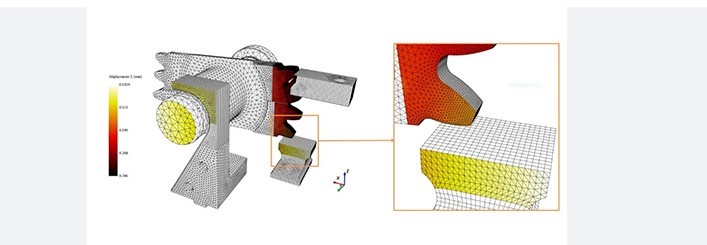
The Importance of Comparing Simulation Results with Experimental Data
Comparing structural simulation with experimental strain data is a core step to ensure the accuracy of numerical models. Systematic comparison can identify simulation assumption defects (such as material constitutive deviations or boundary condition inaccuracies) and correct model parameters to improve prediction accuracy. This process effectively verifies key performance indicators like structural strength and fatigue life, reduces physical testing costs by over 50%, and supports safety certifications in industries such as aerospace and automotive (e.g., FAA/ISO). Experimental data can also reveal nonlinear effects in actual working conditions (such as contact friction or residual stress), filling the blind spots of pure simulation, avoiding over-design or failure risks caused by model simplifications, and providing dual assurance for product reliability.
How to Perform Comparative Verification?
The comparative verification process can be divided into several steps:
- Choose Suitable Simulation Software: There are many simulation software options available on the market; ensure you select a powerful tool that fits your needs.
- Build the Simulation Model: Create an accurate simulation model based on the characteristics of the object being measured.
- Conduct Actual Experiments: Use the selected non-contact strain measurement system, such as the EikoTwin DIC non-contact strain measurement system, to perform experiments and record data.
- Data Analysis: Compare simulation results with experimental data and analyze their consistency and differences. (This can be directly done in the EikoTwin DIC software.)
Summary and Suggestions
In summary, choosing the right non-contact strain measurement system is not a simple task. Through comparison of simulation results and experimental data, you can more clearly see the advantages and disadvantages of each system and make more scientific decisions. Remember, the most suitable is the best; don't be dazzled by flashy features! Hopefully, during your selection process, you will find the measurement system that best fits your needs and supports your scientific research journey!
Comparison and validation of simulation results with experimental data,EikoTwin DIC,Non-contact strain measurement,Full-field strain measurement