


Discussion on the Application of PMI Annotation Inspection in MBDVidia and QIF Standards
Release time:
2025-04-01 00:58
Source:
Introduction
In modern manufacturing, efficient collaboration between design and manufacturing processes is crucial. With technological advancements, PMI annotation inspection has gradually become a hot topic. Especially in tools like MBDVidia, CompareVidia, and related CAD system MBD plugins, how PMI annotation inspection integrates with the QIF standard has become a focus of industry attention.
What is PMI Annotation Inspection?
PMI (Product Manufacturing Information) annotation inspection, simply put, is the review of manufacturing information on product design drawings. This information includes important data such as dimensions, surface treatments, and materials. Through PMI annotation inspection, designers and engineers can communicate more clearly, thereby improving production efficiency and reducing errors.
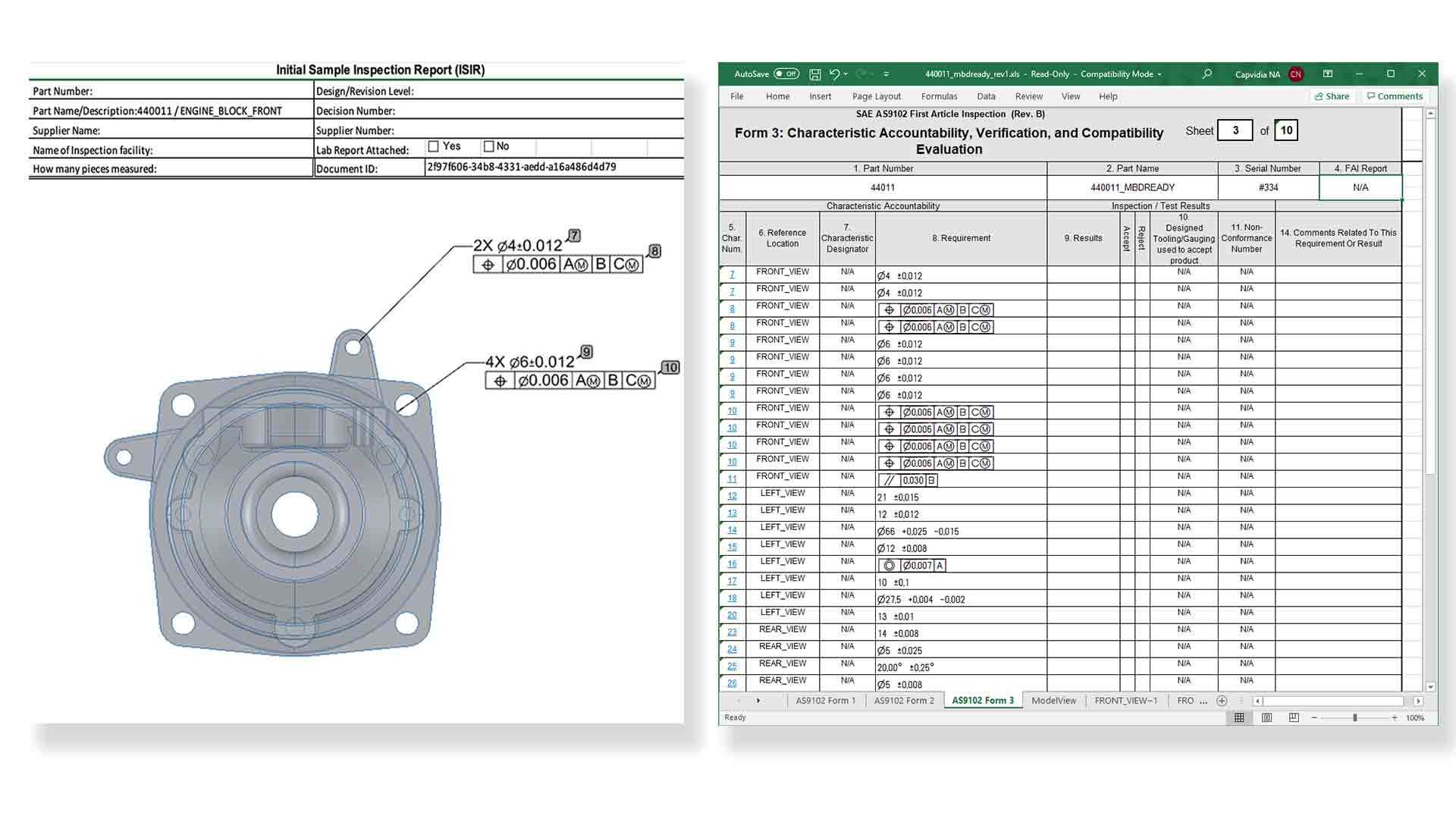
The Relationship Between MBDVidia and QIF
MBDVidia, as a powerful 3D modeling quality management tool, can effectively generate .qif format models with PMI annotations. Its integration with the QIF (Quality Information Framework) standard makes it possible to embed quality information within the model. As a result, companies can quickly obtain quality-related data during PMI annotation inspection, greatly enhancing inspection efficiency. At the same time, MBDVidia can view MBD models exported from almost all mainstream CAD systems and integrate QIF standard-required information into 3D CAD models, making the model information more complete and better suited for automated manufacturing processes.
Advantages of CompareVidia
CompareVidia is also an indispensable tool. It excels at comparing design files exported from different versions and different CAD systems, helping users identify potential design changes. This is closely related to PMI annotation inspection because ensuring the accuracy of annotations during changes is crucial. CompareVidia can reduce errors in manual operations through automatic annotation inspection, improving overall work efficiency.
The Importance of the QIF Standard
The QIF standard provides a unified framework for product quality management. In PMI annotation inspection, adhering to the QIF standard not only improves data interoperability but also ensures information integrity. Through standardized processes, companies can better manage the information flow between design and manufacturing, achieving higher production efficiency.
Summary
In today's manufacturing environment, PMI annotation inspection has become an important means to improve production efficiency and product quality. The use of tools such as MBDVidia, CompareVidia, and related CAD system MBD plugins makes the PMI annotation inspection process more efficient and accurate. The introduction of the QIF standard provides strong support for this process. In the future, we look forward to seeing more companies fully utilize these tools and standards to achieve intelligent and automated production.
PMI Annotation Check