
Signal-Wise Noise Diagnosis and Analysis System - SoundViewier
The Vision Sound Instrument is a comprehensive noise detection and analysis system launched by the American company Signal-Wise. The first generation was developed in 2015, and after several updates, the 6.0 version system was finally completed in 2021. The Vision Sound Instrument is suitable for detecting and analyzing almost all air sound, structural sound, and aerodynamic noise in engineering applications, as well as sound source localization.
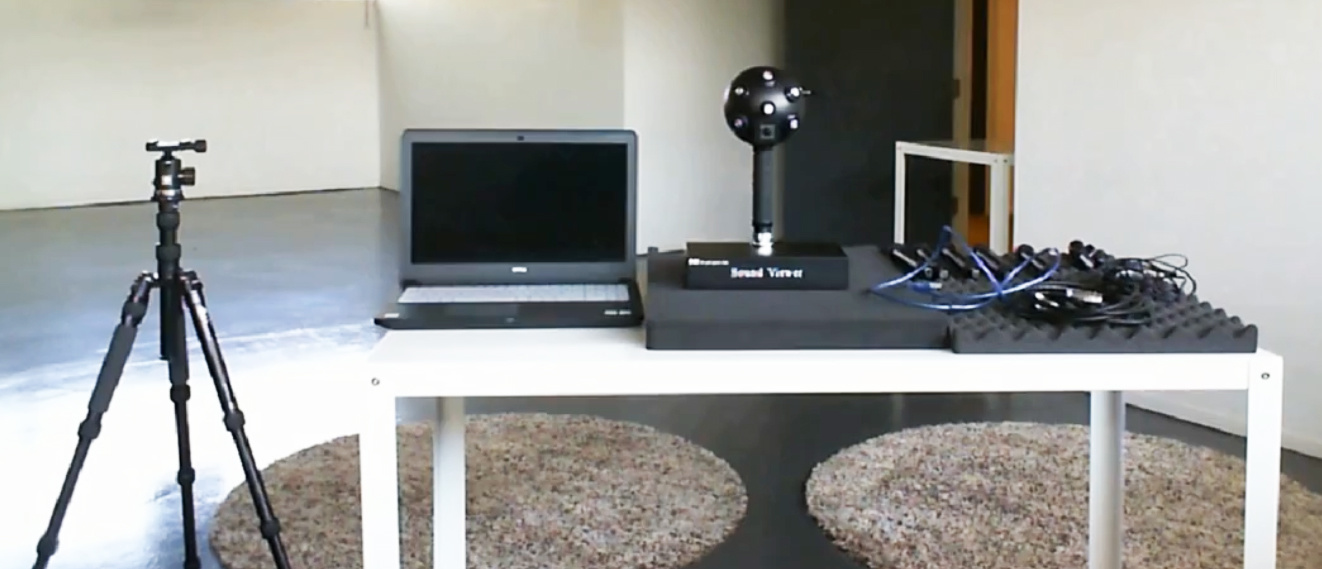
Hardware Composition
The hardware of the Vision Sound Instrument mainly consists of a 3D microphone array with microphone tubes and an eight-channel data acquisition unit. By using the 3D array, users will be able to accurately locate multiple sound sources in 3D space simultaneously, including their ranges. The use of extendable microphone tubes allows the system to handle various noise issues, especially in situations where the measurement space is relatively limited, such as inside a car passenger cabin.
Six channels are designated for microphone measurements. The remaining two channels are used for reference signals, such as tachometer readings during order tracking analysis on any rotating axis, or input power signals during STL (Sound Transmission Loss) analysis.
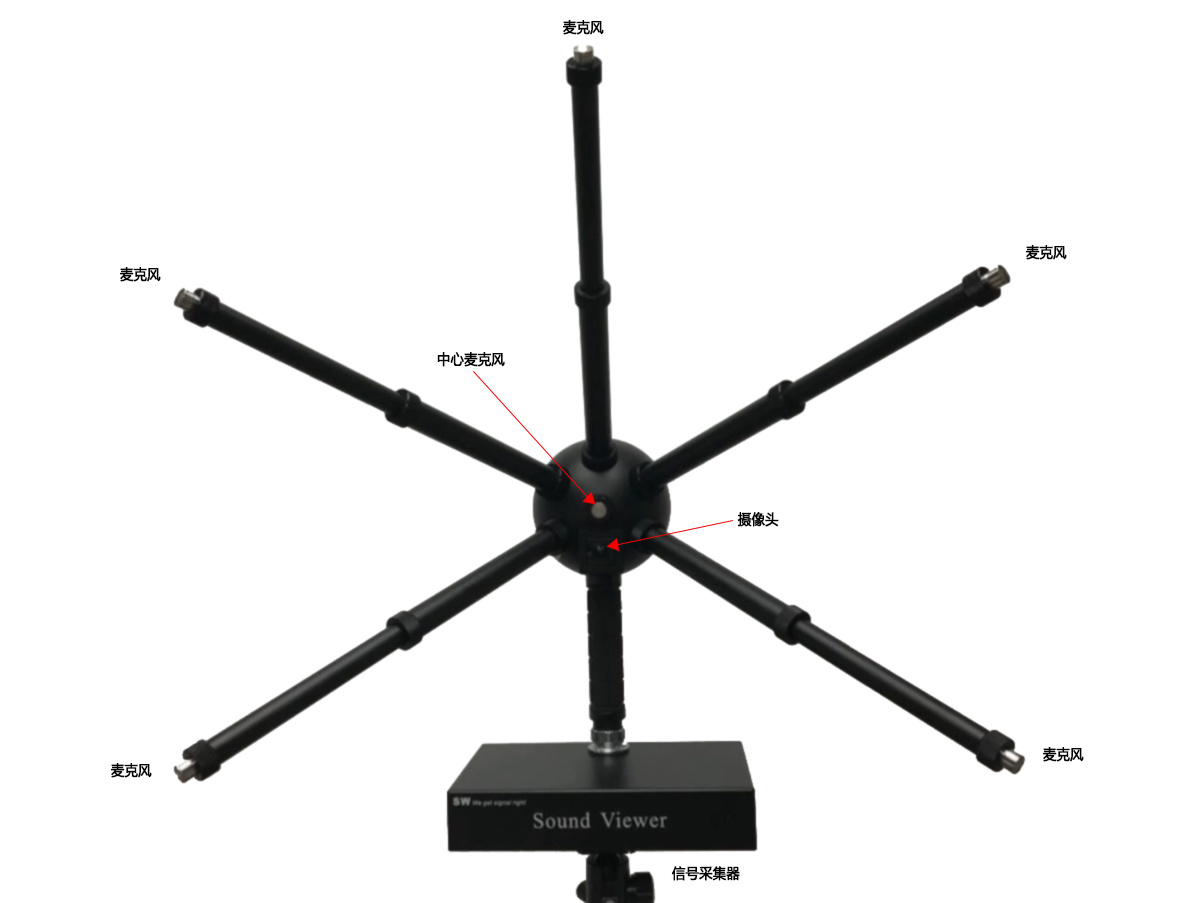
Basic Principles
The Vision Sound Instrument is a disruptive product based on intelligent sound arrival theory and the least squares method of the Helmholtz equation. In simple terms, intelligent sound arrival theory uses intelligent statistical optimization triangulation principles to determine the position of any sound source in three-dimensional space; the least squares method of the Helmholtz equation reconstructs the optimal sound field distribution based on input sound signals. The combination of the two forms rake noise control technology, enabling the Vision Sound Instrument to allow users to detect and analyze any complex noise sources and their generated three-dimensional sound fields.
Product Features
Before the Vision Sound Instrument, common noise detection and analysis tools in the market could only provide a certain physical quantity at a measurement point, such as the sound pressure level given by a microphone or the sound intensity level given by a sound intensity meter. These traditional measurement methods could not provide a global concept, especially failing to obtain all acoustic physical quantities on any structural surface. At the same time, traditional measurement methods could only determine the azimuth angle of the sound source, without being able to determine the longitudinal distance to the sound source.
In addition to being able to simultaneously determine the positions of multiple sound sources in three-dimensional space, namely the azimuth angle and longitudinal distance, the Vision Sound Instrument can also provide the distribution of all acoustic physical quantities on any shaped structural surface and within three-dimensional space, analyze the sound transmission of any materials and structures, or plates, and analyze the sound radiation of transmission components during changes in rotational speed. The frequency band and dynamic range detected, analyzed, and displayed by the Vision Sound Instrument are consistent with those of the measurement microphone; the wider the microphone's frequency band and the larger its dynamic range, the wider and larger the frequency band and dynamic range displayed in real-time by the Vision Sound Instrument. For example, if the microphone's frequency band is 20Hz - 20KHz and the dynamic range is 140dB, the results detected and analyzed by the Vision Sound Instrument will also be 20Hz - 20KHz and 140dB. The spatial resolution of sound sources by the Vision Sound Instrument is independent of the frequency of sound waves.
Application Fields
The Vision Sound Instrument is suitable for detecting and analyzing almost all air sound, structural sound, and startup noise, and obtaining the distribution of all acoustic physical quantities in any three-dimensional space: such as sound pressure level distribution, sound pressure spectrum, sound intensity level distribution, sound intensity spectrum, sound power level, sound power spectrum, etc., on any structural surface and within three-dimensional space. The Vision Sound Instrument has been used for low-frequency noise analysis of motorcycles under steady-state and transient conditions, identification of low-frequency low signal-to-noise ratio automobile noise sources, product quality inspection on production lines, analysis of product defects on production lines, etc. For the above applications, Professor Sean Wu, the main technical founder of Signal-Wise Vision Sound Instrument, led his students to publish related articles at the American Noise and Vibration Conference & Exhibition.
2)Identification of Low-Frequency/Low SNR Automobile Noise Sources
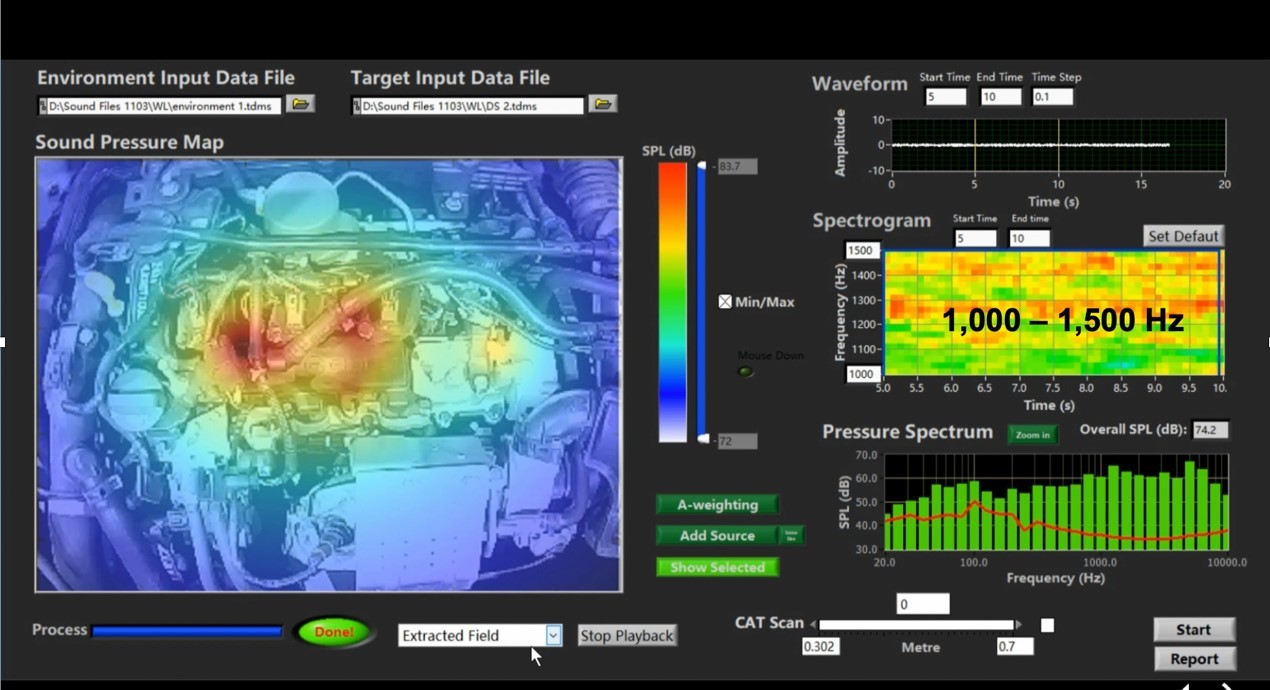
(Engine noise source localization)
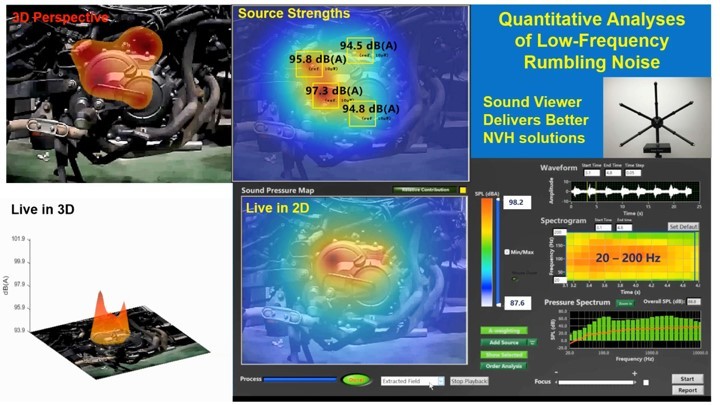
(Analysis of low-frequency rumble noise of motorcycles)
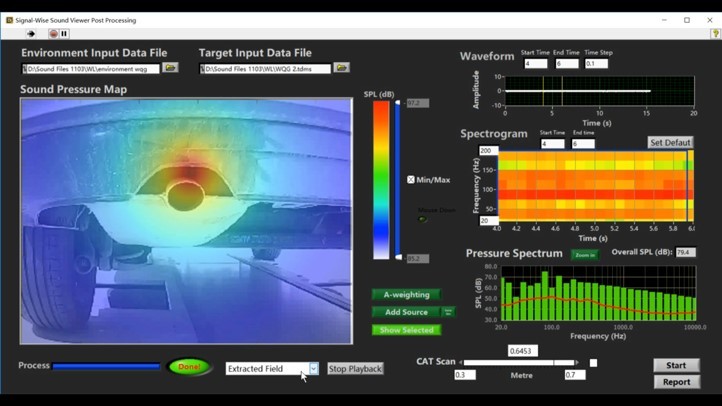
(Automobile tailpipe noise localization and analysis)
Partial Client References

Key words:
CAD Modeling and Repair
Previous Page
MESSAGE
If you are interested in our products, please leave your email and we will contact you as soon as possible. Thank you!