


The preferred combination for current pioneers in footwear design: motion capture system & force measurement platform + human motion biomechanics analysis software!
Release time:
2025-09-05 10:09
Source:
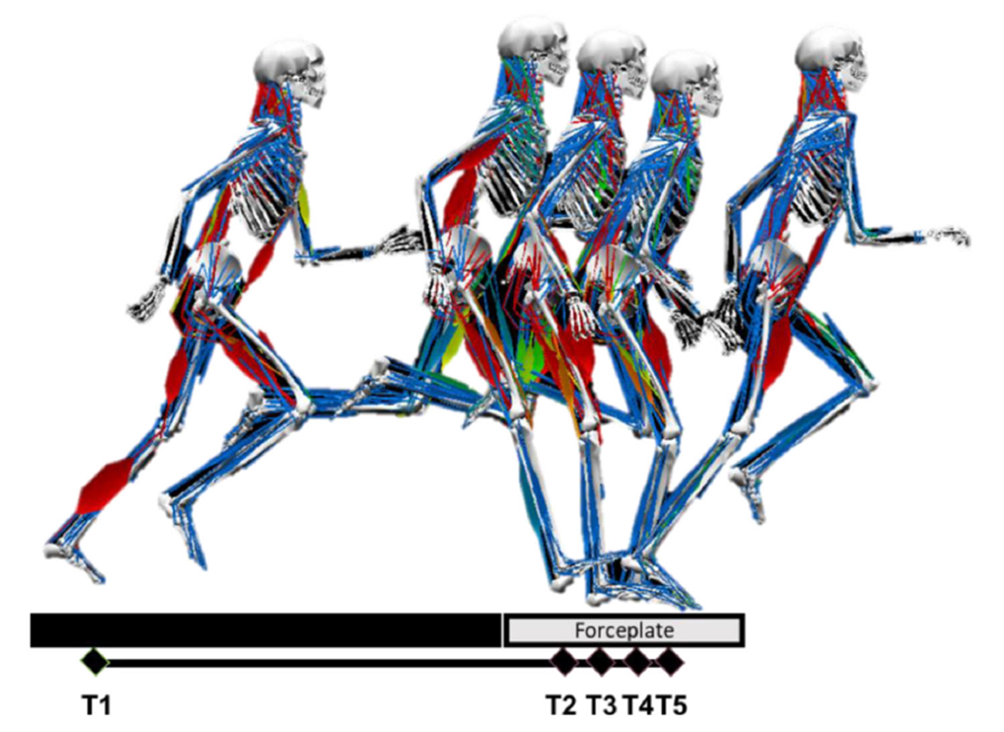
Inside an advanced biomechanics laboratory, a subject is running on a treadmill. The motion capture suit worn and the force plate beneath the feet capture kinematic and kinetic data of each step in real time. This data flows into human biomechanics analysis software, quickly generating detailed musculoskeletal simulation models. Researchers can clearly observe changes in joint moments at foot strike, muscle activation sequences, and plantar fascia tension—this is becoming a routine scene in footwear innovation design.
The wave of digital design is sweeping through the footwear industry. The perfect integration of motion capture systems, force plates, and biomechanics analysis software is fundamentally changing the way functional shoes are designed and developed.
01 Challenges and demands in functional shoe design, new discoveries in biomechanics research
Footwear has long evolved from simple protective tools into complex performance-enhancing devices. Proper shoes can optimize athletic performance and prevent injuries, while improper shoes may cause foot and back injuries.
Traditional design methods heavily rely on empiricism and trial-and-error cycles, making it difficult to accurately quantify the impact of footwear on human biomechanical characteristics. 2025 A study published in Gait & Posture pointed out: " Although rocker shoes are usually recommended to align the rocker axis perpendicular to the gait progression line to prevent foot progression angle (FPA) adjustments, FPA the study found that even with significant changes in the apex position (AP) and apex angle (AA) settings, AP and apex angle (AA) AA no expected changes occurred during the second rocker phase. FPA of the expected changes. " This study tested 9 types AP ( 54%、64%、74% shoe length) and AA ( 60 °, 90 °, 120 °) combinations of rocker shoes, finding that AP or AA had no significant effect on the second rocker phase's FPA , only observing a main effect of AA during the third rocker phase ( 52.4-57.5% gait cycle; p = 0.039 ). The research team collected and analyzed data with the assistance of motion capture systems and force plates, leading to this discovery. +测力台的协助下采集、分析数据,最后有此发现。
02 Core Technology: Motion Capture Systems, Force Plates, and Biomechanics Software
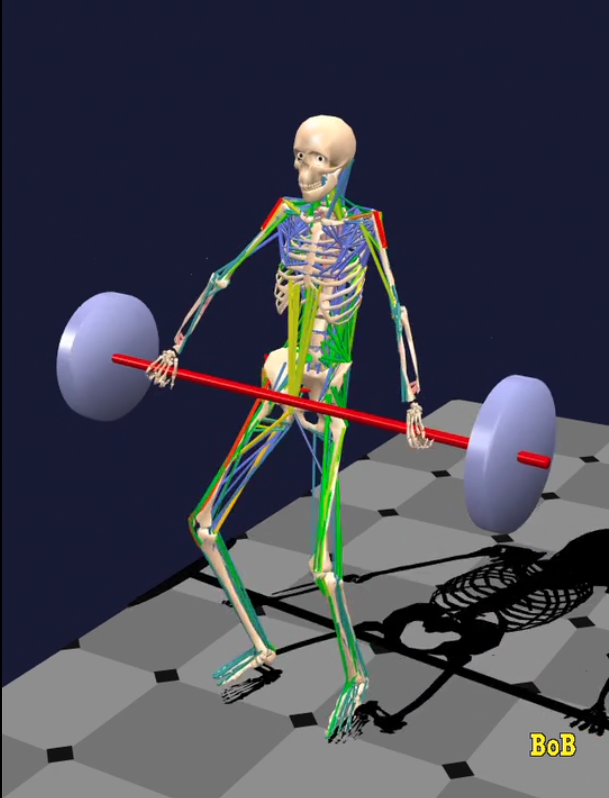
Three-dimensional motion capture systems (such as BTS 、 VICON 、 PERCEPTION 、 Xsens 、 Perception Neuron etc.) can accurately record joint angles, displacements, and velocities during human movement. Force plates simultaneously collect ground reaction forces, center of pressure trajectories, and moment data; biomechanics analysis software, as an important tool, integrates multiple analysis functions, such as BOB human motion biomechanics analysis software supports multiple data format imports and can analyze various biomechanical quantities including point positions, / velocity, / acceleration, segment directions, anatomical trajectories, center of mass positions, body energy, / power, joint angles, joint range of motion, joint moments, ground reaction forces, joint contact forces, muscle forces, and more.
03 Core Applications of Biomechanics Software in Footwear Design
Biomechanics software provides comprehensive design support by establishing coupled models of the foot, - shoe, - and environment. Based on CT tomography technology to construct 3D geometric models of the foot, combined with reverse engineering techniques to build finite element models of the foot's bone-muscle system, researchers can simulate biomechanical responses under different design conditions.
Recent studies have demonstrated the power of this approach. Through " mechanism investigation, - structural design, - and performance optimization, " a full-process R&D model deeply analyzes the biomechanical mechanisms of foot injuries, ultimately developing technologically advanced running shoes with protective functions. From the UK, BOB software default muscle models include more than 600 motor muscle units, allowing easy data exchange and rich graphical display functions. This analytical capability provides unprecedented depth and precision for footwear design.
04 Data-Driven Design Innovation Cases
Recent studies have showcased innovative applications of motion capture systems, force plates, and biomechanics analysis software combinations in footwear research. 2023 A study published in the Journal of Sports Engineering in used the Vicon three-dimensional motion capture system ( 200Hz ) and Kistler force plate ( 1000Hz ) combination, combined with OpenSim musculoskeletal modeling, to analyze the biomechanical effects of different basketball shoe designs on athletes' cutting maneuvers.
The study found: High-top basketball shoes significantly reduce the peak ankle inversion angle by 34.2% ( p<0.01 ) , while also reducing ankle joint torque by 17.8% , providing quantitative evidence for basketball shoe protective design [1] 。
2024 A cutting-edge study in the year used a similar combination of technologies, integrating EMG systems to evaluate the impact of new ski boots on professional athletes' performance. Researchers used 12 Qualisys cameras ( Bertec 250Hz ) and ) to synchronously collect data, and calculated muscle load through the force plate ( 1500Hz AnyBody modeling system. The results showed:
The new boot design reduced tibialis anterior activation by 22.3% , while improving knee joint stability (anterior-posterior shear force reduced by 18.7% ), significantly enhancing athletic performance and fatigue resistance ) [2] In the medical field, the combination of biomechanical analysis software and motion capture systems is driving innovation in personalized insole design. 。
A study published in Clinical Biomechanics in the year used the 2024 Simi Motion system ( RSscan 100Hz ) and pressure plate) combined with biomechanical analysis software to develop customized insole solutions for diabetic foot patients. 1000Hz Personalized insoles reduced forefoot peak pressure by BOB 27.4%-42.1%
The study found: p<0.001 , and pressure-time integral decreased by ( 31.2% ) , significantly lowering the risk of foot ulcers [3] The military equipment field has also benefited from this technology combination. A study published in Ergonomics in the year used 。
OptiTrack 2023 AMTI MuscleTech RSscan 120Hz ) and analysis software to evaluate the impact of new combat boots on soldiers' load-bearing walking efficiency. force plate ( 1000Hz Personalized insoles reduced forefoot peak pressure by Data showed: The new design reduced oxygen consumption by
8.7% , delayed tibial muscle fatigue onset by about minutes , significantly enhancing combat effectiveness during long marches 23 [4] These cases demonstrate that the integrated application of motion capture systems, force plates, and biomechanical analysis software is driving innovation in footwear design across multiple fields, from optimizing athletic performance to medical rehabilitation and special-purpose equipment development, providing unprecedented data support and design insights. 05 Future Trends and Outlook 。
With technological advances, footwear biomechanics research is moving towards multi-scale and personalized directions. Combined with artificial intelligence technology, researchers can automatically generate optimal shoe last designs based on individual foot characteristics. Cutting-edge explorations show that through multidimensional biomechanical tests such as 3D foot scanning, infrared thermography, and pressure sensor monitoring, the comfort and pressure changes in runners' foot regions can be systematically evaluated. Based on research findings, the team developed innovative shoes with a pointed, innovative design scheme to ensure a high match between running shoes and foot movement trajectories, effectively reducing injury risk.
In the future, with advances in sensor technology and continuous algorithm optimization, we will have more precise and efficient footwear biomechanical analysis capabilities. Consumers will only need to scan their feet to quickly obtain the most suitable personalized custom shoes—this is no longer a sci-fi scenario but an attainable future in the digital transformation of the footwear industry.
随着技术进步,鞋类生物力学研究正朝着多尺度、个性化方向发展。结合人工智能技术,研究人员能够根据个体足型特征自动生成最优鞋楦设计。前沿探索显示,通过三维足部扫描、红外热成像、压力传感器监测等多维度生物力学测试,可以系统评估跑者的足部区域舒适度与压力变化。基于研究发现,团队开发出的创新鞋款采用了尖翘的创新性设计方案,确保跑鞋与足部的运动轨迹高度匹配,从而有效降低损伤风险。
未来,随着传感器技术进步和算法持续优化,我们将拥有更精细、更高效的鞋类生物力学分析能力。消费者只需扫描自己的双脚,就能快速获得个性化定制的最适配鞋款——这不再是科幻场景,而是鞋业数字化变革的可及未来。
Assessment and Measurement Metrics Acquisition,Human Movement Biomechanics,Motion Capture System,Shoe Design,BOB Human Motion Biomechanics Analysis Software