


Introducing how noise simulation prediction helps build urban sound environment monitoring networks!
Release time:
2025-08-13 15:48
Source:
Urban noise pollution has become the third major environmental nuisance after air and water pollution. Facing urban expansion and the complexity of traffic networks, traditional noise monitoring methods (relying on limited manual measurements at fixed points) can no longer comprehensively reflect the quality of the sound environment. Noise simulation and prediction technology, with its powerful spatial coverage and prediction accuracy, is becoming the core engine for building intelligent sound environment monitoring networks.
1. Noise Simulation and Prediction Technology: From Static Monitoring to Dynamic Deduction
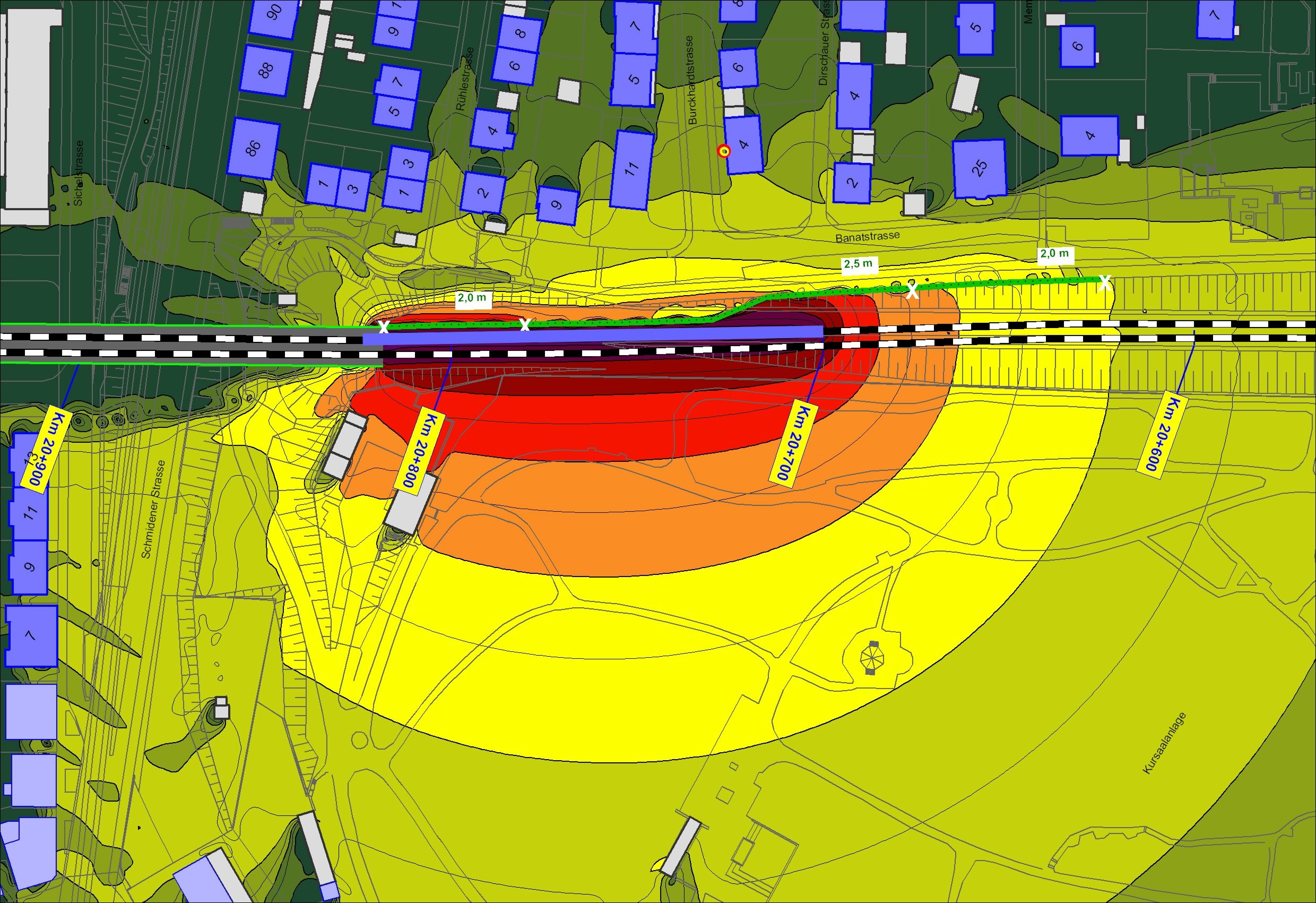
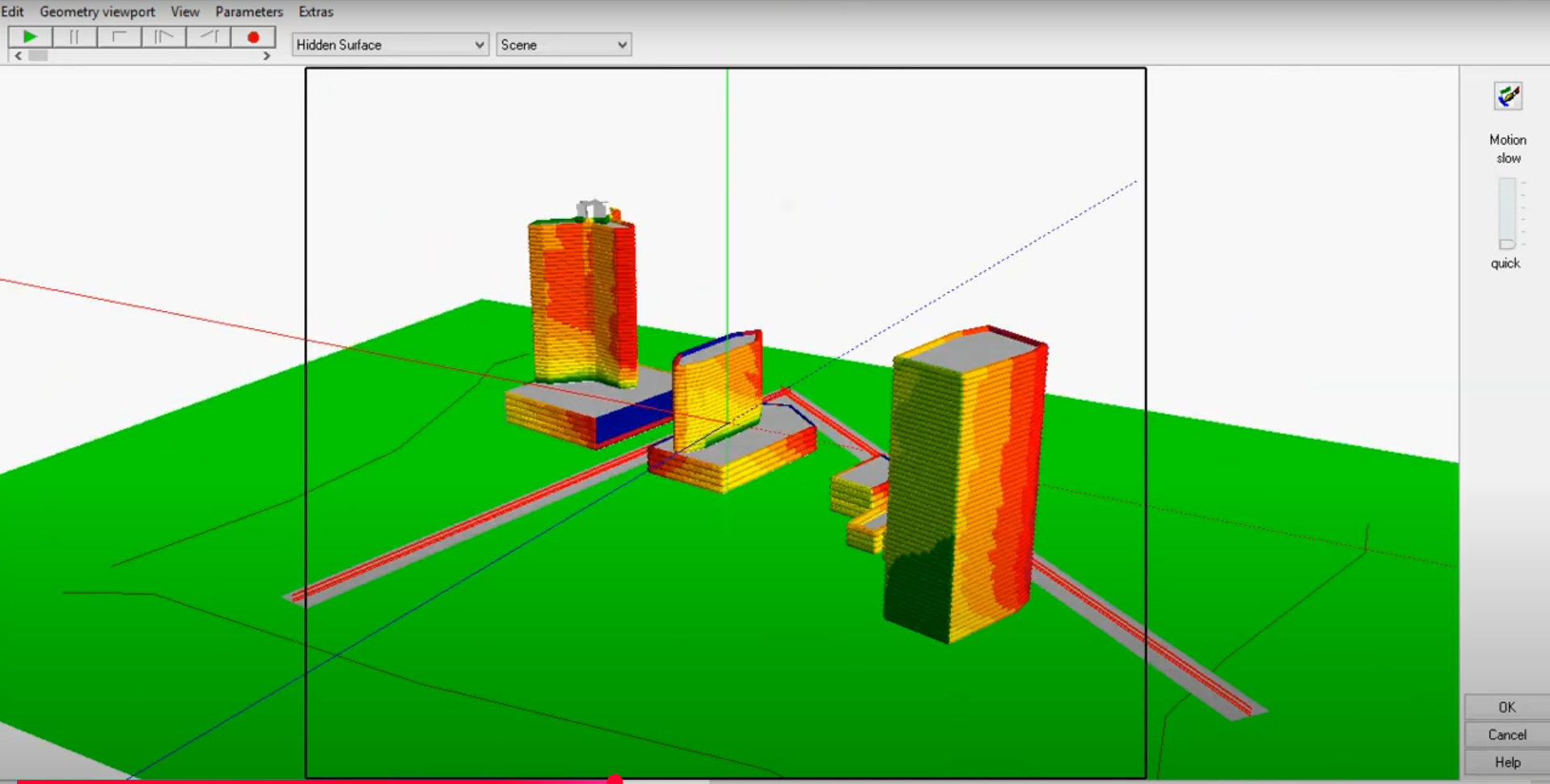
Modern noise simulation software represented by SoundPLAN integrates international standards ( ISO 9613-2 ) and geographic information systems ( GIS ) to model and calculate multiple factors in the sound wave propagation path, including geometric attenuation, ground absorption, atmospheric refraction, and building reflection. Its "sector ray tracing method" emits rays at intervals centered on the receiving point, simulating the interaction between sound waves and obstacles to achieve rapid visualization of noise distribution over large areas. 1 The latest research in recent years has further enhanced the simulation capability of dynamic noise sources. For elevated bridge traffic noise, a new algorithm discretizes moving vehicles into a sequence of continuous static point sources. Through hybrid sound ray tracing technology, it solves the problem of "disconnection between dynamic and static radiation paths" in sound barrier layout, making prediction results more consistent with actual traffic flow changes. Such technological breakthroughs allow urban managers to predict noise impacts during the planning stage and optimize road design and sound barrier placement.
2025 2. SoundPLAN in Practice: Driving Precise Noise Reduction Decisions
Elevated Rail Transit Noise Control
The elevated section of Guangzhou Metro Line 4 uses
simulation of sound barrier noise reduction effects found: SoundPLAN - 2
meter upright sound barriers are only effective for buildings below floors (noise reduction of 9 5-8 dB(A) ) Curved barriers of the same height, being closer to the sound source, extend the noise reduction range to
- floors (an increase of 23 1.5 dB(A) ) Curved barriers of the same height, being closer to the sound source, extend the noise reduction range to
- Fully enclosed sound barriers perform best, reducing noise by more than 30 3 dB(A) for buildings up to floors.
This result provides a direct basis for selecting sound barriers in densely built high-rise areas.
Substation Noise Control Optimization
Simulation of a semi-indoor substation in Hunan shows that when the main transformer is arranged outdoors, the noise at the plant boundary exceeds the night limit by 10 dB(A) . Through SoundPLAN collaborative design of sound insulation screens and air intake louvers, it was found that:
- The louver area is key to noise reduction: reducing the area from 7.6 m ² to 2.8 m ² decreases the vertical noise diffusion distance from 15.9 meters to 9.8 meters.
- Firewalls significantly affect sound wave interference from equipment such as reactors; sound absorption treatment can weaken interference effects.
Urban Noise Maps Empower Public Management
Luohu District in Shenzhen uses SoundPLAN to draw noise maps of main roads, combined with population data to estimate that:
- more than 50% sensitive population points (schools, hospitals, residential areas) are exposed to excessive noise.
- After installing a 5 meter high bent sound barrier at Binhe Middle School, noise in the teaching building was reduced by 2.4 – 6.7 dB(A)
Such maps have become a "strategic sandbox" for urban sound environment governance, supporting land planning and protection of sensitive buildings.
3. Technical Challenges and Innovations: From Interference Correction to Intelligent Integration
Traditional simulation tools have obvious limitations. SoundPLAN When predicting noise from multiple devices in substations, failure to consider sound wave interference effects can cause errors at sensitive points at the plant boundary of more than 10 dB(A) . 2022 A gradient descent correction algorithm proposed in recent years improves accuracy through the following steps:
1. Modeling main equipment as spherical sound sources to calculate interference fields.
2. Using phase matching to correct the initial phase of secondary equipment.
3. Normalizing and then superimposing corrections on the sound field.
Meanwhile, artificial intelligence is driving a paradigm shift in noise monitoring and analysis:
- Quantum-inspired topological optimization algorithm: optimizes three-dimensional sound propagation paths, enhancing the scientific selection of monitoring points.
- 1D-CNN and Transformer fusion model: performs cross-modal analysis of multi-source data on dust and noise, improving the accuracy of complex event recognition.
4. Outlook: Building an Intelligent Closed Loop of "Simulation-Monitoring-Governance"
Future urban sound environment monitoring networks will show three major trends:
1. Prediction accuracy upgrade: integrating BEM (Boundary Element Method) and Quantum Computing, Reconstructing Complex Acoustic Field Interference Effects
2. Accelerated Dynamic Response: Noise Event Classification System Based on Deep Learning, Achieving the Transition from "Monitoring" to "Early Warning"
3. Global Control Closed Loop: Real-time Linkage of Noise Maps with Urban Planning, Traffic Scheduling, and Architectural Design, Forming an "Assessment - Intervention - Verification" Governance Chain
Noise simulation and prediction have evolved from scientific research tools into core infrastructure for urban sound environment management. When every decibel reduction is precisely calculated and every sound source propagation is dynamically tracked, the vision of a "quiet city" is becoming a reality from the digital world.
SoundPLAN Noise Simulation Software,Noise Control,Noise Detection