


Application of Professional Equipment and Fixtures in High-Acceleration Life Testing of Products
Release time:
2025-08-07 19:21
Source:
Highly Accelerated Life Test ( HALT ) is a core method in reliability engineering that rapidly triggers potential product defects by applying multidimensional incremental stresses (temperature, vibration, and their combination), significantly shortening the R&D cycle and improving product reliability. Its effectiveness highly depends on two key elements: high-performance environmental test equipment and specialized fixture design. This article analyzes the synergistic effects of both in conjunction with industry technological advancements.
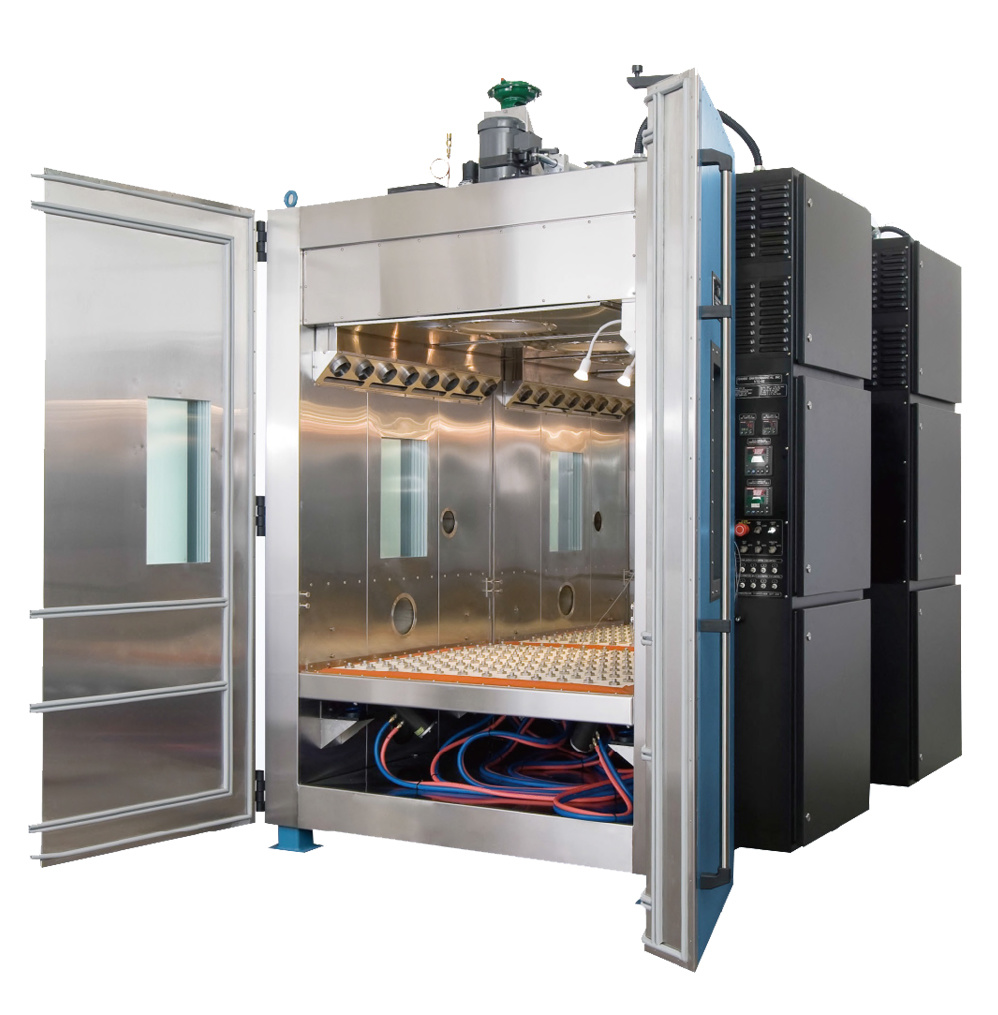
1. HALT Technical Evolution of Test Chambers and Mainstream Equipment
Modern HALT environmental test chambers must meet extreme temperature change rates, multi-axis vibration, and composite stress capabilities. Current mainstream equipment technical specifications have achieved:
- Temperature range reaching -100 °C to +200 °C, with temperature change rates breaking through 70 °C /min , enabling precise simulation of thermal shock;
- The vibration system uses an air hammer type three-axis six degrees of freedom ( 6DoF ) technology, covering frequency bands 5 – 10000Hz with acceleration up to 100Grms , capable of exciting structural resonance points above 90% ;
- Intelligent control integrates multi-channel signal monitoring (such as 36 thermocouples +40 accelerometers), achieving closed-loop test management through SCADA software.
Typical representative equipment includes:
- USA HANSE VTC series: Its vacuum liquid nitrogen proportional valve and boss airflow design ensure temperature variation while reducing energy consumption. The vibration table surface uses special ceramic coating, supporting 70 °C /min × 193cm large load space ( 193cm ), suitable for avionics and automotive controller testing; 227kg),适用于航空电子及汽车控制器测试;
- Qualmark Typhoon series: Integrates PSD vibration management system and high-speed temperature change module, T4.0 models support 48 inch vibration table and 100 pound load, with silent design suitable for laboratory environments;
- RCC REAL-48 : With 60 °C /min temperature change rate and 60GRMS vibration capability, paired with PLC touchscreen controller, suitable for verification of small and medium consumer electronic products.
The table below compares the performance of main products:
Brand and Model
|
Temperature Range
|
Temperature Change Rate
|
Vibration Capability
|
Main Application Scenarios
|
HANSE VTC Series
|
-100 °C ~ +200 °C
|
70 °C /min
|
100Grms
|
Aerospace, automotive electronics, general appliances
|
Qualmark T4
|
-100 °C ~ +200 °C
|
70 °C /min
|
Typical Range 5 – 75 gRMS , special customization up to >100 gRMS
|
Large industrial equipment
|
RCC REAL-48
|
-100 °C ~ +200 °C
|
60 °C /min
|
60Grms
|
Small and medium consumer electronic products
|
2. The Key Role and Innovation of Fixture Design
Fixtures act as stress transmission media, and their performance directly affects test effectiveness. Traditional integrated fixtures tend to deform and degrade at high temperatures, causing distortion in case temperature measurements. For example, Si microwave power transistor tests show that when the case temperature exceeds 200 °C, integrated fixtures experience contact failure due to mismatched thermal expansion coefficients, resulting in test data deviations exceeding 15% .

Innovative separated fixture design overcomes limitations through the following optimizations:
- Material innovation: Using nickel-based high-temperature alloys, temperature resistance is increased to above 260 °C, providing room for upgraded temperature stress;
- Structural separation: Decoupling heating and clamping units reduces deformation of heat conduction paths, ensuring case temperature detection error < ± 1 °C;
- Application case: In microwave power tube step stress tests, separated fixtures successfully support constant stress tests above Si °C, improving accelerated life model fitting accuracy to 260 . 98%。
3. Equipment Selection Considerations and Industry Trends
2025 Data from aerospace industry tenders in recent years reflect the latest requirements: test chamber effective volume ≥ 1.2m ³ (compatible with large servos), vibration table static load ≥ 200kg , and temperature change rate ≥ 70 °C /min as mandatory indicators. The bid price for a single system reaches 483 Ten thousand yuan, indicating the market recognition of high-end equipment.
Clear future development direction:
1. Precise control of compound stress: temperature and vibration synchronization accuracy improved to millisecond level to avoid pseudo-failures caused by overstress;
2. Intelligent fixture system: embedded sensors monitor stress transmission efficiency in real time and dynamically adjust clamping force;
3. Modular expansion: such as HANSE VTC Series supports from VTC-1 ( 46cm ³) to VTC-36 ( 193cm ³) flexible configuration, adapting to multi-size products.
HALT The essence is "to excite defects rather than simulate lifespan," its effectiveness = Equipment's ultimate stress capacity × fixture transmission efficiency.
Conclusion: Collaborative drive for reliability leap
Professional HALT The synergy of equipment and customized fixtures is the core to achieve "accelerated defect exposure." On one hand, the test chamber needs to continuously break through temperature and vibration limits (such as 100Grms vibration, 70 °C /min temperature variation); on the other hand, fixtures need to develop towards high-temperature adaptability and structural decoupling. Only by combining the two can product lifecycle defects be exposed within 5 days, supporting enterprises to achieve the "nine major benefits" (including warranty cost reduction 50%、 MTBF improvement 3 times). With the acceleration of localization process (such as Chongqing Galaxy winning the aviation project), an independent and controllable high-end HALT ecosystem is forming.
Professional Equipment and Fixtures,High Acceleration Life Test,HALT,Reliability Testing,Environmental Test Chamber