


Look, how human motion biomechanics analysis software empowers bionic robot motion control and gait simulation!
Release time:
2025-08-06 14:48
Source:
At the Medical Rehabilitation Experimental Teaching Center of Henan University of Chinese Medicine, researchers are collecting kinematic parameters and biomechanical data of students' walking using the latest gait analysis evaluation training system. These gait cycle data, accurate to the millisecond, are not only used for rehabilitation therapy teaching but also continuously fed into a computer simulation platform, providing a training foundation for the motion control algorithms of the new generation of bionic exoskeleton robots.
Meanwhile, in a laboratory at Chongqing University thousands of miles away, a lower limb powered exoskeleton robot based on the dual-joint bionic principle is smoothly performing squatting movements — it has made a significant breakthrough in simulating the gastrocnemius muscle's cross-joint energy transfer mechanism.

01 Breakthrough Moment in Bionic Robot Motion Control
《 Journal of NeuroEngineering and Rehabilitation 》August issue published the latest research showcasing revolutionary progress of the enhanced gastrocnemius bionic lower limb powered exoskeleton ( EGME ) device. By precisely simulating the biomechanical characteristics of the gastrocnemius muscle across the knee and ankle joints, it solves the problem of low energy transfer efficiency in traditional single-joint exoskeletons.
The research team used OpenSim 4.3 simulation platform combined with human experiments to innovatively develop a force - position parallel control strategy.
In horizontal walking tests, the device significantly reduced gastrocnemius muscle activation intensity by 46.4%-59.8% ; in squatting tasks, user endurance time increased by 7.79 times.
Also in August, the preprint platform arXiv published a study on gait assistance for stroke patients. The research team used a multi-task temporal convolutional network ( TCN ) trained on treadmill walking data from four post-stroke participants to achieve ankle joint torque estimation ( R ² = 0.74 ± 0.13 ).
"Data-driven methods enable exoskeletons to dynamically adapt to each patient's unique gait pattern," the researchers pointed out, "which is of great significance for community rehabilitation of people with neuro-motor impairments."
02 Digital Deconstructor of Human Motion
Behind these breakthroughs are a series of human motion biomechanics analysis software. 2025 A global market analysis report from the year shows that Scalefit 、 Qualisys 、 AnyBody Technology and BOB human motion biomechanics analysis software and other mainstream products are rapidly expanding their application scenarios.
Among them, AnyBody Modeling System 5.0 , as a leader in multibody dynamics simulation, can build detailed human models containing 600 multiple muscles.
Through inverse dynamics analysis, this software can accurately calculate joint loads and muscle activation states under known motion trajectories, providing physiological basis for exoskeleton design.
At the data acquisition front end, MotionMonitor integrated gait analysis system demonstrates strong capabilities.
This system can synchronously integrate optical motion capture, force plates, surface electromyography, electroencephalography, and even eye-tracking data to achieve multimodal biomechanical analysis. According to statistics, more than 40 research institutions worldwide have adopted this system, producing over 42,000 research publications.
"Traditional single sensors cannot capture the complexity of movement," explained a sports science expert, "now we can simultaneously observe the interactions among skeletal movement, muscle activation, neural control, and ground reaction forces."
03 Synthetic Data Revolution: Breaking Medical Data Barriers
A core challenge faced by biomechanical analysis software is the scarcity of high-quality clinical data, especially for rare diseases and special populations.
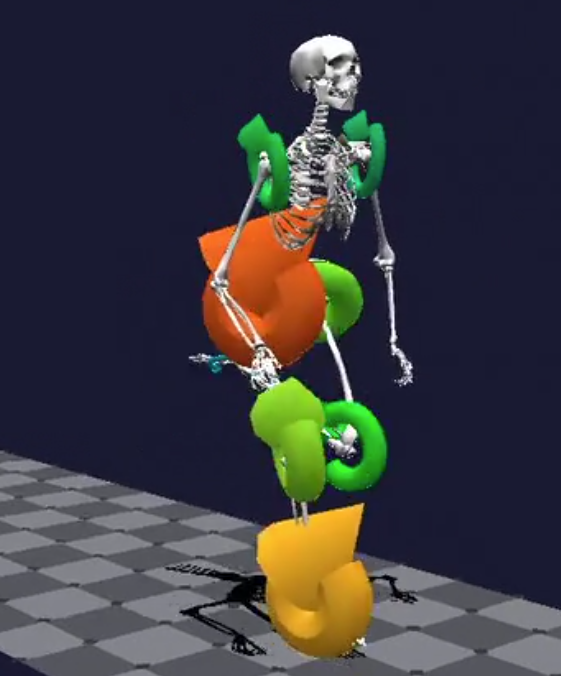
《 Nature Communications August issue proposed a breakthrough solution: IBM Research Institute, Cleveland Clinic, and University of Tsukuba jointly developed a physics-based skeletal muscle simulation generative AI technology.
This framework can generate synthetic data covering gait from children to elderly, healthy to pathological. Validation shows that models trained entirely on synthetic data achieve gait parameter estimation accuracy comparable to or even surpassing models trained on real data.
"This technology particularly addresses the data shortage problem for cerebral palsy patients," the researchers emphasized, "synthetic data enables our gait analysis models to achieve unprecedented robustness in rare disease assessment."
04 Application Prospects and Challenges
As biomechanical analysis technology matures, its application scenarios are rapidly expanding. The latest research Manip4Care demonstrates a robotic limb manipulation system designed to assist daily care for patients with severe motor impairments.
This system uses a physical simulator to grasp and reposition human limbs while meeting biomechanical constraints and collision avoidance requirements. In simulated bathing and dressing tasks, the system successfully coordinates multi-joint movements, significantly reducing caregiver workload.
However, the industrial implementation still faces multiple challenges. 2025 The annual global market report points out that cross-platform data compatibility and the cost of model personalization adaptation are the main obstacles restricting the widespread application of biomechanical software.
QYResearch Analysts stated: "With AnyBody and other software beginning to support cross CAE platform collaboration, as well as the rise of open-source models, the industry is expected to overcome these bottlenecks within three years."
BOB Human motion biomechanics analysis software, MotionMonitor and other platforms have already taken root in more than 40 research institutions worldwide, giving rise to nearly 42,000 academic papers. Moreover, IBM the institute's synthetic data technology can even accurately predict muscle activity from single-camera videos, solving the data shortage dilemma in research on rare diseases such as cerebral palsy.
In the future clinics, doctors will retrieve not only patients' gait parameters but also personalized exoskeleton control plans generated by biomechanical software; in nursing homes, care robots will rely on precise limb mechanics models to provide natural and smooth daily assistance to elderly people with mobility difficulties. The digital mapping of human motion is becoming a reality.
BOB Human Motion Biomechanics Analysis Software,Gait Analysis,Robot Motion Control,Human Biomechanics Analysis