


How does markerless motion capture technology assist in analyzing the correlation between movement patterns and pathology?
Release time:
2025-07-29 15:28
Source:
Sensory Evaluation: When motion capture removes the marker suit, biomechanical analysis quietly enters a new era of pathological decoding in natural states.
A German psychiatric team recently completed a groundbreaking study: 23 In patients with anxiety disorder walking naturally, their gait temporal parameters PC1 were significantly lower than those of the control group. This key finding did not come from traditional observation or scale assessment but from the precise capture of subtle gait changes in patients using three-dimensional markerless optical motion capture technology.
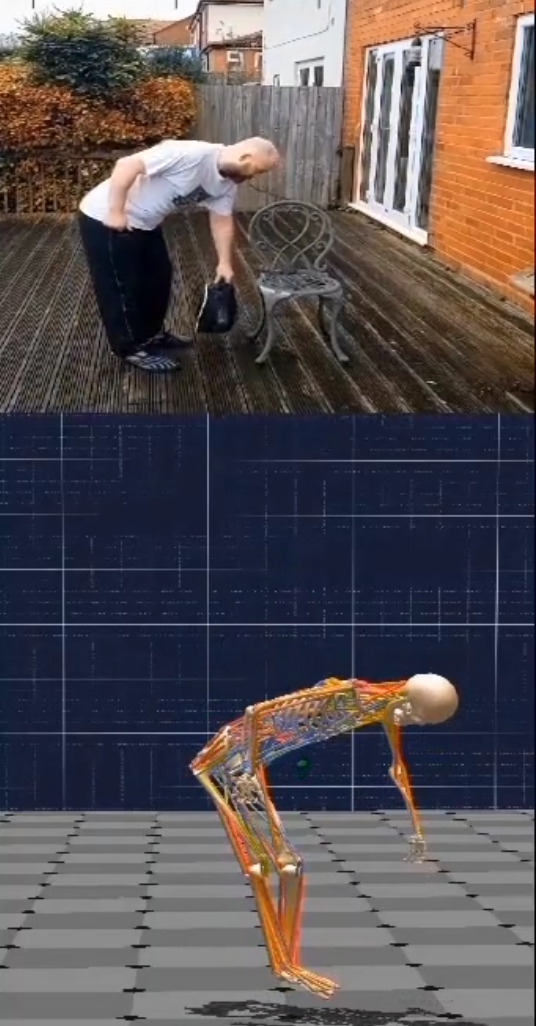
With the rapid development of deep learning algorithms and computer vision technology, markerless motion capture technology is revolutionizing the study of the relationship between movement patterns and pathology. From gait abnormalities in psychiatric patients to rehabilitation assessment in stroke patients, this technology, which can capture motion parameters with high precision without attaching markers to the body, is revealing unprecedented connections between human movement and disease.
01 Technological breakthrough solving clinical dilemmas of traditional marker methods
In biomechanics and clinical medicine, traditional marker-based motion capture has long faced multiple challenges. Reflective markers attached to the skin surface may fall off, cause soft tissue artifacts, and interfere with the subject's natural movement.
These issues are especially prominent for patients with neuropsychiatric disorders. Anxiety disorder patients are sensitive to unfamiliar devices, and discomfort caused by markers may exacerbate their movement abnormalities.
The core breakthrough of markerless technology lies in the automatic recognition of human key points through artificial intelligence algorithms. Based on convolutional neural networks AI models can directly reconstruct three-dimensional motion data from ordinary video or depth camera footage.
2025 Year 6 Published in the month in the journal Journal of Biomechanics validation study confirmed that the markerless system Theia3D and the previous 7 main motion components showed high consistency with the gold standard Vicon system (r=0.814-0.998) r=0.814-0.998 ), especially when characterizing the core dynamic features of postural control.
More notably, a comparative study by Peking University First Hospital showed that the markerless system (Watrix) Watrix reduced the single test time from the traditional system's 34 minutes to 18 minutes, nearly doubling efficiency and paving the way for large-scale clinical application.
02 Pathological correlation revealing the disease fingerprint behind movement abnormalities
The true value of markerless technology lies in the association between the subtle movement features it captures and specific pathological states. In anxiety disorder research, the German team found that the time-related parameters of the patient group PC1)显著降低( p<0.05 were significantly reduced, which may reflect dysfunction in the basal ganglia-thalamocortical circuit. - thalamocortical - cortical circuit.
Chinese researchers applied this technology to complex terrain walking studies. Through experiments with healthy subjects walking on slopes, they found that foot joint coupling patterns dynamically reorganize with terrain — the hindfoot dominates frontal plane motion on everted slopes, while the forefoot and midfoot dominate on inverted slopes. 12 "Foot joint coupling is like a precise gear set, and slope walking is a natural test field for the robustness of this system," emphasized the lead researcher Jie-Wen Li in the paper.
Jie-Wen Li in the paper. In stroke rehabilitation research at Shenzhen University General Hospital, smartphone-based markerless motion capture technology is evaluating the effect of cervical proprioceptive training on patients' balance function. This technology has for the first time captured stroke patients' movement compensation mechanisms in natural states.
03 Clinical translation, technology migration from laboratory to real-world scenarios
The greatest advantage of markerless technology is its environmental adaptability. The research team at Coventry University in the UK deeply experienced this: when they moved from optical laboratories to real environments,
Xsens motion capture suits made subjects "almost forget they were wearing the suit," while data quality improved due to the natural state. In the BOB biomechanical model library (Biomechanics of Bodies) developed at Coventry University, markerless motion capture data can be directly imported to automatically calculate parameters such as internal load, energy consumption, and reaction forces during various activities. This engineering analysis tool combined with markerless capture technology provides a complete solution for understanding biomechanical changes under pathological conditions.
The latest research in the year confirmed that markerless technology also performs excellently in dynamic balance tasks. Visual deprivation experiments showed that the standard deviation of the main velocity increased significantly with eyes closed, which was completely consistent with marker-based systems, confirming its reliability in neurocontrol research. 04 Challenges and future, the path to improved accuracy and standardization Despite broad prospects, markerless technology still faces challenges. Research from Peking University found that in coronal and transverse parameter measurements, markerless systems significantly underestimate key parameters such as step width, pelvic tilt, and hip adduction/abduction angles. Occlusion issues are also bottlenecks in practical applications. In team sports dynamic analysis, although multi-view systems show accuracy advantages, multi-person tracking in complex scenes may still lead to loss of key frame data.
2025年最新研究证实,无标记技术在动态平衡任务中也展现出色性能。视觉剥夺实验显示,闭眼状态下主速度标准差(PV-STD)显著增加( p<0.05 ),这一发现与标记系统完全一致,证实了其在神经控制研究中的可靠性。
04 挑战与未来,精度提升与标准化之路
尽管前景广阔,无标记技术仍面临挑战。北京大学的研究发现:在冠状面和横断面参数测量上,无标记系统会显著低估步宽、骨盆倾斜度和髋关节内收-外展角等关键参数。
遮挡问题也是现实应用的瓶颈。在团队运动动态分析中,尽管多视角系统展现出精度优势,但复杂场景下的多人追踪仍可能导致关键帧数据丢失。
The lack of personalized models is another major challenge. Current algorithms are mostly developed based on standard human body models and have insufficient adaptability to special body types or abnormal movement patterns.
The key path for future development is already clear: through interdisciplinary collaboration, balancing algorithm accuracy with practical needs, and establishing unified standards. Close cooperation among clinicians, engineers, and industry will promote the translational application of markerless video analysis in sports medicine.
As 5 Published in the month in the journal Arthroskopie "s review emphasized, next-generation technologies will integrate IMU inertial sensors and visual data to achieve millimeter-level accuracy in extracting motion pathology features in natural environments.
The biomechanics team at Coventry University imported markerless motion capture data into which was completely consistent with marker-based systems, confirming its reliability in neurocontrol research. the model library, precisely visualizing the skeletal muscle force state of athletes while skating. This technology integration strategy is being adopted by more and more laboratories worldwide.
Looking ahead, markerless motion capture technology will evolve from a single assessment tool into an entry point for personalized medicine. As German researcher Dilsa Cemre Akkoc Altinok predicted: "Dynamic changes in gait parameters will become biomarkers for treatment response in mental illnesses, and this technology will open a new window for us to understand neural regulatory mechanisms."
A slight inward rotation of the toe during walking, an unconscious sway of the trunk while standing—these previously overlooked movement details have now become key clues to decoding the disease code.
运动模式与病理关联分析,人体运动生物力学分析软件,BOB运动生物力学分析软件,无标记动捕