


Application of SoundPLAN Noise Prediction Simulation Software in Noise Analysis and Optimization of Oilfield Central Processing Plant
Release time:
2025-07-29 10:03
Source:
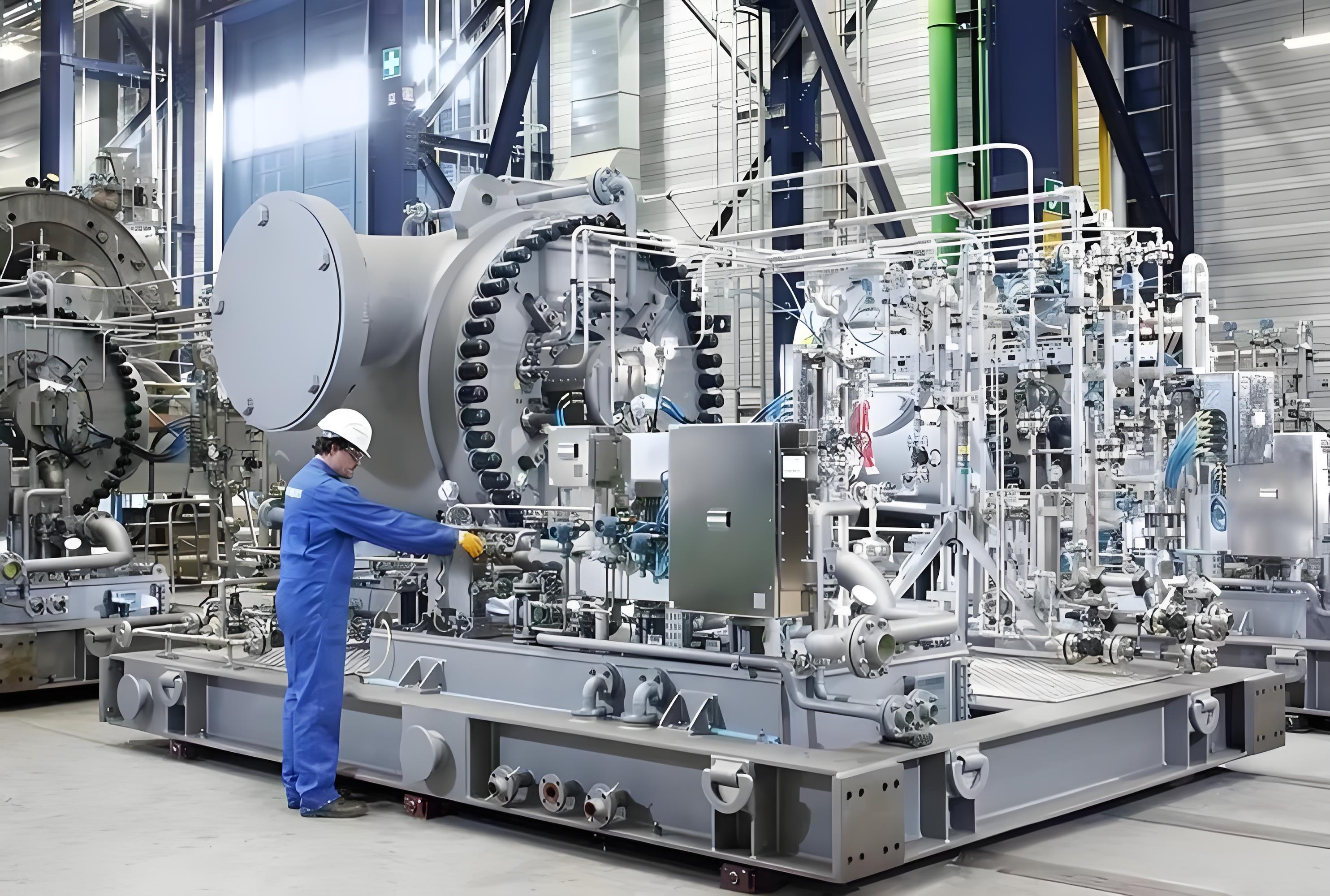
In the petrochemical industry, the roaring noise generated by large compressors, generator sets, and pump areas during operation not only threatens workers' hearing health but may also trigger complaints from surrounding communities. How to accurately predict and control this noise? Recently, a study on a central processing facility (CPF) of an oilfield in Uganda, CPF ) conducted through SoundPLAN noise prediction software has provided scientific solutions for the industry.
Noise Prediction: From 3D Modeling to Compliance Management
2024 In , the journal "Petroleum and Chemical Equipment" published the research results of Ding Zhiqi's team from Offshore Oil Engineering Co., Ltd. The team built a 3D noise model of the oilfield central processing facility based on SoundPLAN software, conducting acoustic simulations at 12 key monitoring points (including plant boundaries, equipment areas, and office areas), covering both normal and emergency operating conditions.
Key Findings
1. Normal Conditions: The main noise sources are the compressor area, main generator, diesel pump area, etc., with noise near equipment reaching 80-85 dB(A) . However, model verification showed:
- Work area noise ≤ 85 dB(A) , meeting hearing protection standards;
- Daytime noise at plant boundaries ≤ 65 dB(A) , below the 70 dB(A) limit;
- Nighttime noise at plant boundaries slightly exceeds 60 dB(A) , requiring targeted noise reduction (see Table 1 ).
2. Emergency Conditions (only flare and fire pump running):
- Flare noise dominates, but the peak is only 88 dB(A) , far below the 140 dB(A) safety threshold;
- Within meters of the flare, nighttime noise exceeds limits, indicating the need for emergency control (see Figure 700 ). 4 ).
( Data source: Ding Zhiqi et al., "Noise Prediction Analysis of Oilfield Central Processing Facility," Petroleum and Chemical Equipment, 2024 issue, 27 Table 2 , Table 3 and conclusion section.)
Technical Breakthrough: How to Achieve Accurate Prediction?
The research team improved accuracy through three innovative modeling methods:
1. Sound source classification: small pumps and valves set as point sources, large equipment (such as compressors) modeled as surface sources;
2. Scene restoration: buildings and storage tanks simplified as reflective cubes / and cylinders, with ground sound absorption differentiated between industrial areas (hard surfaces) and outside the plant (soft soil);
3. Dynamic conditions: simulating the sound field distribution of sudden flare combustion, quantifying its impact range on plant boundaries.
" SoundPLAN 's shadow volume calculation function solved the sound propagation simulation problem of dense equipment clusters," Ding Zhiqi pointed out in the study. The software is widely used in the global industrial noise field. According to its official website, in the past decade, it has completed noise compliance verification in more than 2000 complex projects such as substations and wind farms. 。
Industry Value: A Closed Loop from Prediction to Control
This study not only verified the applicability of SoundPLAN in petrochemical plants but also provided a decision-making chain for noise control:
- Design phase: identify high-noise areas such as compressor zones and water injection pump zones, pre-install sound barriers;
- Operation and maintenance management: designate a nighttime control zone of 700 meters around the flare area to reduce community disputes;
- Emergency response: confirm that 140 dB(A) regulatory redundancy is high, so no additional emergency noise reduction investment is needed.
International cases have confirmed this approach: Norway's Equinor company used a similar model, reducing offshore platform work area noise by 12 dB(A) (source: NOISH 2022 Industrial Noise White Paper). NOISH 2022 Industrial Noise White Paper).
Extended Thoughts: How Digital Tools Reshape Industrial Environmental Protection?
With global environmental regulations becoming stricter, noise control has become a rigid indicator for project approval. The World Health Organization ( WHO ) points out that long-term exposure to noise levels ≥ 70 dB(A) increases the risk of cardiovascular diseases 17% (source: NOISH 2022 Industrial Noise White Paper). WHO Environmental Noise Guidelines 2021 ). The value of tools such as SoundPLAN lies in:
- Predicting pollution distribution through digital twins, replacing costly field measurements;
- Providing quantitative basis for selecting noise reduction materials (such as sound-absorbing panels and soundproof enclosures);
- Helping enterprises balance production efficiency and community sustainability.
"Early-stage noise prediction is the most cost-effective noise reduction measure." — Li Houjun, " SoundPLAN Application in noise prediction in complex terrain"
Conclusion
The research by Ding Zhiqi's team highlights the key role of noise prediction software in the petrochemical industry’s shift from "passive control" to "active prevention." With algorithm iterations (such as the introduction of AI source identification), the future SoundPLAN may further promote refined industrial noise management—after all, a quiet factory is not only an environmental achievement but also a sign of respect for workers and the community.
References
1. Ding Zhiqi et al. . Noise Prediction Analysis of Oilfield Central Processing Plant [J]. Petroleum and Chemical Equipment, 2024, 27.
2. WHO. Environmental Noise Guidelines for the European Region (2021).
3. SoundPLAN Official Case Library . Industrial Noise Control Projects (2023).
4. NIOSH. Reducing Noise Exposure in Petroleum Refineries (2022).
Noise reduction solutions for power stations such as power plants, pump stations, and compressor stations - noise source control, propagation path control, and receiver protection,Noise Detection and Simulation,Noise Control,SoundPLAN