


Comprehensive Analysis of Noise Reduction Solutions at Construction Sites
Release time:
2025-07-23 14:33
Source:
At six o'clock in the morning at a city construction site, the pile driver begins to roar, but the surrounding residential buildings are unusually quiet—this is no longer a luxury in the construction industry, but a new reality brought by noise control technology.
At the Shenzhen Natural History Museum project site, engineer Wang lightly taps on a tablet, and the screen displays real-time noise levels in various areas of the site. A set of orange data suddenly flashes—the noise level in the southeast corner concrete pouring area exceeds the limit. He immediately adjusts the equipment position via walkie-talkie, and within ten minutes the values return to the green safe zone.
This is a common scene in noise control within China's construction industry. With the acceleration of urbanization, construction noise pollution has become increasingly prominent, and high-intensity construction noise has become one of the top disturbances to urban residents' lives.
"Construction noise pollution is characterized by high intensity, long duration, and complex frequencies, causing serious impacts on nearby schools, hospitals, and residential areas," pointed out noise control expert Yang Na. Long-term exposure to construction noise can lead to hearing loss, sleep disorders, and other health issues, and even disrupt the ecological balance of surrounding flora and fauna.
01 Standards First, Shenzhen Leads New Noise Reduction Regulations
2025 Year 3 Month 1 Day, Shenzhen officially implemented the revised "Technical Specification for the Prevention and Control of Construction Noise Pollution" ( DB4403/T 63-2025 ), which is the latest upgraded version of the country's first local standard for construction noise pollution prevention and control.
The new standard expands the structure to twelve chapters, adding requirements for blasting, demolition, earthworks, and other operations, with special emphasis on source control and process innovation.
"The standard requires construction units to develop a complete noise prevention and control plan, including full-process management such as preparation, communication, and noise monitoring," said one of the main drafters of the standard. The newly added appendix includes a "Construction Noise Pollution Prevention and Control Implementation Plan" template, providing clear operational guidelines for construction units.
Driven by the standard, Shenzhen has already had 21 construction projects awarded the title of "Excellent Construction Noise Pollution Prevention Project," providing replicable experience for noise reduction at construction sites nationwide.
02 Technological Innovation, the Intelligent Revolution of Noise Reduction Equipment
In the field of construction site noise control, a new generation of monitoring equipment is changing traditional management models. The combination of high-precision sensors and AI algorithms has ushered noise monitoring into the intelligent era.
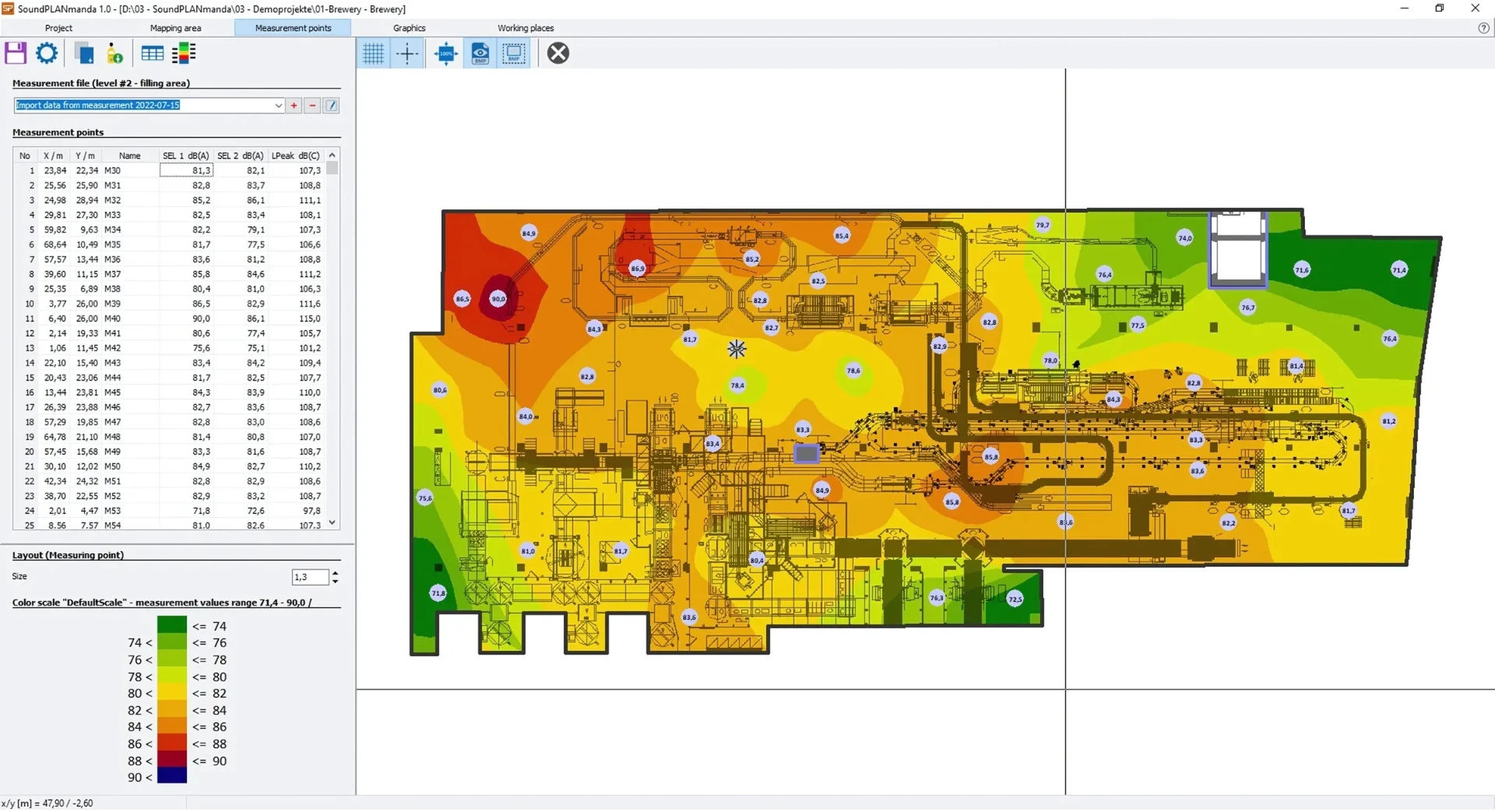
Using MEMS microphone arrays, the SONOCAT on-site sound absorption measurement system can directly measure actual performance at the material installation location; SOUNDVIEWER comprehensive noise diagnostic analysis system can identify noise sources in real time and warn of exceedances. The application of prediction software makes noise control more proactive. The German
SoundPLAN noise simulation software version integrates multiple international standards and can accurately simulate noise propagation before construction, predicting the impact range. "It allows us to foresee noise impacts and develop mitigation measures before the project starts," said a project manager. 9.1 Advances in material science are equally critical. On-site measurements show that new foam aluminum sound barriers improve noise reduction effects by 50 compared to traditional materials, while the application of nano-porous sound-absorbing materials achieves an astonishing
decibel noise reduction in construction sheds. 40% Management Optimization, From Single-Point Control to Systematic Governance 28 Modern construction noise reduction has gone beyond simple technical applications, evolving into a systematic project covering time management, spatial layout, and personnel training.
03 Scientific scheduling is crucial. A large project in Shenzhen strictly confines high-noise operations such as concrete mixing and rebar cutting to daytime, with only low-noise processes at night. This "time zoning" management has reduced resident complaints by
In terms of site layout, the "separation of movement and quiet" principle has become mainstream. A technical director at a site explained: "We concentrate high-noise equipment like pile drivers on the side farthest from residential areas, with green sound barriers in between, reducing noise in sensitive areas by
10-15 75%。
decibels." Personnel training is the foundation of noise reduction work. Shenzhen standards clearly require construction units to regularly organize noise management training and assessments. At excellent sites, the pass rate for noise knowledge tests among construction workers reaches , and the compliance rate for operational standards exceeds
The future is here, the development trend of intelligent noise reduction 100% With the popularization of 95%。
04 and IoT technologies, noise monitoring is moving towards networking. Monitoring equipment using
communication can achieve wide-area deployment, with data uploaded in real time to cloud platforms, generating dynamic noise maps. 5G Diagnostics is becoming a new favorite in the industry. Drawing on the "sound analyzer" diagnostic technology used by Skoda automobiles, 5G/NB-IoT the construction industry is developing intelligent diagnostic systems for construction equipment noise, capable of identifying equipment anomalies through sound features with an accuracy exceeding
AI "In the next three years, AI of new projects will adopt intelligent noise monitoring systems," predicted a noise control expert, "combined with digital twin technology, we can optimize noise reduction plans in virtual environments and then apply them to actual construction sites." 90%。
Sites that were once forced to stop work due to noise complaints have now become showcases for noise reduction technology. The second phase of Shenzhen Eye Hospital was constructed only 70% meters from the ward building, yet set a record of zero complaints.
The project manager looked at the real-time updated noise monitoring map and said, "We used to rely on experience, now we rely on data." He pointed to a low-noise pile driver working in the distance and said, "This new equipment is quieter than traditional models by 20米处施工,却创造了零投诉的纪录。
项目经理看着实时更新的噪声监测图,说“以前靠经验,现在靠数据”,他指着远处正在作业的低噪声打桩机说,“这台新设备比传统机型安静了15 Decibels, the noise level outside residents' windows is even lower than the sound of their air conditioners running.
On the construction site fence, an electronic screen displays the noise level in real time: 57.3 Decibels, below the national standard. At the bottom of the screen, a scrolling message reads "No nighttime construction today" — this is a new starting point for reconciliation between construction and the city.
Noise control is not only a technical issue but also a way of dialogue between construction and the city.
Noise Reduction Plan for Construction Sites - Noise Source Control & Transmission Path Control & Receiver Protection,Noise Control Solutions,Noise source,On-site sound absorption measurement,Noise Map