


How to effectively monitor and inspect noise sources in factory workshops in the era of "precise noise reduction"?
Release time:
2025-07-17 10:48
Source:
Breakthroughs in sound source localization, dynamic management, and health risk awareness are driving noise control from extensive to precise approaches.
Data from the 2023 National Ecological Environment Petition and Reporting Platform shows that noise pollution complaints account for 38.1% —second only to air pollution, with industrial noise making up 26.5% of total complaints. As urbanization accelerates, industrial noise control has shifted from simple "decibel reduction" to precise identification, dynamic regulation, and coordinated health risk management in a new phase.
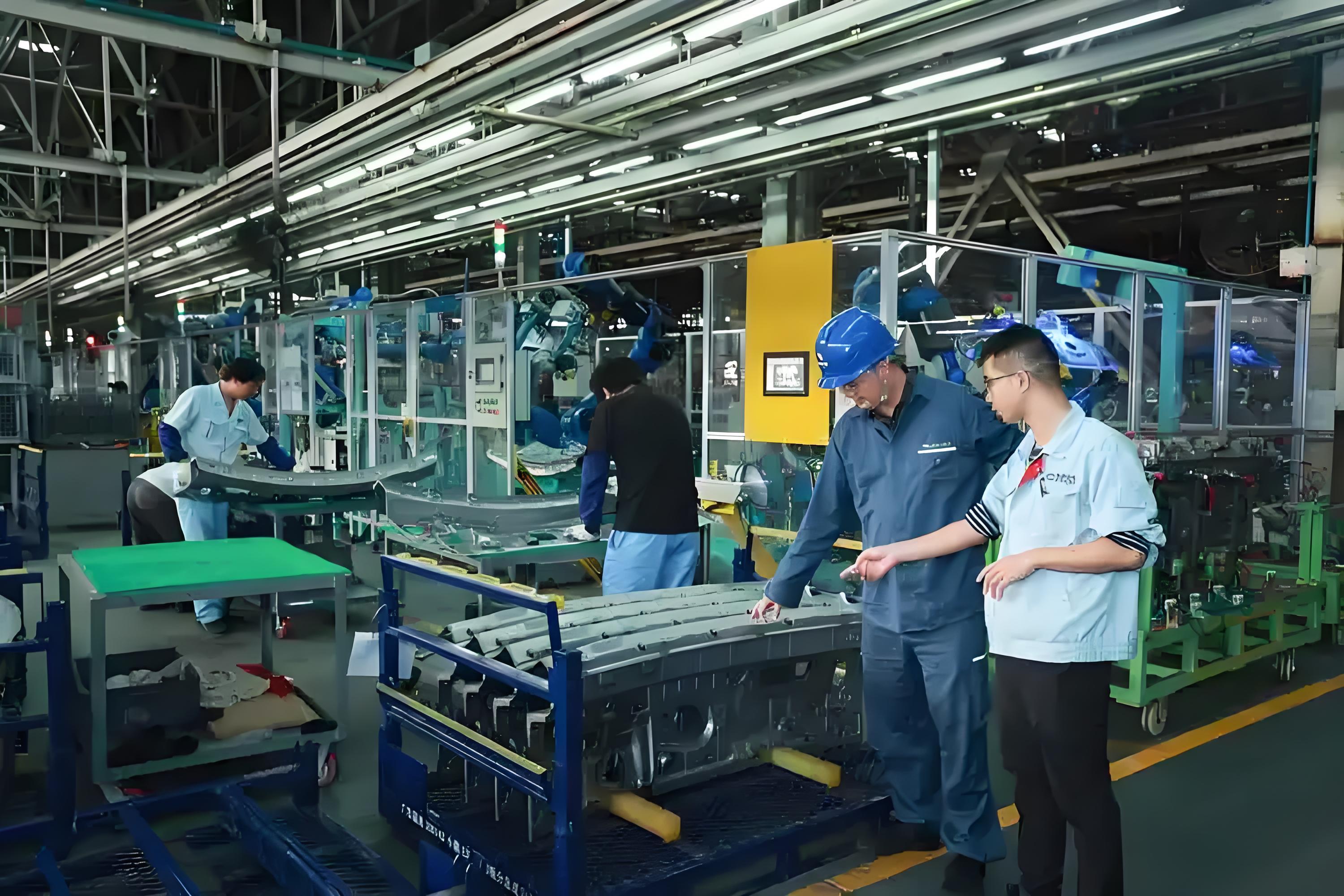
01 Sound Source Localization: From Vague Control to Precise Targeting
Traditional noise control often treats symptoms rather than causes, but a team from Shanghai Jiao Tong University published research in "Acoustic Technology" offering new ideas. Researchers set up sound intensity measurement points near key power plant equipment and, using P-P dual microphone probes, measured the surface radiated sound intensity of the plant, simplifying the equipment building into a surface sound source model.
"In the past, we only knew the plant boundary exceeded limits but couldn't identify who was responsible," explained Professor Jiang Weikang, the paper's corresponding author. By calculating the contribution weights of 11 main noise sources to the plant boundary prediction points, the team found that the gas turbine inlet and pre-module were the "culprits" with contribution rates of 25.8% and 33.9%, respectively.
Based on this, the team designed targeted sound barrier solutions, reducing plant boundary noise from exceeding limits to 56dB(A), meeting the national Class 2 acoustic environment standards. Similar SOUNDPLAN noise prediction software and SoundViewer comprehensive noise diagnosis and detection systems play key roles in such projects. Their industrial noise modules comply with ISO 9613-2 international standards, with prediction errors controllable within 1dB(A). 。
02 Dynamic Management: Intelligent Control of Airport Noise
A 2024 airport management patent demonstrates cutting-edge dynamic noise reduction practices. Sichuan Airport Group's system monitors residential area noise in real time and immediately activates a sound source localization - taxiway optimization response chain when aircraft noise exceeds limits.
The system first locks onto target flights using radar data, calculating their taxiing distance and straight-line distance to residential areas; then selects taxiway entrances meeting safety distances, simulating how the distance between aircraft and residential areas changes when taxiing 2000 meters under different entrance scenarios; finally choosing the entrance that minimizes noise impact duration.
"Adjusting taxiway entrances costs less than 5% of sound barrier walls but can reduce residential noise exposure time by 15%-30%," said patent inventor Qing Weishan. This dynamic strategy can reduce tens of thousands of disturbance incidents annually at dual-runway airports. 。
03 Hidden Crisis: The Health Cost of Compliant Noise
A more severe issue is that even noise meeting current standards still harms health. A study by Bazmaren University in Turkey on 172 workers found that long-term exposure to 78.22dB(A) (below the 85dB(A) limit) in a furniture factory resulted in significantly higher hearing thresholds at 2000-6000Hz compared to a low-noise group (60.55dB(A)).
"High-frequency hearing loss is an early sign of noise-induced hearing loss," emphasized first author Özge Gedik Toker. Surprisingly, the high-noise group’s work efficiency score (3.42) was significantly lower than the low-noise group (3.65), proving noise reduces productivity through cognitive interference. Tools like the SoundViewer comprehensive noise diagnosis and detection system, SONOCAT on-site sound absorption measurement system can quickly identify such hidden risks.
04 Technology Integration: The Future Path of Precise Noise Reduction
Current noise control shows three major technology integration trends:
Precision Diagnosis —such as the SoundViewer system combining sound arrays and spectrum analysis to achieve visualized noise source localization,
Intelligent Prediction —optimizing sound propagation models through machine learning, improving prediction accuracy by 40%,
Dynamic Control —real-time response systems represented by airport patents have been piloted at Capital Airport and Pudong Airport. Pilot projects
The newly revised 2025 "Industrial Enterprise Noise Control Design Standard" includes the "sound source contribution rate" indicator for the first time, requiring new projects to provide noise contribution analysis reports for major equipment. "Just like tracing PM2.5 sources is essential for air pollution control, noise control must also identify the 'real culprit'," said an expert involved in the standard revision.
As China's manufacturing moves toward high-end development, industrial noise control is undergoing a paradigm shift from passive protection to active control, and from total quantity control to source analysis. When a power plant worker removed earplugs used for ten years and pointed to the real-time sound source contribution data on the control screen, he said:
"Now we know who to 'hit'."
This silent revolution is just beginning.
References
1. Zeng Pengya et al. Research on Plant Boundary Noise Prediction and Contribution Analysis Method Based on Sound Source Monitoring [J]. Acoustic Technology, 2022
2.CN118609431A. Airport Management System Based on Noise Monitoring and Sound Source Analysis [P]. 2024
3.Gedik Toker et al. Industrial noise: impacts below permissible limits [J]. BMC Public Health, 2025
4.Ministry of Ecology and Environment. 2023 China Environmental Noise Pollution Prevention and Control Report [R]
SonoCat multifunctional acoustic measurement device,Noise Detection,Noise Monitoring,Noise Simulation Prediction,SoundPlan,SoundViewer