


Exploring the Main Methods of Product Reliability Testing
Release time:
2025-04-30 00:53
Source:
Introduction: Why Product Reliability is Crucial
In today's competitive market, product reliability directly affects a company's reputation and sales. Imagine if a phone malfunctions after just a few months of use; the consumer reaction is predictable. Therefore, ensuring product reliability is a challenge that companies must face.
The main methods for product reliability testing include the following:
Environmental Testing
Climatic Environmental Testing: Such as high temperature testing, low temperature testing, temperature and humidity cycling tests, thermal shock tests, etc., simulating product usage under different climate conditions to evaluate performance and reliability.
Mechanical Environmental Testing: Including vibration testing, shock testing, collision testing, drop testing, etc., used to assess product performance under mechanical stress.
Comprehensive Environmental Testing: Such as combined tests of temperature + humidity + vibration/shock, HALT (Highly Accelerated Life Testing), HASS (Highly Accelerated Stress Screening), etc., to more comprehensively evaluate product reliability under multiple environmental factors acting together.
Performance Testing
Functional Testing: Verifying whether the product operates normally according to design requirements, including tests of various functions, interfaces, and interactions, such as boundary value analysis, equivalence partitioning, and decision table testing.
Physical Performance Testing: Such as cross-hatch testing, wear resistance testing, scratch testing, plug-in and unplug testing, button life testing, etc., to evaluate the product's physical characteristics and reliability.
Electromagnetic Compatibility (EMC) Testing: Including radio frequency performance testing, electrostatic discharge immunity, electrical fast transient/burst immunity, etc., testing the product's resistance to electromagnetic radiation and interference.
Electrical Performance Testing: Such as temperature rise testing, withstand voltage testing, insulation resistance testing, dielectric strength testing, etc., to ensure the product's electrical performance meets requirements.
Accelerated Life Testing (ALT)
By increasing stress levels (such as temperature, voltage, etc.), accelerate the product's failure process to obtain product life information in a shorter time and predict its lifespan under normal usage conditions.
Failure Rate Testing
Probability Ratio Sequential Testing (PRST): Using statistical methods, based on preset truncation points and sample sizes, to determine whether the product meets reliability requirements.
Time and Failure Termination Testing: Evaluating product reliability based on test time and number of failures, calculating sample size and determining compliance with reliability standards.
Analysis and Evaluation Methods
Failure Mode, Effects, and Criticality Analysis (FMECA): Identifying potential failure modes of the product, analyzing their impact on product performance, assessing criticality, and proposing improvement measures.
Reliability Prediction: Estimating product reliability based on design, analysis, or test data, as well as data from similar products, predicting product lifespan and warranty conditions.
Modeling and Simulation: Creating graphical or mathematical representations of the product and its reliability performance, using simulation methods for verification, identifying bottleneck components, and optimizing design, manufacturing, and operational activities.
Other Tests
Packaging and Transportation Testing: Including environmental temperature and humidity testing, stacking tests, packaging compression tests, etc., to evaluate product reliability and stability during packaging and transportation.
IP Protection Testing: Dust and water resistance testing to evaluate the product's protection level and interference resistance.
Safety Testing: Such as insulation resistance, dielectric strength, impulse voltage testing, etc., to ensure product safety during use.
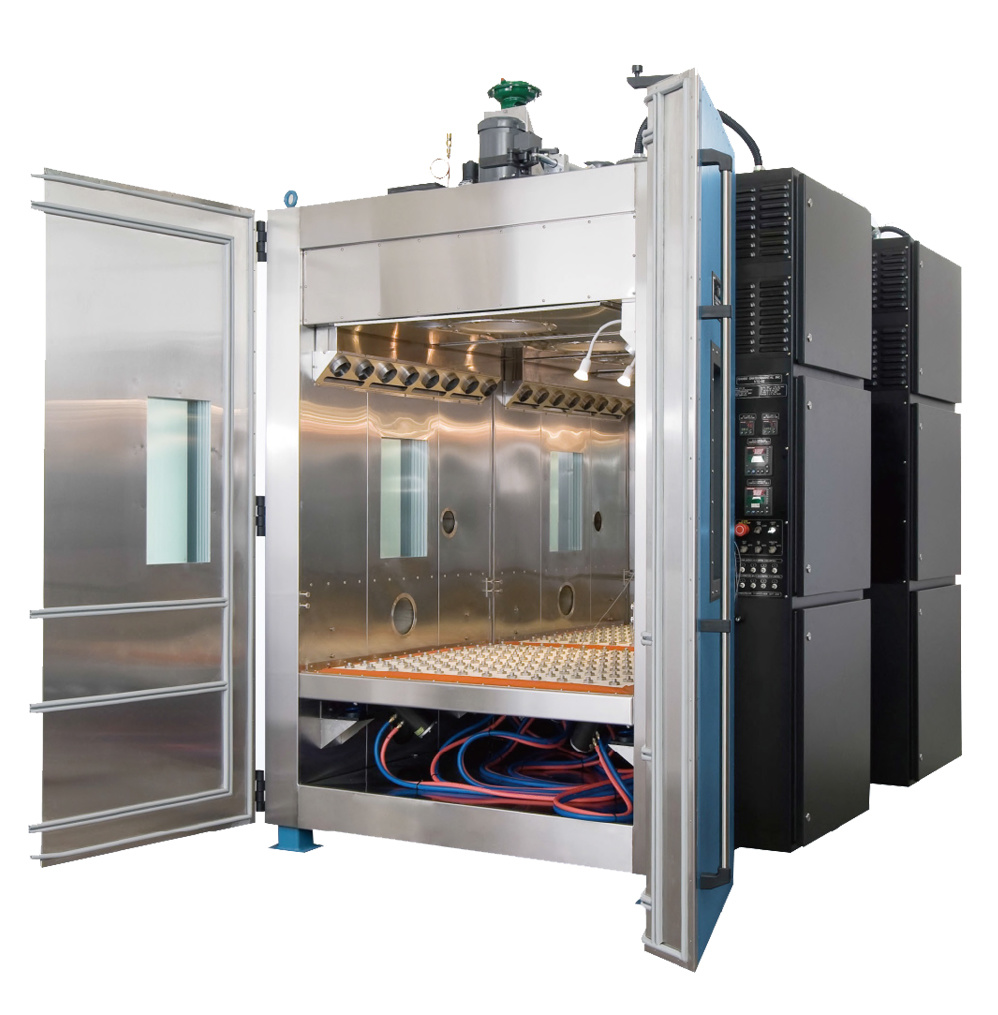
HANSE Special Environmental Test Chambers There are nine specifications: VTC-1, VTC-1.5, VTC-4, VTC-6, VTC-9, VTC-16, VTC-25, VTC-32, and VTC-36, providing typical environmental stimuli such as vibration, temperature, and humidity. By applying single or combined environmental stresses to products, the goal is to accelerate the discovery of potential defects and weak points.
R&D and design personnel continuously improve product defects revealed in HALT & HASS tests to achieve product quality improvement and lifespan extension.
HANSE Special Environmental Test Chambers The advantages are as follows:
1) Full vacuum liquid nitrogen proportional valve, high-precision proportional control, low noise, no condensation or dripping, safe and reliable;
2) Product airflow channel design effectively improves energy distribution, achieving higher temperature change rates while reducing energy consumption;
3) Raised platform and multi-layer structure improve airflow guidance while achieving high GRMS value transmission;
4) Core exciter with long life and extremely low failure rate, greatly reducing maintenance costs;
5) HanseView software developed by VR company, powerful and easy to operate, integrating multi-channel spectrum analysis functions.
HANSE High Acceleration Life Test System