


Intelligent Manufacturing: The Future of Automatic Generation of MBD Models and 2D Drawing Bubble Diagrams
Release time:
2025-04-15 00:58
Source:
Introduction
In the wave of intelligent manufacturing, Model-Based Definition (MBD) models are hailed as the key to future development. So, why are MBD models so important? In this article, we will explore the relationship between MBD models and Automatic Generation of 2D Drawing Balloon Charts and how they jointly drive the transformation of the manufacturing industry.
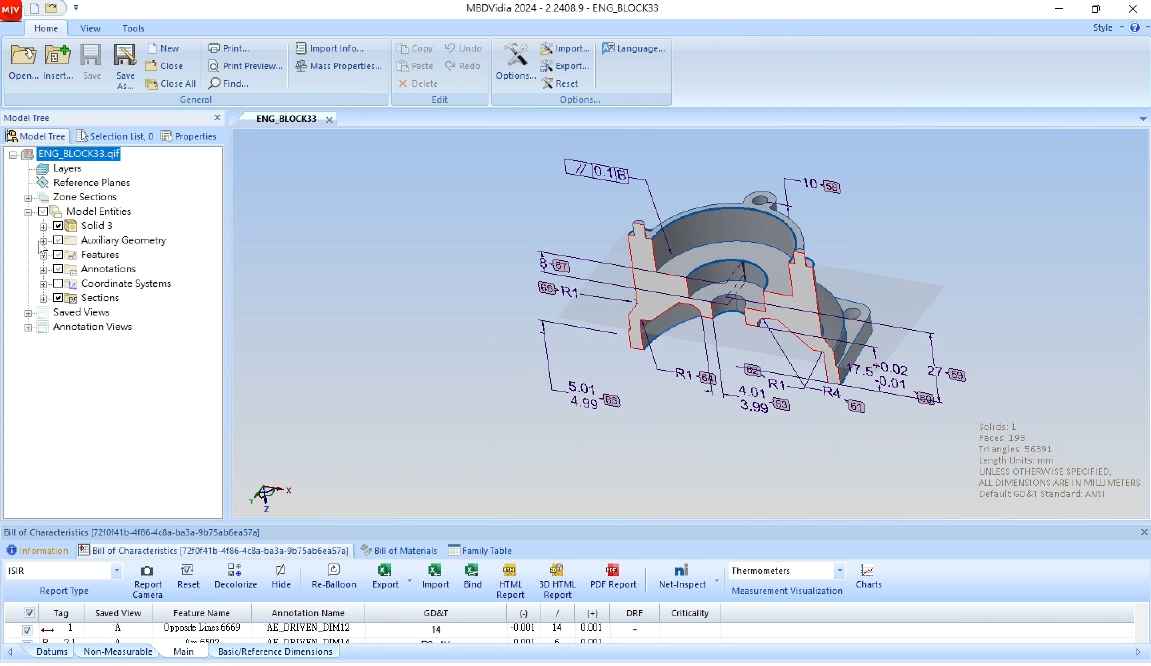
Definition and Advantages of MBD Models
MBD models refer to conveying product design information through 3D models, including dimensions, tolerances, materials, etc. Its greatest advantages are:
1. Error Reduction: Using 3D models can effectively reduce misunderstandings and errors found in traditional 2D drawings.
2. Increased Efficiency: Designers and engineers can collaborate more quickly, avoiding cumbersome document transfers.
3. Promoting Innovation: 3D model visualization allows teams to discuss designs more intuitively, inspiring more creativity.
Significance of Automatic Generation of 2D Drawing Balloon Charts
In traditional manufacturing, drawings are the basis for communicating design information. However, Automatic Generation of 2D Drawing Balloon Charts automating this process has brought revolutionary changes. Let's look at its advantages:
- Automation: Software automatically generates balloon charts, saving a lot of manual drawing time.
- Accuracy: Automatically generated balloon charts avoid human errors, ensuring accurate information transmission.
- Real-time Updates: When design changes occur, balloon charts can be updated instantly, ensuring all relevant personnel receive the latest information.
Synergistic Effects in Intelligent Manufacturing
In the context of intelligent manufacturing, combining MBD models with Automatic Generation of 2D Drawing Balloon Charts can create huge synergistic effects. Collaboration among designers, engineers, and production staff becomes closer, and information flows more smoothly. For example, in a project, designers can directly generate balloon charts through MBD models and share them with the production team, enabling production personnel to quickly understand design intent and reduce communication costs.
Case Study: Application Example of a Company
Let's look at a specific case: an automotive manufacturing company improved production efficiency by 30% after introducing MBD models and Automatic Generation of 2D Drawing Balloon Charts Their design team was able to complete work in days that previously took weeks. This not only shortened the product launch time but also significantly reduced production costs. Additionally, the error rate dropped substantially, and customer satisfaction increased.
Future Outlook: The Integration of MBD and Automation
Looking ahead, the integration of MBD models and Automatic Generation of 2D Drawing Balloon Charts will become even closer. With the development of artificial intelligence and machine learning technologies, more intelligent tools are expected to appear in manufacturing. These tools will not only automatically generate drawings but also predict potential design issues and make adjustments in advance.
Conclusion
In summary, MBD models play an indispensable role in intelligent manufacturing, while Automatic Generation of 2D Drawing Balloon Charts provides strong support for them. From improving efficiency to reducing errors, this intelligent transformation is bringing new opportunities to the manufacturing industry. Enterprises pursuing innovation and efficiency should consider how to better utilize the combination of these two to meet future challenges!
Automatic generation of 2D drawing bubble diagrams