


Using the EikoTwin DIC system: Is it feasible to test objects without a mesh model?
Release time:
2025-04-13 01:06
Source:
Introduction
In modern engineering testing, Grid-based DIC (Digital Image Correlation technology) has become a popular strain measurement tool. However, in some cases, we may face test objects without a grid model. At this time, can the EikoTwin DIC strain measurement system function effectively? Let's explore this question together.
What is DIC?
DIC, or Digital Image Correlation technology, is a non-contact strain measurement method. It calculates deformation and strain by analyzing changes in images of the object's surface. Traditionally, DIC requires applying a specific grid pattern on the test object to facilitate image processing and analysis. However, the introduction of the EikoTwin DIC system has made this process more flexible.
Test objects without grid models
So, can the EikoTwin DIC system work properly with test objects that lack a grid model? The answer is yes! Although conventional DIC relies on grid models, the EikoTwin DIC system currently offers a network self-generation feature, enabling effective strain measurement even when the test object has no grid model.
Flexible application scenarios
Whether it is complex material testing or simple structural verification, the EikoTwin DIC system can handle it with ease. It can capture clear images under different lighting conditions and backgrounds, thereby extracting strain data. This is especially important for test objects with complex surface structures or uneven material properties.
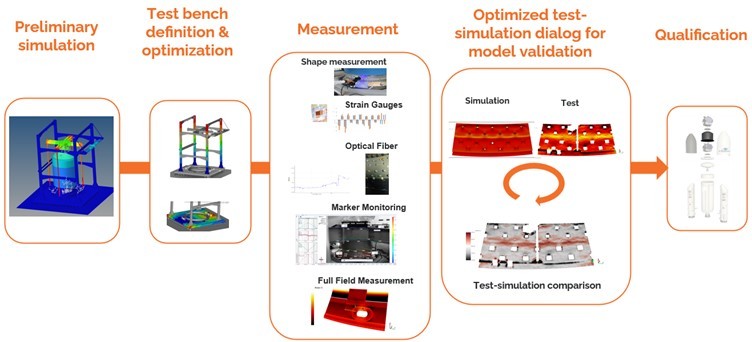
How to use the EikoTwin DIC system
The process of using the EikoTwin DIC system is relatively simple. First, ensure the test object's surface is clean to prevent dust or oil from affecting image quality. Then, apply speckle patterns on the surface, select appropriate cameras and light sources, and adjust the shooting angle and distance. Next, set parameters through the software and start the measurement. The system will automatically analyze image changes and calculate strain data.
Advantages of the EikoTwin DIC system
Compared with traditional DIC technology, the EikoTwin DIC system has several significant advantages:
- Grid-based model: Measurement results are directly displayed on the grid model, making simulation and actual measurement comparisons more intuitive.
- High-precision measurement: The EikoTwin DIC system can provide high-resolution image capture, ensuring the accuracy of measurement results.
- Strong adaptability: It can adapt to various materials and surface conditions with great flexibility.
Summary
In summary, the EikoTwin DIC strain measurement system performs excellently even on test objects without grid models. With its flexibility and high precision, it provides engineers with a powerful tool that greatly expands testing possibilities. In the future, with continuous technological advancements, we have reason to believe that the EikoTwin DIC system will be applied in more fields, promoting the development of testing technology.
Conclusion
Therefore, when facing test objects without grid models, the EikoTwin DIC strain measurement system is undoubtedly a reliable choice. Let's look forward to its application in more scenarios in the future!
DIC Based on Grid Model