


Exploring the Possibility of Comparative Validation of Simulation Experiments Using the EikoTwin DIC System
Release time:
2025-04-11 01:39
Source:
Introduction
In modern engineering, simulation technology is rapidly evolving, especially in the fields of material testing and structural analysis. Many engineers and researchers are actively exploring how to conduct effective testing without network models. Today, we will delve into an important question: Can test objects without network models use the EikoTwin DIC strain measurement system?
Introduction to the EikoTwin DIC System
EikoTwin DIC (Digital Image Correlation technology) is an advanced strain measurement system that uses high-precision cameras to capture the deformation of objects during loading. By comparing two frames of images, EikoTwin can calculate the strain distribution on the object's surface. This technology is widely used in both laboratory and field testing, especially in material mechanics and structural engineering. The difference between EikoTwin DIC and traditional DIC is that it imports simulation models, allowing DIC analysis results to be directly displayed on the network model, making the comparison between simulation and actual measurement more intuitive and efficient.
Advantages of EikoTwin DIC
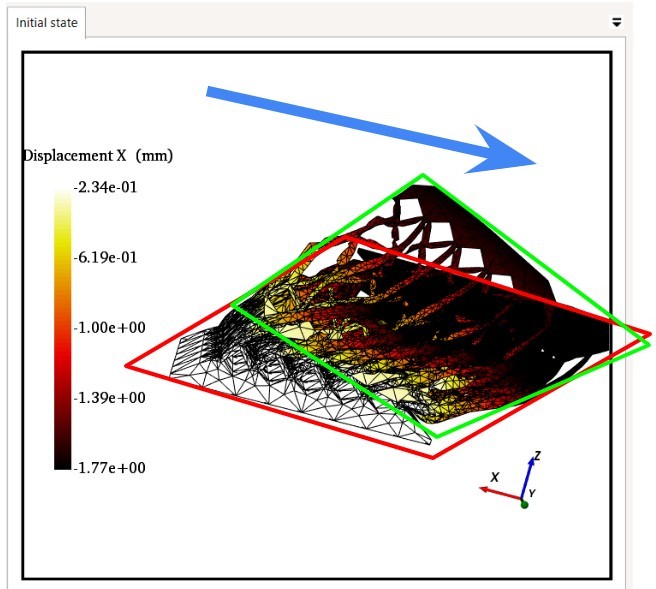
Despite these challenges, the EikoTwin DIC system still demonstrates excellent strain measurement capabilities. Its high resolution and real-time data processing make it an ideal tool for experimental validation. Currently, even without network models, the system can assist customers in automatically generating mesh models, then provide reliable test results through high-quality image capture and precise data analysis.
Practical Cases of Simulation Experiment Comparison and Validation
To better understand the application of EikoTwin DIC without network models, we can refer to some practical cases. In certain material tests, researchers obtained strain data through the EikoTwin system and compared it with theoretical models. The results showed the accuracy and consistency of the data. This simulation experiment comparison and validation not only enhanced the understanding of material behavior but also verified the effectiveness of the EikoTwin DIC system under complex testing conditions.
Conclusion
In summary, test objects without network models can indeed use the EikoTwin DIC strain measurement system for simulation experiment comparison and validation. Despite many challenges, this system, with its high performance and flexibility, can provide convincing data support in practical applications. In the future, with continuous technological advancements, we have reason to believe that the DIC system will play a greater role in more fields.
Closing Remarks
We hope this article provides you with valuable insights to help you conduct more effective simulation experiment comparison and validation using EikoTwin DIC without network models. Let us look forward to more innovations and breakthroughs in the future!
Simulation Experiment Comparative Verification