


Would you like to learn about on-site sound absorption measurement and multifunctional noise detection and assessment?
Release time:
2025-03-28 01:21
Source:
Introduction
In modern society, noise pollution has become an issue that cannot be ignored. Whether it is the hustle and bustle of the city or the roar of industry, it has a profound impact on our quality of life. To address this problem, Multifunctional Noise Detection and Evaluation Equipment is particularly important. These devices not only help us detect noise but also assess its impact on the environment and humans.
What is multifunctional noise detection and evaluation equipment?
Simply put, multifunctional noise detection and evaluation equipment is a high-tech tool capable of real-time monitoring and assessing noise levels in the environment. These devices usually have data recording, analysis, and reporting functions, providing scientific basis for relevant departments to take corresponding measures to reduce noise pollution.
The necessity of on-site sound absorption measurement
So, why is on-site sound absorption measurement so important? First, sound absorption measurement helps us understand the propagation characteristics of noise in specific environments. Second, based on the measurement results, we can formulate more effective noise control strategies. Imagine, without this data support, how would we know which areas need improvement?
Sound absorption measurement methods
The reverberation chamber method uses a room with a uniformly diffuse sound field to determine the sound absorption characteristics of materials by measuring the difference in sound energy decay before and after placing the material. This method simulates the random incidence of sound waves in real environments, and the measured absorption coefficient is close to the actual absorption performance during use.
The impedance tube method uses the standing wave principle to calculate the material's sound absorption coefficient and acoustic impedance by measuring the distribution of reflected and incident sound pressure inside the tube. This method is suitable for mid-to-high frequency measurements and offers high testing accuracy.
The two-microphone method separates sound wave components by simultaneously measuring incident and reflected waves with two microphones. It is suitable for a wider frequency range, including low frequencies.
The free-field method measures the oblique incidence absorption coefficient by setting a specific angle of incidence in a free or semi-free sound field. It is suitable for measuring the sound absorption performance of large-scale materials or structures and is applicable to open environments and outdoor sound-absorbing materials.
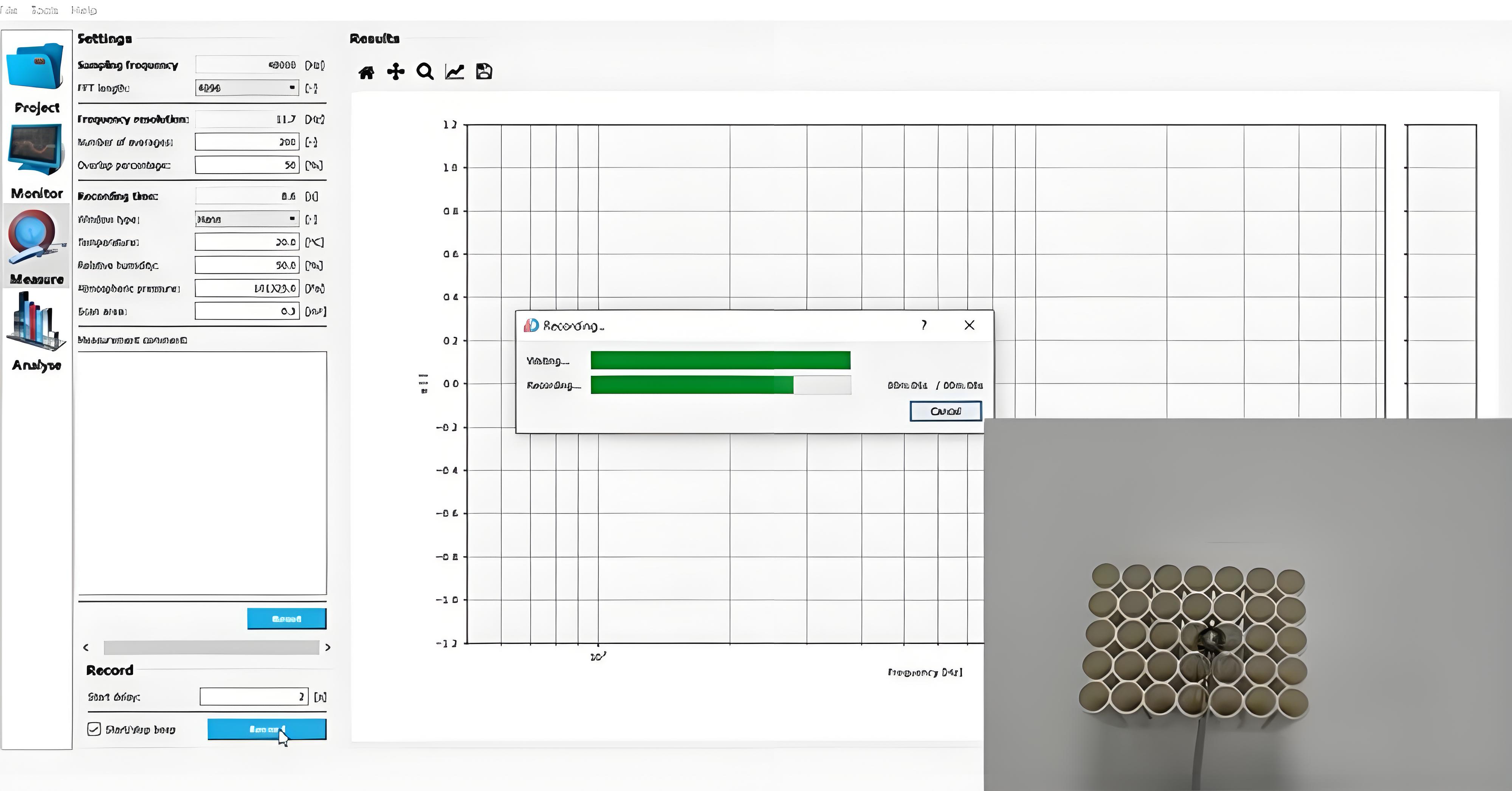
The local plane wave method is a unique sound absorption measurement technique used by SonoCat multifunctional acoustic measurement equipment. It captures and analyzes sound using a spherical microphone array and decomposes the sound field into incident and reflected parts using the local plane wave method, allowing precise measurement of sound absorption. This method provides an innovative in-situ measurement technology for absorption coefficients, overcoming the dependence on laboratory environments of traditional methods, making precise sound measurements possible in various real environments.
How to choose the right equipment
When selecting on-site sound absorption measurement and evaluation equipment, it is necessary to comprehensively consider measurement objectives, environmental conditions, device performance, and operational convenience. The following are key considerations and equipment selection recommendations:
1) Clarify measurement requirements and standards
Sound absorption parameter requirements: Choose appropriate measurement methods (such as reverberation chamber method, impedance tube method, sound intensity method, or impulse response method) based on target parameters (e.g., absorption coefficient, reverberation time, sound intensity distribution).
Frequency range: Ensure the device covers the required frequency band (e.g., 20 Hz~20 kHz), as different materials have significantly different absorption performance at different frequencies.
Standard compliance: Follow relevant international or national standards (such as ISO 354, ISO 10534-2, GB 3785, etc.) to ensure the device meets accuracy requirements (e.g., Type 2 or higher precision sound level meters).
2) Device performance and core components
Probe selection
Traditional sound intensity probes: Suitable for simple sound field environments, easy to operate, low cost, but weaker anti-interference ability in complex sound fields or multi-source environments.
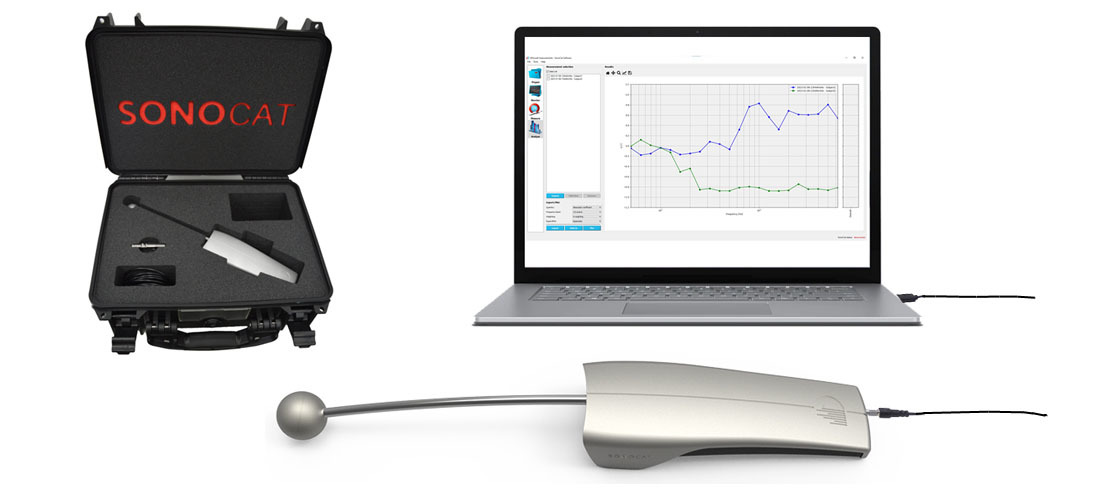
Spherical probes (such as SonoCat): Suitable for complex sound fields or high background noise environments, stronger anti-interference ability (error ±0.5 dB), support multi-point sound field information collection, but require computer real-time analysis.
Microphones and sound sources
Prefer free-field microphones or multi-channel arrays to ensure wide frequency response and phase matching.
Sound sources should cover the target frequency band, such as broadband noise generators (pink/white noise) or impulse sources (balloon bursts, electric sparks).
Data acquisition and analysis systems
Support real-time spectrum analysis (FFT, octave bands) and multi-channel synchronous acquisition, such as Brüel & Kjær PULSE system or portable sound cards + software (e.g., REW).
3) Environmental adaptability and portability
Anti-interference ability: For complex environments (such as factories, outdoors), choose devices with strong noise resistance (such as spherical probes). When background noise increases by 10 dB, the error should be less than ±0.5 dB.
Temperature, humidity, and protection: Devices need to adapt to on-site environments (such as waterproof and dustproof designs) to avoid performance degradation due to high temperature, humidity, or chemical gases.
Portability: On-site measurements often require lightweight devices (such as handheld sound level meters or similar, portable impedance tubes) to reduce installation and transportation difficulties.
4) Operational convenience and maintenance
Ease of use: Devices with user-friendly interfaces and simplified operation processes can reduce the risk of misoperation, such as sound level meters with integrated touch screens or analyzers supporting wireless transmission.
Maintenance and calibration: Regularly calibrate microphone sensitivity (using acoustic calibrators) and phase matching (for sound intensity probes) to ensure long-term stability.
Battery and endurance: Prefer devices with long battery life or support external power supply to avoid measurement interruptions due to power failure on site.
5) Software and data processing functions
Real-time analysis: Software should be equipped with reverberation time analysis, sound intensity distribution calculation, etc. (such as EASERA, Artemis SUITE), supporting data and chart export.
Compatibility and scalability: Devices should support multi-platform data synchronization (such as computers, tablets) and future function upgrades.
6) Brand service and cost considerations
Brand Qualification: Choose certified manufacturers (such as Brüel & Kjær, NTi) to ensure equipment quality and after-sales service.
Cost Performance: Consider overall performance, maintenance costs, and scalability, avoiding excessive pursuit of high-end equipment. For example, simple scenarios can use traditional probes, while complex scenarios require spherical probes plus high-precision analysis systems.
Data Analysis and Result Application
The measured data is not the final goal; the analysis and application of the data are key. By analyzing noise data, we can identify noise sources, assess their impact on the surrounding environment, and propose improvement suggestions. For example, if the noise level in a certain area is too high, additional soundproofing measures may be needed, or the working hours of the construction site may need to be adjusted.
Conclusion
In summary, Multifunctional Noise Detection and Evaluation Equipment plays an indispensable role in on-site sound absorption measurement. Through accurate measurement and analysis, we can not only effectively control noise pollution but also improve people's quality of life. In the future, with continuous technological advancement, these devices will become more intelligent and portable, contributing to our environmental protection efforts.
Multifunctional Noise Detection and Evaluation Equipment