


Explore EikoTwin DIC: The Future of 3D Full-Field Strain Measurement
Release time:
2025-03-22 01:01
Source:
Introduction
In modern engineering and scientific research, accurate strain measurement is crucial. Advances in three-dimensional full-field strain measurement technology enable us to obtain deformation information of structures with higher precision and efficiency. Today, we will delve into the EikoTwin DIC system, which utilizes a stereo mesh model for three-dimensional full-field strain measurement, ushering in a new era of strain measurement.
What is EikoTwin DIC?
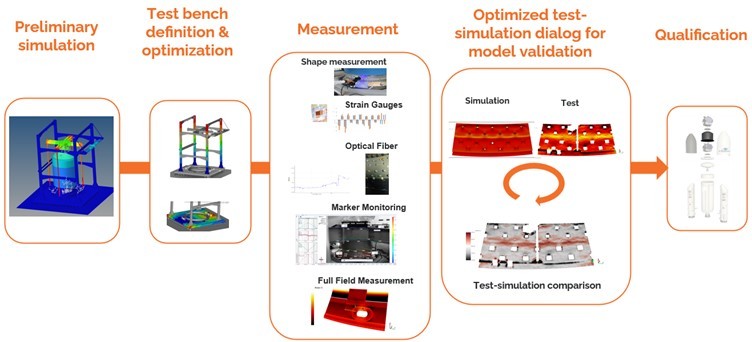
EikoTwin DIC (Digital Image Correlation) is an image processing-based strain measurement system. Compared to traditional strain measurement methods, it does not require direct contact with the measured object, making it more flexible and efficient. By capturing images of the object during loading, EikoTwin DIC can analyze and calculate the strain distribution on the object's surface in real time.
Advantages of the Stereo Mesh Model
The stereo mesh model is the core component of the EikoTwin DIC system. By creating an accurate mesh on the object's surface, it helps the system better capture displacement and strain information. The use of this model greatly improves measurement accuracy, especially in complex strain fields, effectively reducing errors.
1. Improved Measurement Accuracy
Using the stereo mesh model, EikoTwin DIC can perform high-precision measurements in smaller areas. As a result, even minute deformations can be clearly captured, ensuring data reliability.
2. Real-time Monitoring
The system can monitor the deformation process of objects in real time, providing engineers with immediate feedback. This is particularly important in dynamic testing, helping engineers adjust experimental plans promptly and avoid potential risks.
Wide Range of Applications
EikoTwin DIC has broad applications in multiple fields. For example, in civil engineering, engineers can use the system to monitor the structural health of bridges and buildings. In materials science, researchers use it to study the performance of new materials under different loads.
Future Prospects
With continuous technological advancements, the EikoTwin DIC system will keep evolving, with more innovative features expected to be added, such as more efficient data processing algorithms and smarter analysis tools. This will bring new possibilities to three-dimensional full-field strain measurement, promoting further development in related research and applications.
Conclusion
In summary, the EikoTwin DIC three-dimensional full-field strain measurement system based on the stereo mesh model provides a novel and effective tool for engineering and scientific research. Its flexibility and high-precision measurement capabilities not only enhance our research efficiency but also lay the foundation for future innovations. With ongoing technological progress, we look forward to seeing more application examples and breakthrough achievements in the near future.
Three-dimensional full-field strain measurement