


Essential 3D Sound Intensity Measurement Techniques for On-Site Acoustic Measurements
Release time:
2025-03-22 01:00
Source:
What should be noted in on-site acoustic measurements?
In fields such as noise control, environmental monitoring, and architectural acoustics, on-site acoustic measurement is an indispensable part. However, to obtain accurate measurement results in complex environments, mastering some key techniques is essential. Among these, Three-dimensional sound intensity measurement is an important aspect. Let's explore the key points to pay attention to in on-site acoustic measurements!
1. Choose the appropriate measurement equipment
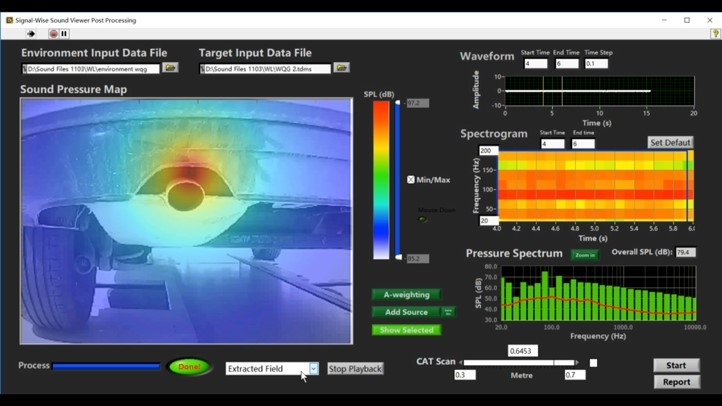
First, selecting the right measurement equipment is crucial. Different acoustic measurement needs require different equipment. For example, when conducting Three-dimensional sound intensity measurement it is necessary to use a high-sensitivity microphone array. This equipment can accurately capture the directionality and intensity of the sound source, providing more detailed acoustic data. The SOUNDVIEWER comprehensive noise detection and analysis system from Signal-Wise in the USA can not only locate noise sources in three-dimensional space and measure three-dimensional sound intensity but also reconstruct the three-dimensional sound field, making it very practical.
2. Influence of environmental factors
Secondly, the impact of environmental factors on acoustic measurements should not be underestimated. During measurement, try to avoid external interferences such as wind noise and traffic noise. Measurements can be conducted during quiet periods or barriers can be set up around the measurement site to reduce background noise interference. This ensures Three-dimensional sound intensity measurement accuracy.
3. Selection of measurement location
Additionally, the choice of measurement location is equally important. Ensure the measurement point is close enough to the sound source while avoiding near-field effects. Generally, selecting a measurement point at a certain distance from the sound source better reflects the overall characteristics of the sound field.
4. Data collection and analysis
When conducting Three-dimensional sound intensity measurement data collection and analysis are also important tasks. Using professional software for data processing helps us better understand the distribution characteristics of the sound field. Moreover, keeping good data records is crucial for subsequent comparison and analysis.
5. Pay attention to safety and regulations
Finally, safety and regulations cannot be ignored. During on-site measurements, it is essential to comply with relevant safety regulations to ensure the safety of personnel and equipment. Additionally, following standard operating procedures can effectively improve the reliability of measurement data.
Summary
On-site acoustic measurement is a technically demanding and strict task. By paying attention to the key points above, especially the techniques of Three-dimensional sound intensity measurement we can more accurately capture acoustic characteristics, providing strong data support for subsequent noise control and environmental improvement. Remember, details determine success; taking every measurement seriously is the key to achieving ideal results!
Three-dimensional sound intensity measurement