


A visualization scheme for rehabilitation data based on motion capture and biomechanical analysis is more conducive to the assessment and analysis of sports rehabilitation outcomes.
Release time:
2026-07-16 18:12
Source:
For a long time, the evaluation of exercise rehabilitation outcomes has largely relied on patients’ Subjective description With the therapist's Visual estimation However, questions such as how many degrees of motion the joint has regained, whether force generation is symmetrical between both sides, and whether muscle loading has returned to a safe range cannot be answered merely by “observing” or “asking.” When… Motion capture technology Break down movement into quantifiable three-dimensional data, and then by Biomechanical analysis Only by reconstructing the invisible muscle forces and joint loads on the body surface can rehabilitation assessment truly shift from “experience” to “evidence.”
01 What does the assessment and analysis of exercise rehabilitation outcomes entail?
A scientific rehabilitation assessment is not based on a single metric, but rather on a comprehensive continuum that spans from “external movement” to “internal loading”:
▍Kinematics: The "Form" of Movement
Joint range of motion (ROM), gait spatiotemporal parameters, and postural angles are the most intuitive indicators. For example, in a gait study of juvenile idiopathic arthritis (JIA), children in the active phase Knee range of motion was significantly lower than that of healthy peers (46.3° vs 49.8°). , such subtle differences are precisely sensitive indicators of the recovery process [1] 。

Verification of the marker detection and removal procedure in the video: (a) Original frame, (b) Detected markers, (c) Embedded frame used for marker-free analysis.
▍Dynamics: The "Force" of Motion
Using a three-dimensional motion capture system and a force platform, it is possible to quantify parameters during the gait cycle. Peak Ground Reaction Force , assessing the impact load on the knee joint during movement [2] . Strength is the key variable determining whether an organization can safely withstand training.
▍Symmetry and Functional Quality
Symmetrical bilateral force production and multi-joint coordination often provide a more accurate reflection of real-world function than data from a single joint. Research based on wearable inertial sensors has analyzed 3,526 exercise intervals , extract those related to biomechanical assessment Motion Symmetry Coefficient , the classification accuracy for sports and physiological features reaches 95.5% [3] 。

02 How can we effectively conduct outcome assessment and analysis in sports rehabilitation?
For an assessment to be credible, the key lies in three points: The data must be accurate, the models must be deep, and the processes must be reproducible. 。
First, precise motion capture serves as the foundation. Optical marker-based motion capture remains the gold standard for motion analysis, enabling three-dimensional kinematic assessment of complex structures such as the shoulder joint across multiple dynamic movements. [4] 。 BTS SMART-DX EVO Intelligent Motion Capture System Employing a distributed intelligent architecture, it can integrate up to 256 infrared cameras with built-in processing units and natively synchronize force plates, surface electromyography (sEMG), and inertial sensors, delivering high-precision, multi-source synchronized raw data.
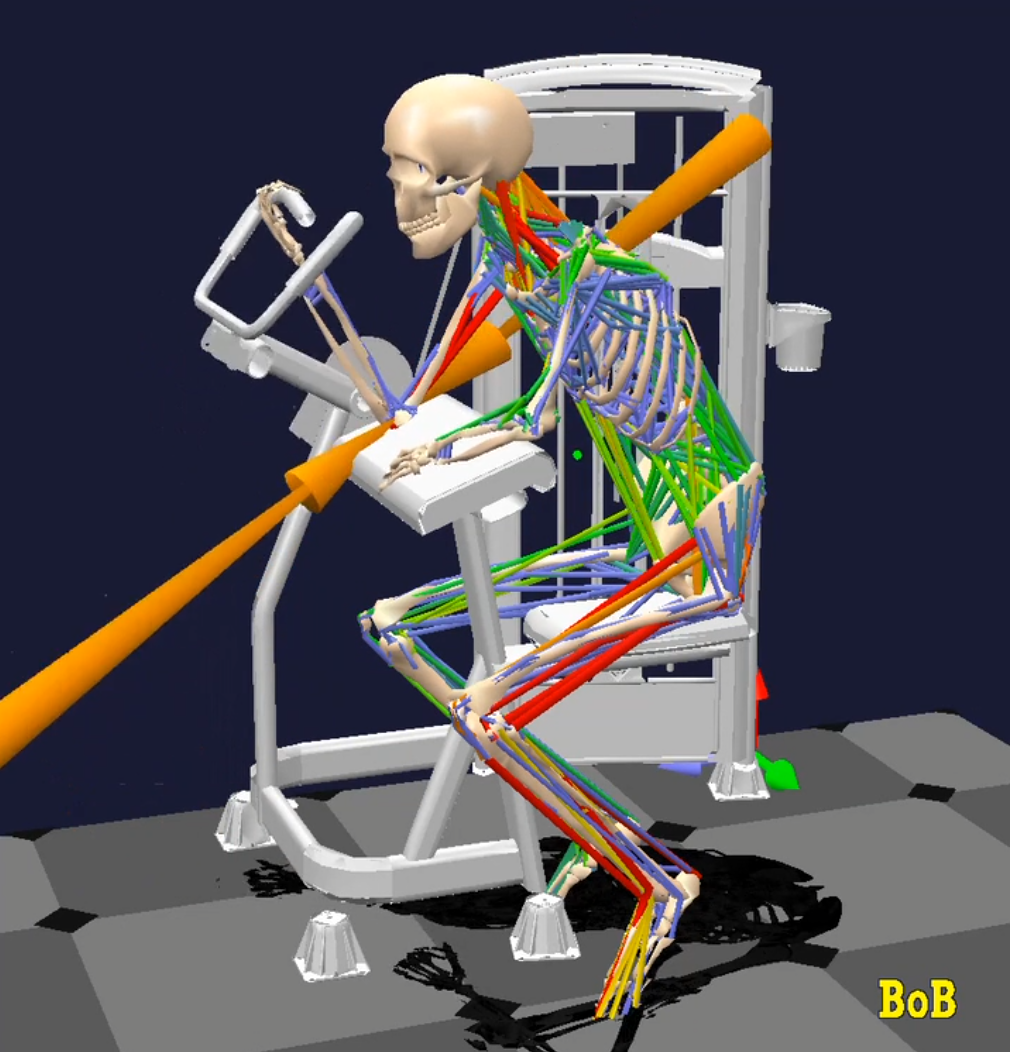
Second, biomechanical modeling enables assessments to “see deeper.” Muscle force and joint contact load are the key determinants of rehabilitation safety, yet they cannot be measured directly. ANYBODY and BOB This type of biomechanical simulation software for human movement uses inverse dynamics to resolve the uncertainty inherent in muscle redundancy, enabling the computation of muscle activity, muscle forces, and joint reaction forces from observed motion. BOB Human Movement Biomechanics Analysis Software A human body model comprising 36 rigid segments, 34 joints, and over 600 muscles is integrated, enabling the computation of center-of-mass trajectories, ground reaction forces, muscle forces, and joint contact loads, thereby elevating motion-capture data to a comprehensive internal biomechanical representation.
Third, accessibility determines whether long-term follow-up is feasible. Although traditional marker-based systems are accurate, they are hampered by high costs ( $150,000–over $500,000 ), approximately 60 minutes for spot preparation, as well as the displacement caused by marking points Soft-tissue artifacts (errors often exceed 10 mm and 10°) [5] ; Data missing due to dropped or occluded marker points requires specialized algorithms to reconstruct the complete sequence [6] In recent years, AI-driven markerless motion capture has been rapidly filling the gap.
Markerless motion capture with multiple cameras has achieved research-grade joint localization accuracy of 16–34 millimeters, and monocular systems demonstrate sensitivity of 82%–88% for longitudinal monitoring of fall risk in older adults and stroke recovery; this technology is transforming motion analysis from a “lab‑only” domain to one that is accessible in the community. —— Georganakis et al., review in Bioengineering, 2026 [5]
This trend has been clinically validated: a single-camera markerless gait pipeline demonstrated robust agreement with the gold-standard system across 108 subjects. [1] ; relying solely on a portable solution using a smartphone for video recording, achieving this within over 15 hours of synchronized data Joint angular error is less than 3° Gait metrics have ICC > 0.9 and operate stably across 1,021 real-world clinical video segments. [7] 。

03 A Visualization Scheme for Rehabilitation Data Based on Motion Capture and Biomechanical Analysis
With accurate data and sophisticated models, the final step is Visualization of Sports Rehabilitation ——Transform abstract mechanical data into intuitive visualizations that both doctors and patients can easily understand. An effective plan typically follows the " Collection → Modeling → Visualization → Decision-Making "Closed-loop unfolding:
Collection and Modeling: First by BTS SMART-DX EVO Motion capture system Collect high-precision three-dimensional motion data along with synchronized force and electromyography (EMG) data, then submit ANYBODY and BOB It retroactively calculates internal biomechanical quantities such as muscle forces, joint contact loads, and the center-of-mass and ground-reaction-force trajectories. Leveraging the MATLAB/Simulink environment, BOB can simultaneously visualize time-varying muscle force distributions and joint loads in a 3D model alongside corresponding curves, making it immediately clear “which muscle bears what load and when.”
Visualization is communication: When left–right muscle strength bar graphs, joint angle trend lines, and gait symmetry heat maps are displayed side by side, therapists can quickly identify compensations and areas of weakness, while patients can see their progress through intuitive feedback—“visible rehabilitation” itself serves as a powerful motivator. Research also shows that combining wearable sensors with virtual exercise environments enables continuous biomechanical data feedback in settings that closely mimic real-world scenarios, expanding the horizons of rehabilitation training and telemedicine. [3] 。
Data-Driven Decision Making: Based on cycle-by-cycle, comparable quantitative curves, the intensity and progression pace of rehabilitation programs can be precisely adjusted, transforming assessment from a one-time conclusion into a traceable, dynamic process. Motion capture is responsible for “seeing clearly,” biomechanics for “calculating thoroughly,” and visualization for “explaining things clearly.” —The synergy of these three components constitutes a comprehensive methodological framework for evaluating the effectiveness of modern sports rehabilitation.
Conclusion | The advancement of sports rehabilitation essentially transforms “recovery” from an elusive, subjective experience into a quantifiable, comparable, and traceable chain of evidence. When motion capture provides precise movement data, biomechanics reconstructs internal loads, and visualization communicates both to patients and clinicians, the evaluation of rehabilitation outcomes truly enters a new era of evidence-based, precise, and sustainable practice.
References
[1] Behl, A.; Papies, D.; Ilg, W.; Kraft, M.; Bevot, A.; Hansmann, S. Markerless gait analysis for children and adolescents with juvenile idiopathic arthritis using a machine learning pipeline. Pediatric Rheumatology , 2026, 24: 29. DOI: 10.1186/s12969-026-01211-w.
[2] Zhang, H. Biomechanical Analysis in Sports Injury Prevention and Rehabilitation: Current Status and Future Trends. Journal of Human Movement Science , 2025, 6(1): 40. DOI: 10.23977/jhms.2025.060106.
[3] Procházka, A.; Charvátová, H.; Honzírková, M.; Schätz, M. Integrated Biomechanical Motion Analysis in a Virtual Cycling Environment Using Wearable Sensors. IEEE Access , 2025, 13: 175069. DOI: 10.1109/ACCESS.2025.3619396.
[4] Sassi, M.; Mancini, L.; Carnevale, A.; et al. Preoperative radiomic biomarkers reflect functional shoulder impairment in rotator cuff tears: a structure–function analysis. Frontiers in Bioengineering and Biotechnology , 2026, 14: 1774121. DOI: 10.3389/fbioe.2026.1774121.
[5] Georganakis, P.; Spinthiropoulos, K.; Panitsidis, K.; Parris, D.; Gerodimou, V. From Optical to AI-Driven Markerless Motion Capture in Motor Learning and Rehabilitation. Bioengineering , 2026, 13(7): 776. DOI: 10.3390/bioengineering13070776.
[6] Zheng, C.; Zhuang, Q.; Peng, S.-J. Efficient motion capture data recovery via relationship-aggregated graph network and temporal pattern reasoning. Mathematical Biosciences and Engineering , 2023, 20(6): 11313–11327. DOI: 10.3934/mbe.2023501.
[7] Peiffer, J.D.; Shah, K.; Djuraskovic, I.; et al. Portable biomechanics laboratory enables clinically accessible movement analysis from a handheld smartphone. npj Digital Medicine , 2026. DOI: 10.1038/s41746-026-02825-w. (Online ahead of print)
Regarding in the text BTS SMART-DX EVO Intelligent Motion Capture System (camera count, distributed architecture, multi-source synchronization capabilities), ANYBODY Human Musculoskeletal Simulation Modeling Software (Inverse dynamics, muscle forces, and joint reaction force computation) and BOB Human Movement Biomechanics Analysis Software (36 segments / 34 joints / over 600 muscle models, MATLAB environment and visualization capabilities) of the Product Description , derived from publicly available technical documentation provided by various manufacturers and industry‑wide public information; this material is not subject to the data citation requirements of the aforementioned references and is therefore treated separately.
Sports rehabilitation,Sports Biomechanics,Motion capture,Human Skeletal and Muscular System Simulation Modeling,BOB,ANYBODY,BTS SMART-DX EVO Intelligent Motion Capture System