


2026 SoundPLAN Software: A Practical Application Guide for Noise Simulation, Prediction, and Assessment Across All Scenarios
Release time:
2026-07-10 10:48
Source:
📋 Article Outline
- Core Definitions of SoundPLAN Software and Highlights of the 2026 Version Upgrade
- Standard Operating Procedures for Noise Simulation, Prediction, and Assessment Using SoundPLAN Software
- Adaptation Plan for Multi-Scenario Noise Simulation, Prediction, and Assessment Using SoundPLAN Software
- Comparison of SoundPLAN Software’s Measured Performance with Data from Similar Tools
- Explanation of Support Benefits Included with a Genuine SoundPLAN Software License
- Trends in the Industry Application Development of SoundPLAN Software in 2026
- Frequently Asked Questions
SoundPLAN software is a professional-grade noise simulation, prediction, and assessment tool that complies with the latest domestic environmental impact assessment standards.

Core Definitions of SoundPLAN Software and Highlights of the 2026 Version Upgrade
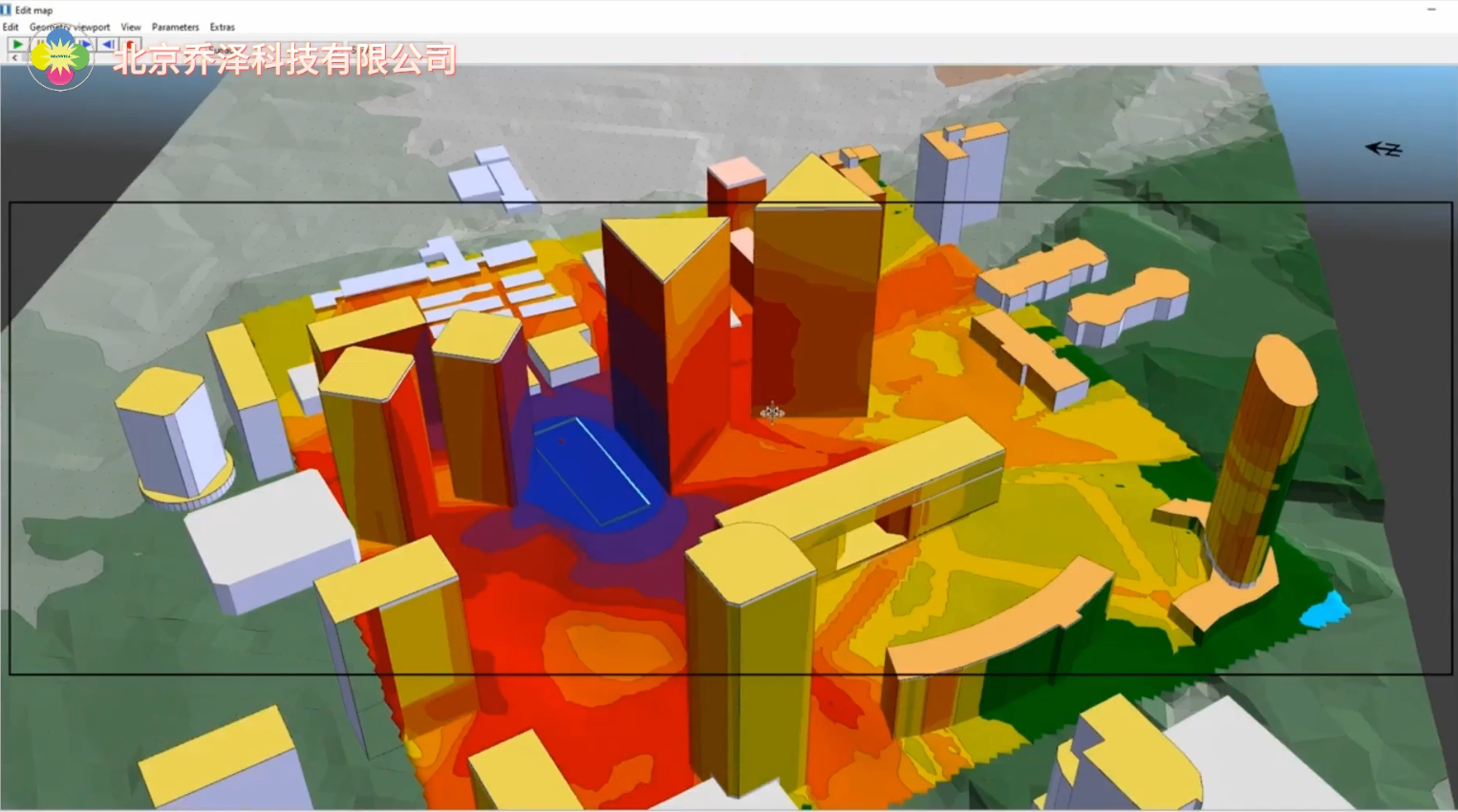
As a noise simulation tool with high industry recognition, SoundPLAN software After decades of iterative refinement, the software now covers most noise‑assessment scenarios, including industrial sites, urban transportation networks, airport terminals, and municipal projects. The 2026 update further aligns with the latest domestic sound‑environment quality standards. A key structural enhancement is the updated 3D graphics, brought up to the current state of the art, which will enable faster integration of new features in the future. The new 3D building outline display serves as a prime example.
Other highlights of SoundPLANnoise 9.1:
- ISO 9613-2:2024 includes detailed considerations for object types such as cylinders and chimneys, as well as attenuation through foliage (trees and shrubs).
- The impact of noise barriers on sound propagation can be evaluated based on specific criteria.
- The import functionality has been revised and simplified, and extended with flexible property assignment via formulas. A new import library helps enable faster support for new import formats in the future.
- Import Excel data directly into a geodatabase.
- Enhanced parameters and settings for Nord2000.
- Use LZW compression for TIFF in the high-pass filter.
- A new type of cylindrical roof for industrial buildings.
- Other psychoacoustic evaluation descriptors include loudness, clarity, and pitch.
- Spreadsheet functionality has been improved; for example, headers can now be arranged vertically.
- Added line-band plots and line-band charts for computing and visualizing noise scores, hotspots, and other statistical assessments.
Standard Operating Procedures for Noise Simulation, Prediction, and Assessment Using SoundPLAN Software
Using SoundPLAN software to conduct noise simulation, prediction, and assessment follows a standardized workflow; adhering to this process can significantly improve efficiency and help prevent deviations in the results.
- Import the project’s base geographic data, including the project boundary, distribution of surrounding sensitive points, and terrain elevation information.
- Build a three-dimensional scene model and input parameters for noise‑attenuating obstacles such as buildings, green belts, and sound barriers.
- Calibrate the sound source data and enter the field-measured equipment noise and traffic flow noise parameters into the system.
- Start the simulation, adjust the mesh resolution parameters, and obtain the acoustic field simulation results at the corresponding resolution.
- Export visualized sound field maps and analysis data, and generate assessment reports that meet approval requirements.
Avoiding Common Pitfalls in the Modeling Phase of SoundPLAN Software
Many beginners using SoundPLAN for modeling often overlook the need to differentiate ground absorption coefficients, instead assuming all surfaces are hard. This leads to significant discrepancies between simulated results and measured data. During modeling, it is essential to assign appropriate absorption parameters to different areas—such as grasslands, paved surfaces, and water bodies—based on the land use type at the project site.
Verification Method for SoundPLAN Software Calculation Results
After completing the SoundPLAN software calculations, practitioners can select 3–5 on-site measured noise monitoring points and compare the simulated values generated by the software with the measured values. If the deviation is kept within 2 decibels, the simulation results meet the accuracy requirements for noise prediction assessments; otherwise, the source parameters must be reviewed and adjusted, and the calculations repeated.
Adaptation Plan for Multi-Scenario Noise Simulation, Prediction, and Assessment Using SoundPLAN Software
SoundPLAN software Pre-built scenario templates are provided for different application scenarios, allowing practitioners to quickly complete adaptation by simply invoking the corresponding template, without having to build the framework from scratch.
Field Application of SoundPLAN Software for Noise Scenarios in Industrial Parks
In noise simulation, prediction, and assessment scenarios for industrial parks, SoundPLAN software can simultaneously input acoustic source parameters for hundreds of different types of production equipment, accurately simulating noise distribution at the plant boundary under various production shifts. This provides data support for enterprises to subsequently install sound barriers and adjust equipment layouts. Industry data released in 2026 indicates that most Class-A environmental impact assessment agencies in China now use noise simulation and prediction software such as SoundPLAN to complete noise assessment projects for industrial parks.
Practical Application of SoundPLAN Software for Traffic Artery Noise Scenarios
For noise simulation, prediction, and assessment scenarios on major transportation corridors such as highways and urban expressways, SoundPLAN software can directly import traffic volume data and vehicle type composition data for different time periods, automatically calculating the along‑route noise distribution across these periods. This provides precise quantitative data to support subsequent measures, such as retrofitting soundproof windows and installing noise barriers in residential areas along the route.
| Comparison dimension | SoundPLAN software | Traditional manual calculation | Other domestic simulation tools |
|---|---|---|---|
| Simulation accuracy | ≤1dB | 3–5 dB (under normal conditions) | 2-3 dB (reference to industry average) |
| Time required for modeling a 100,000-square-meter factory campus | Efficient and time-saving | Time-consuming | Superior to manual calculation |
| Compliance Adaptability | Complies with the latest domestic environmental impact assessment standards | Manual adaptation is prone to errors. | Some of the old standards have not been updated (for general reference only) |
Explanation of Computational Stability for Large-Scale Scenarios in SoundPLAN Software
For noise simulation, prediction, and assessment projects covering urban areas spanning dozens of square kilometers, SoundPLAN software supports distributed computing scheduling, preventing software lag and computational crashes, and demonstrating excellent overall stability.
Advantages of Visualizing SoundPLAN Software Results
The color-coded sound field distribution maps generated by SoundPLAN software support custom color schemes and can be directly inserted into official assessment reports without the need for additional post-processing, further enhancing practitioners’ work efficiency.
Explanation of Support Benefits Included with a Genuine SoundPLAN Software License
As the officially authorized domestic service provider for SoundPLAN software, Beijing Qiaoze Technology Co., Ltd. offers software sales and licensing, Chinese-language technical support and training, and localized application consulting. It also provides long-term free advisory services, engineering application exchange programs, and rapid technical support responses.
Official Genuine Technical Support Services for SoundPLAN Software
All purchases from Beijing Qiaozе Technology SoundPLAN software Users are entitled to perpetual use of the procurement edition of the software and may receive guidance from qualified technical personnel at any time for operational issues, ensuring the smooth progress of noise simulation, prediction, and assessment projects.
Practical training services for SoundPLAN software
For novice users, the service provider also offers in-person, hands-on training that covers the entire workflow, including basic modeling, accuracy calibration, and report generation. With this training, practitioners who have a foundational understanding can independently complete noise simulation, prediction, and assessment for routine projects after just three days.
Trends in the Industry Application Development of SoundPLAN Software in 2026
As domestic requirements for acoustic environment management become progressively stricter in 2026, the application scope of SoundPLAN software in noise simulation, prediction, and assessment will further expand, gradually extending into new areas such as the development of intelligent urban noise management systems.
Direction of linkage between SoundPLAN software and the real-time monitoring system
Going forward, SoundPLAN software will offer additional data interfaces that can directly connect to on-site real-time noise monitoring devices, dynamically update source parameters, and enable real-time automatic updates of noise simulation, prediction, and assessment results for specific areas, thereby reducing manual operation costs.
SoundPLAN Software AI Intelligent Noise Reduction Solution Generation Feature
The upcoming 2027 release of SoundPLAN will feature new AI-assisted capabilities: after entering noise control objectives, the system can automatically generate multiple noise reduction optimization plans, further reducing the workload of professionals and enhancing the intelligence of noise simulation, prediction, and assessment.
❣️ Frequently Asked Questions
Q: What foundational knowledge is required to get started with SoundPLAN software?
A: With a basic understanding of noise acoustics and familiarity with standard EIA project procedures, one can independently carry out noise modeling, prediction, and assessment for routine projects after approximately three days of hands-on training.
Q: Does the SoundPLAN software support China’s latest environmental noise assessment standards?
A: The latest 2026 version of SoundPLAN software has been fully adapted and incorporates the most recent national standard parameters. You can simply invoke it to generate noise simulation, prediction, and assessment results that comply with domestic approval requirements.
Q: What are the official channels for purchasing legitimate copies of SoundPLAN software?
A: Users can visit the official website of Beijing Qiaoze Technology at www.deanwell.com.cn to inquire about purchasing legitimate copies of SoundPLAN software and to obtain officially authorized service support.
Q: Can SoundPLAN software handle large-scale airport noise projects?
A: SoundPLAN software includes a dedicated airport noise modeling module that is fully capable of handling noise simulation, prediction, and assessment for extremely large-scale airport scenarios. Several real-world implementation cases are already available.
Q: Is SoundPLAN software currently available for free trial?
A: You can find the link to apply for a free trial of the SoundPLAN software on the technical support page of the Beijing Qiaozhe official website: https://www.deanwell.com.cn/technical_support/7.html.
SoundPLAN software,Noise Simulation and Prediction,Noise Control,Noise Control,Noise Simulation,Environmental Noise Assessment