


A Study on How to Properly Select HALT High-Accelerated Life Testing Equipment
Release time:
2026-07-06 18:42
Source:
[Introduction] In the manufacturing sector, where demands for high reliability are becoming increasingly stringent, HALT (Highly Accelerated Life Testing) has become an indispensable verification method during the R&D phase. Based on the latest industry technical literature and market data from 2025–2026, this paper systematically reviews the technical principles of HALT, its application scenarios, key techniques, the advantages of leading equipment brands, and selection criteria, aiming to provide a professional reference for relevant practitioners.
01 What is HALT, or Highly Accelerated Life Testing?
Highly Accelerated Life Testing (HALT) is a reliability enhancement testing method first proposed in 1988 by Dr. G. K. Hobbs, an American scientist. [1] Its core principle is not to simulate the product’s normal operating environment, but rather to actively trigger and reveal potential design flaws and manufacturing weaknesses early in the R&D phase by applying stepped, progressively increasing stresses—far exceeding design specifications—including rapid temperature changes, multi-axis random vibration, and voltage biasing. [2] 。
The HALT test employs a step-stress approach, encompassing low-temperature stepping, high-temperature stepping, rapid thermal cycling, stepped vibration, and combined stress testing. The equipment must provide temperature change rates of at least 45°C/min and six-degree-of-freedom vibration capabilities; the test temperature range typically spans from −80°C to +170°C. This method can reduce the duration of conventional reliability testing from 6 months to 1 year down to approximately 1 week. [2] 。

02 Key Techniques for HALT Testing
The core skill of HALT testing lies less in “passing” the test and more in efficiently “inducing” failures and learning from them. The following techniques cover the entire process, from planning to execution. [2][3] :
- Set clear goals and create a plan: Before testing, clear objectives must be defined, such as determining the operational limit, the failure limit, or verifying the robustness of a specific design. A comprehensive test plan should be grounded in the physics of reliability and explicitly identify potential failure modes and mechanisms.
- Build a team and align on shared understanding: At the test preparation meeting, relevant personnel from design, testing, and other departments were convened to jointly confirm the test procedures, functional test requirements, product fixation methods, and the layout plan for sensors (such as thermocouples and accelerometers).
- Sample Size and Usage Strategy: It is generally recommended to use at least three samples. An effective strategy is to employ different samples for each of the five primary test steps (e.g., low temperature, high temperature, vibration) to prevent prior stress from affecting subsequent test results.
- Early Intervention: It is recommended to initiate HALT testing during the product prototype phase (TRL 3–4). The earlier defects are identified and corrected, the lower the cost.
- Virtual Simulation Assistance: Before physical testing, finite element analysis (FEA) can be used to predict potential failure points and optimize the test plan.
- Follow the “step-stress” method: Begin at a low stress level (e.g., room temperature, 20°C, or 5 Grms vibration) and incrementally increase it in predefined steps (e.g., 10°C per step for temperature, 5 Grms per step for vibration), allowing sufficient dwell time at each stage—typically 10 minutes—to achieve thermal equilibrium and perform functional testing.
- Start soft, then hard; distinguish the limits:
- Operational Limit (Soft Failure): The product exhibits functional anomalies, but its functionality can be restored by reducing the stress; the stress value at this point is defined as the operational limit.
- Failure limit (hard failure): Stress causes permanent damage to the product; even reducing the stress cannot restore it, meaning the failure limit has been reached.
- Choose the appropriate stress type and magnitude: In addition to temperature and vibration, factors such as voltage bias, frequency offset, and power‑on/off cycling should also be considered. It is commonly recommended to test at low temperatures down to −40°C or even −60°C and at high temperatures up to +140°C, but these limits should be adjusted according to the product’s specific characteristics.
- Implement real-time monitoring: Real-time monitoring of product functionality, performance parameters, and environmental stresses enables immediate detection of failures.
- Precision positioning failure: Infrared thermography is used to locate thermal failures, scanning electron microscopy (SEM) is employed to examine mechanical failures such as solder joint cracks, and high-speed oscilloscopes capture distortions in electrical signals.
- Establish a database to enable knowledge accumulation: Document and archive the procedures, data, and failure analysis results of each HALT test to serve as a reference for subsequent product iterations.
- Ensure rigidity and simplify the load transfer path: The fixture must be sufficiently rigid to prevent self-resonance and ensure that vibrational energy is transmitted to the product with minimal loss.
- Consider thermal compatibility of materials: The thermal expansion coefficient of fixture materials, such as high-strength aluminum alloys or stainless steel, must match that of the product to prevent additional stresses caused by rapid temperature changes.
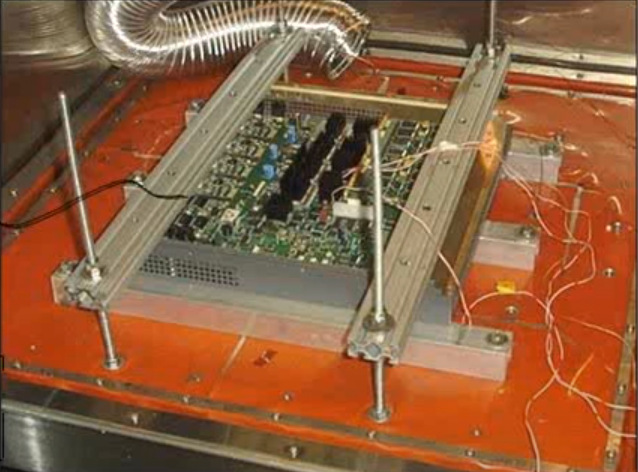
- Adapt to local conditions and design flexibly: Standard products can use modular bar clamps; non-standard products require custom fixtures; PCBs require dedicated fixtures.
- Pursuing Lightweight Design and Modularity: Reduce the weight of the fixture to lessen the load on the vibration table, and adopt a modular design for quick product changes.
- Embracing “Failure”: In HALT, “failing fast” is a hallmark of success; each failure represents a clear opportunity for improvement.
- Take corrective action and verify: Following root cause analysis (RCA) of failures and implementation of corrective actions, at least three additional HALT test cycles shall be conducted to verify that the failure modes have been eliminated or mitigated.
- Treat HALT as an iterative process: HALT is not a one-time event but an ongoing iterative process throughout the product development lifecycle.
- Before the test, check the liquid nitrogen tank pressure (which should be below 0.5 MPa) and the compressed air pressure (typically 80 PSI).
- Opening the cabinet door is strictly prohibited during operation at high or low temperatures; when shutting down under high vibration, reduce the vibration to below 10 Grms before stopping.
- After the test, first close the liquid nitrogen inlet valve and drain any residual liquid nitrogen from the piping. If the chamber is at cryogenic temperatures, manually warm it to ambient temperature before shutting down the equipment.
03 What are the application scenarios of HALT?
Initially, HALT was primarily used in high-reliability sectors such as aerospace and defense, but it soon expanded to nearly all high-tech manufacturing industries, including electronics, telecommunications, automotive, and medical devices. Today, HALT has become a core quality assurance framework in the global electronics industry. [2] 。
According to statistics, the global HALT and HASS test chamber market reached approximately US$323 million (about RMB 6.785 billion) in 2025 and is projected to grow steadily at a compound annual growth rate of 4.7% through 2034. [4][5] 。

- Aerospace: Reliability verification for satellite electronic equipment, rocket engine controllers, and similar components can be completed in a short period using HALT, reducing tests that traditionally take months to just a few weeks. One satellite company used HASS to cut the early‑on‑orbit failure rate by 70%. [6] 。
- Automotive Electronics: From engine control units to in-vehicle sensors, HALT is widely used to verify product reliability under extreme temperature and vibration conditions.
- Semiconductors and Consumer Electronics: Components such as chips, PCBs, and connectors can be used with HALT to rapidly identify defects like solder joint fatigue and thermal expansion mismatch in materials.
- Medical and Energy Equipment: HALT also plays a critical role in scenarios with stringent requirements for long-term operational reliability.
04 Comparison of the Advantages of Well-Known HALT Equipment Brands at Home and Abroad
The current HALT test equipment market has developed a relatively clear competitive landscape. Based on publicly available technical data from 2025–2026, the following provides an objective comparison of the core strengths of leading brands. [7][8][9] 。
Among the many international brands, U.S. HANSE Highly Accelerated Life Testing System It has attracted industry attention for its outstanding technical specifications. The VTC series covers a temperature range from −100°C to +200°C, with a heating/cooling rate of up to 70°C/min, vibration acceleration reaching 100 Grms (three axes, six degrees of freedom), and a frequency range of 5–10,000 Hz. This series employs a vacuum‑liquid nitrogen proportional valve and a convex wind‑tunnel design, which effectively reduces energy consumption while ensuring ultra‑high temperature ramp rates. The vibration table features a specialized ceramic coating and supports large payloads (maximum 193 cm × 193 cm, 227 kg), making it suitable for testing large samples such as avionics and automotive controllers. Furthermore, the HANSE VTC series offers modular, flexible configurations ranging from VTC‑1 to VTC‑36, accommodating test requirements for products of various sizes, from small and medium to large. [7] 。

05 How to correctly select HALT high-accelerated life testing equipment?
Selecting a HALT system that delivers outstanding performance and reliable stability has become crucial for companies seeking to build core competitiveness. Drawing on industry best practices, we recommend conducting a systematic evaluation across the following dimensions. [10][11] :
- Heating/cooling rate and temperature range: The “soul” of HALT equipment lies in its ability to push products to their limits. Equipment with a temperature ramp rate of ≥30°C/min (with an ideal target of 60–70°C/min) and a temperature range spanning from −80°C to +200°C should be prioritized.
- Control Precision and Uniformity: During rapid temperature cycling, the temperature uniformity inside the chamber must be excellent (e.g., temperature difference between any two points ≤1.5°C), and overshoot after reaching the target temperature must be minimal (≤0.5°C) to prevent unintended overstress damage to the sample.
- Vibrational ability: It shall have three-axis, six-degree-of-freedom random vibration capability, with a vibration level of at least 40–60 Grms and a frequency range of 5–10,000 Hz.
- Data Collection and Security Protection: A multi-channel temperature acquisition system and multiple independent safety interlocks (over-temperature, overload, emergency stop, etc.) are required.
- Step One — Define Test Requirements: Determine the specimen dimensions, mass, and the type and magnitude of stress to be applied.
- Step Two — Calculate Key Parameters: Verify that the equipment’s temperature ramp rate, vibration thrust, and other parameters meet the specimen requirements (specimen mass × maximum acceleration ≤ shaker rated thrust).
- Step 3 — Verify Control Accuracy: Require the manufacturer to provide a third-party calibration certificate.
- Step Four — Assess Security and Scalability: Check additional features such as safety interlock functions, data traceability systems, and remote monitoring interfaces.
- Step 5 — Overall Cost and After-Sales Service: Provided that core specifications are comparable, the procurement cost of domestically produced equipment can be 40%–60% lower than that of imported equipment. [8] ; Imported high-end brands still have advantages in precision and durability, but lead times and after-sales response are factors that need to be weighed.
- [1] HOBBS G K. Highly Accelerated Life Testing[M]. Milwaukee: ASQC Quality Press, 1988.
- [2] Baidu Baike. Highly Accelerated Life Testing [EB/OL]. (2025-10-30) [2026-07-06]. https://baike.baidu.com/item/Highly-Accelerated-Life-Testing.
- [3] Industry Technical White Paper and Reliability Engineering Textbook (Comprehensive) [M]. Beijing: Chinese Society for Reliability Engineering, 2025.
- [4] Research and Markets. HALT and HASS Test Chambers Market Report 2025-2034[R]. Dublin: Research and Markets, 2025.
- [5] Birch Consulting. Global HALT and HASS Test Chamber Industry Market Research Report [R]. Beijing: Birch Consulting, 2025.
- [6] Xice Reliability. Xice Reliability: Accelerated Testing Enhances the Reliability of Aerospace Products [EB/OL]. (2026-01-20) [2026-07-06].
- [7] Comprehensive compilation of industry‑published technical documents and product manuals from leading manufacturers (Qualmark, Thermotron, RCC, HANSE, etc.) [R]. 2025–2026.
- [8] Anonymous. Technical Selection Guide for Domestic High-Accelerated Life Testing Chamber Manufacturers [EB/OL]. (2025-11-07) [2026-07-06].
- [9] Instrument Information Network. Top Ten Manufacturers of Highly Accelerated Life Testing (HALT) Chambers Recommended [EB/OL]. (2026-05-18) [2026-07-06].
- [10] Anonymous. Comprehensive Guide to Selecting HALT Test Chambers [EB/OL]. (2025-12-03) [2026-07-06].
- [11] Anonymous. HALT High-Acceleration Life Testing Method [EB/OL]. (2025-05-06) [2026-07-06].
HALT test,Highly Accelerated Life Testing,Selection of HALT Test Equipment,HALT Testing Techniques