


When applying motion biomechanics analysis in sports training, sports rehabilitation, and human factors engineering, how should you choose motion capture equipment?
Release time:
2026-07-01 13:50
Source:
Biomechanical analysis in sports is moving from the laboratory to training fields, rehabilitation centers, and ergonomic assessment sites. Whether optimizing athletes’ sprinting techniques, evaluating return-to-play after anterior cruciate ligament (ACL) injuries, or analyzing human body loads in industrial tasks, motion capture systems have become indispensable quantitative tools. However, with a variety of technological approaches—such as optical markers, inertial measurement units (IMUs), and markerless computer vision—the practical challenge many practitioners face is selecting the most suitable equipment for a given scenario.
What is a solution based on sports biomechanics analysis?
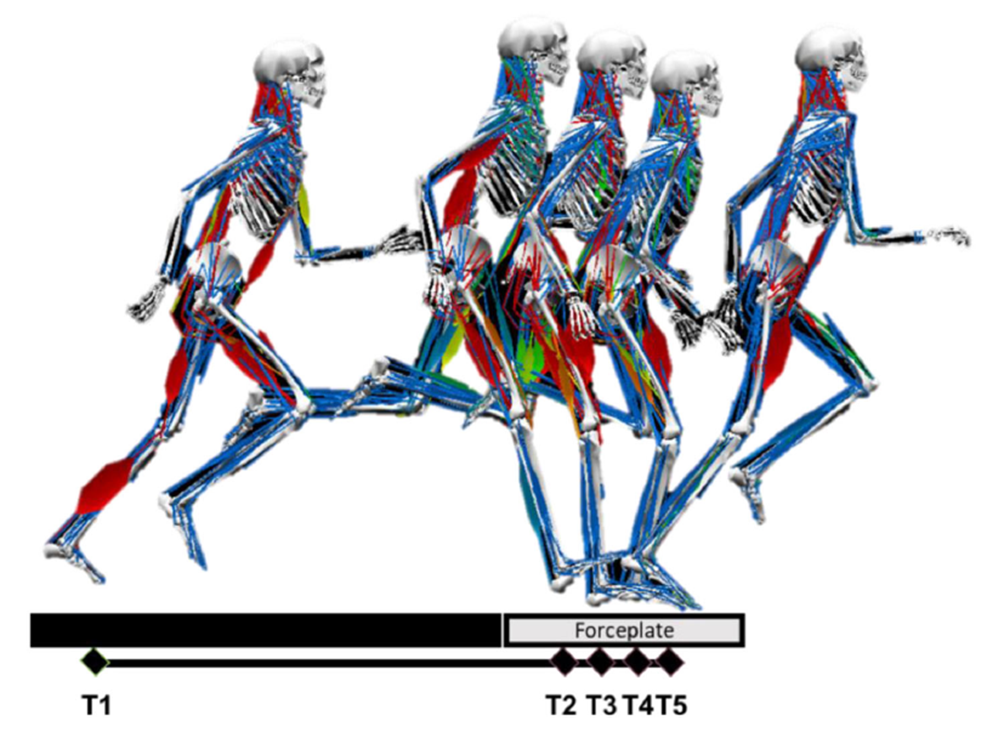
A sports biomechanics analysis solution refers to a systematic approach that uses motion capture equipment to collect human kinematic (joint angles, velocity, acceleration) and kinetic (ground reaction forces, joint moments) data, and combines this with modeling and simulation software for quantitative assessment. A complete solution typically comprises three levels: Data Collection Layer (motion capture equipment), Data Processing Layer (Biomechanics analysis software) and Application Output Layer (Training feedback, rehabilitation assessment, or ergonomic report).
At the data acquisition end, mainstream technologies include optical marker-based systems (such as Vicon and Qualisys), IMU systems (such as Xsens and Noitom), and markerless systems based on computer vision (such as Theia3D and OpenCap). [1] . On the software analysis side, BOB Human Movement Biomechanics Analysis Software and AnyBody human musculoskeletal simulation modeling software Biomechanical analysis software It can import motion capture data and compute key parameters such as joint torques and muscle forces; whereas BTS SMART-DX EVO Motion capture equipment The former provides the hardware system required for data acquisition. Combined with the latter, they form a complete hardware–software closed loop, spanning from data collection to analysis.
Why apply sports biomechanics analysis?
Sports Training: From Experience-Driven to Data-Driven
In competitive sports, motion capture technology can reveal technical details invisible to the naked eye. A systematic review and meta-analysis of jumping tasks showed that current markerless motion capture systems achieve moderate accuracy in lower-limb jumping biomechanics analysis—pooled RMSE values in the sagittal plane were 5.3°, 4.4°, and 4.9° for the hip, knee, and ankle joints, respectively. [3] Although this level of accuracy still falls short of the optical gold standard, it is sufficient to support real-time technical feedback on the training field. For team sports that require high-frequency, large-scale screening, markerless systems offer particularly pronounced efficiency advantages.
Sports Rehabilitation: Quantitative Assessment and Return-to-Play Decisions
In the field of rehabilitation, motion biomechanical analysis provides an objective basis for return-to-sport (RTS) decision-making following ACL injury. Studies have confirmed that lower-limb joint kinematics assessments using markerless systems such as Theia3D demonstrate good inter-session reliability in dynamic RTS screening tasks. [4] Compared with traditional methods that rely on subjective judgment, quantitative assessment can detect compensatory patterns and asymmetries earlier, thereby reducing the risk of re-injury. In sports rehabilitation, 3D motion analysis has moved from the laboratory to clinical practice, with IMU sensors and smartphone optical cameras becoming the most widely used tools. [5] 。
Human Factors Engineering: From the Laboratory to Real-World Work Environments

The fields of ergonomics and occupational health also benefit from biomechanical analysis of movement. Research shows that carrying a standard 3.5 kg load significantly increases asymmetry in ground reaction forces and plantar pressures among police recruits, thereby substantiating the risk of musculoskeletal injuries. [6] Transferring motion capture technology from the laboratory to end users in real-world settings is a significant challenge today. Inertial motion capture systems, such as Xsens Analyze 2025, come preloaded with male and female anatomical models, providing critical data on gait, posture, and upper- and lower-limb dynamics, thereby enabling occupational health and safety professionals to make data-driven decisions. [7] 。
Who in the field is applying it, and what results have they achieved?
🔬 Academic Research Institutions
Top sports biomechanics laboratories worldwide commonly use optical marker-based systems as the gold standard. Vicon systems achieve a static mean absolute error of 0.15 mm and a dynamic error of less than 2 mm. [1] However, its high cost and reliance on laboratory settings have limited large-scale adoption. In recent years, more research has begun exploring low-cost VR tracking solutions—a study used HTC Vive Trackers to analyze the kinematics of squatting movements and found that their repeatability (average trial-to-trial variability of 0.65°–4.01°) was comparable to that of a Vicon system, while the entire setup cost only about $1,000. [8] 。
🏆 Professional Sports Club
Professional sports teams are widely deploying IMU and GPS tracking systems for load management. Systems such as Catapult Vector and STATSports Apex have demonstrated key metric reliability (e.g., speed, distance, positional coordinates) with ICC > 0.80 in field validation studies. [1] . In throwing sports such as baseball, BTS motion capture equipment Combined BOB or AnyBody simulation modeling has been used to analyze joint loading during throwing motions, helping to prevent elbow and shoulder injuries.
🏥 Rehabilitation Medical Institution
In clinical rehabilitation, IMU systems are favored for their portability and the fact that they do not require external cameras. Systems such as Xsens MVN can achieve joint angle accuracies of 2–8° during tasks like jump landings and direction changes. [1] A systematic review indicates that machine learning–enhanced rehabilitation monitoring can significantly reduce the rate of re-injury. [9] 。 BOB Human Movement Biomechanics Analysis Software It can import data from devices such as Vicon and Xsens, calculate joint torques and muscle forces, and provide quantitative evidence for developing personalized rehabilitation plans.
🏭 Human Factors and Occupational Health
In the fields of industry and human factors engineering, motion capture technology is being used for analyzing work postures and assessing the risk of musculoskeletal disorders (MSDs). Movella’s Xsens Analyze 2025 enhances the accuracy of gait and posture analysis through native integration of male and female anatomical models. [7] Occupational health and safety experts can use this data to optimize workstation design, assess risks associated with handling tasks, and develop targeted interventions.
How to Choose: A Comparative Framework for Three Types of Motion Capture Technologies
Based on existing literature, the core differences among the three mainstream motion capture technologies can be summarized as follows: [1][3][8] :
Selection decisions should follow “ Scene matching takes priority Principle: If maximum accuracy and a sufficient budget are priorities, optical systems remain the preferred choice; for applications requiring site flexibility and real-time feedback, IMU systems offer greater advantages; and when balancing efficiency with non-invasiveness, markerless systems provide the optimal compromise.
- Adlou, B., Wilburn, C., & Weimar, W. (2025). Motion Capture Technologies for Athletic Performance Enhancement and Injury Risk Assessment: A Review for Multi-Sport Organizations. Sensors , 25(14), 4384.
- Biomechanics and Motion Analysis: From Human Performance to Clinical Practice. (2025). Bioengineering , 12(10), 1114.
- Ogura, A., et al. (2025). Are we there yet? A systematic review and meta-analysis of the validity and reliability of automated markerless motion capture systems during jumping tasks. Journal of Sports Sciences .
- Inter-session reliability of markerless lower extremity joint kinematics and kinetics for return-to-sport screening tasks. (2025). PubMed .
- Recent Advancement of 3d-motion Analysis in Sports Rehabilitation: A Narrative Review. (2025). JCDR , 19(9), 20.
- Use of Technologies for the Acquisition and Processing Strategies for Motion Data Analysis. (2025). Biomimetics , 10(5), 339.Movella. (2025).
- Movella. (2025). Movella releases its first-ever biomechanical human model for inertial motion capture. Xsens.cn.
- Czajkowska, U., Popek, M., Pezowicz, C., Leśnik, B., & Żuk, M. (2025). Squat Kinematics Analysis Using Vicon and Affordable Motion-Capture Solutions. Sensors,25(11), 3294.
- Machine learning-enhanced rehabilitation monitoring: a systematic review. (2025). BMC Sports Sci Med Rehabil.
Biomechanical analysis,Sports training,Sports rehabilitation,Human Factors Engineering,How to Choose Motion Capture Equipment,Motion capture