


AI-driven acoustic simulation and prediction in architecture is reshaping the design process and enabling precise optimization.
Release time:
2026-06-22 12:12
Source:
Noise pollution resulting from accelerating urbanization has become a major environmental factor affecting residents’ health and quality of life. The sound insulation performance of building envelopes—particularly the acoustic behavior of vulnerable components such as doors, windows, and walls—directly determines indoor acoustic comfort. Traditional architectural sound insulation design relies heavily on finite element modeling (FEM) and experimental testing, often facing bottlenecks such as time-consuming computations, lengthy iterative cycles, and the inability to rapidly evaluate designs during the conceptual stage. In recent years, the deep integration of artificial intelligence and acoustics is fundamentally transforming this landscape— Machine learning, graph neural networks, probabilistic optimization algorithms The introduction of such technologies has improved the sound insulation of buildings. Simulation Prediction From “post-verification” to “ Design-Driven ”, providing architects and acoustic engineers with unprecedented decision-support capabilities.
01 Graph Neural Networks + Probabilistic Genetic Algorithm: A New Paradigm for Acoustic Insulation Optimization
A study published in Building and Environment in 2025 [1] , proposed a method based on Graph Transformer Network (GTN) and Probability-Informed Genetic Algorithm (probability-informed GA) An optimization framework specifically designed for the efficient optimization of the sound insulation performance of bidirectional varied materials (BVMs). As a type of functionally graded material (FGM), BVMs exhibit complex topological relationships in their internal structure that decisively influence acoustic propagation paths; traditional scalar-parameter modeling struggles to capture these geometric characteristics.

The study models each unit cell of the BVM as a graph structure—nodes represent the corner points of shell elements, and edges represent the connectivity between elements; node features include spatial coordinates, while edge features include edge lengths. GTN captures long-range dependencies among nodes in the graph via a self-attention mechanism, thereby accurately predicting transmission loss. Meanwhile, the research team has developed a Probabilistic Information Genetic Algorithm , the historical mutation success rate at each genetic locus is modeled using a Beta distribution to dynamically guide the selection of variation points, rather than relying on random mutation as in traditional genetic algorithms. Experiments show that at 500 Hz (a typical frequency in indoor acoustic environments), the optimized BVM partition wall achieves 36.92 dB Propagation loss [1] 。
The academic value of this framework lies in the fact that it is the first to integrate Graph Neural Network It introduces a framework for predicting building sound insulation and demonstrates, with verifiable accuracy (MRE 0.8%), its capability to model complex geometries. In practical engineering applications, this method can significantly reduce reliance on time-consuming FEM simulations, enabling… Architectural Design Process Acoustic evaluation in has been compressed from “several days” to “milliseconds.”
02 Material Structure and Measurement Methods: Multidimensional Research Advances
In addition to algorithmic breakthroughs, recent studies have advanced architectural sound insulation technology from various perspectives, including material structure, measurement methods, and numerical modeling. In the field of window sound insulation, Caballol et al. [2] Through comparative laboratory studies, the impact of different glazing configurations and shutter boxes on sound insulation performance was systematically evaluated across the 50–5000 Hz frequency range. The researchers found that, above 100 Hz, windows without shutter boxes generally outperformed those with shutter boxes. However, in the low-frequency range (50–80 Hz), employing different measurement methods—namely the ISO 10140 laboratory method, the ISO 16283 field method, and hybrid approaches—resulted in significant variations in reported sound insulation values. Notably, when only the low-frequency corner‑point method was applied to the receiving room, the measured sound insulation values were the lowest, and differences among window types were obscured. This study underscores that low-frequency sound insulation ratings are highly dependent on the measurement methodology and highlights the need to refine standardization protocols to enhance the reliability and perceptual relevance of the results.

In the field of wood-based composite materials, Imirzi and Kaya [3] Wood-based sandwich panels with different geometric corrugated cores (circular, rectangular, trapezoidal) were fabricated, and their sound absorption coefficients (α) and sound transmission loss (STL) were measured using the impedance tube method. The experiments showed that perforation of the panel surface positively affects the sound absorption coefficient, which increases significantly with increasing hole depth; the geometry of the corrugated core also enhances sound absorption performance, with the trapezoidal core exhibiting particularly outstanding results at 2000 Hz. Regarding sound transmission loss, both perforation and hole depth reduce STL, but the circular core shows the smallest reduction. This study recommends using perforated panels with trapezoidal corrugated cores in applications prioritizing indoor acoustic comfort, while semi-perforated panels with circular corrugated cores are suggested for scenarios requiring spatial sound isolation.
A preliminary assessment of wood-based materials also confirmed the importance of structural differences. Wahyuningtyas et al. [4] Using a simplified experimental approach, the sound insulation performance of solid wood, plywood, laminated board, and particleboard was compared under various real-world noise sources (motorcycle horn, falling rocks, music, woodworking machinery). The results show that all materials significantly reduce sound levels (by 74.6–89.6 dB), with particleboard performing best and solid wood worst. This is attributed to particleboard’s higher porosity and more complex internal pathways, which enhance the dissipation of acoustic energy through internal friction and viscous losses.
For gradient porous materials, Zhu et al. [5] Based on the Johnson–Champoux–Allard (JCA) model and the virtual transmission loss (VTL) method, the sound insulation performance of gradient flow-resistance porous materials was systematically investigated. They found that, Low → High A flow-resistance gradient structure exhibits higher transmission loss than a uniform or high-to-low structure, with the three-layer gradient design delivering the best performance. When this gradient scheme was applied to an automotive roof liner, transmission loss improved by 5.8 dB, corresponding to a 5.8-dB reduction in the receiver cavity sound pressure level; however, in dashboard applications, the improvement was negligible due to rigid boundary constraints. This study highlights the potential of gradient structures for broadband noise control within confined spaces.

In terms of quiet cabin design, Tang et al. [6] By combining finite element simulations with two‑chamber tests, the sound insulation performance of multilayer composite walls and glass doors was optimized. They confirmed that 5–20 mm single‑pane glass obeys the mass law, with an average increase in sound insulation of approximately 0.8 dB for each additional millimeter of thickness; 10 mm single‑pane glass exhibits optimal performance in the low‑frequency range. For the wall, the optimized composite structure (9J+1.5L+50X+1.2G) demonstrates excellent low‑frequency sound insulation and balanced mid‑ to high‑frequency performance within the core band of 63–1000 Hz. The study also proposes a hybrid computational method that integrates low‑frequency finite element analysis with high‑frequency statistical energy analysis, enabling efficient full‑band predictions.
The impact of actual window installation and structural details on their sound insulation performance has also attracted attention. Dulak and Nowoświat [7] Laboratory measurements were conducted on windows larger than the ISO reference size to investigate the effects of installation method (expansion strip vs. low-pressure polyurethane foam), the presence or absence of a sill, and mullion type (fixed vs. operable) on Rw and Rw+Ctr. The results indicate that window frame structural details have a negligible impact on sound insulation; however, the EN 14351-1 standard method for estimating whole-window sound insulation based on insulated glass unit (IGU) data significantly underestimates actual performance, with estimated values 2–5 dB lower than measured values. This study recommends that windows with high sound insulation requirements (Rw≥41 dB) must have their performance verified through full-scale laboratory testing.
03 Application of End-to-End Acoustic Tools, from Simulation to Field Measurements
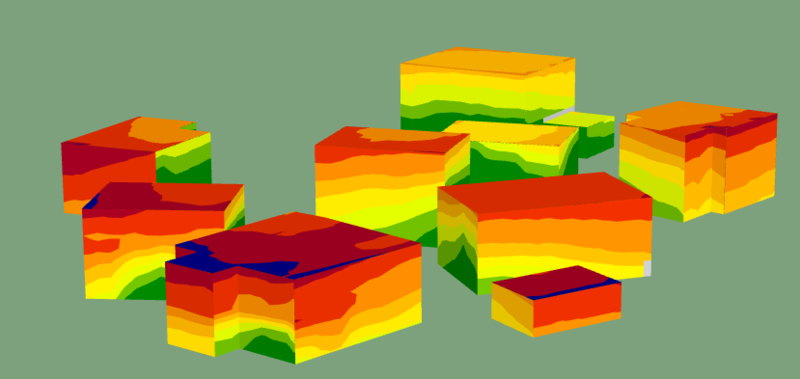
The aforementioned academic studies have revealed how material structure, measurement methods, and optimization algorithms influence sound insulation performance; translating this knowledge into engineering practice, however, depends on the support of specialized software and hardware. SoundPLAN Noise Simulation and Prediction Software As a leading tool for environmental noise modeling and architectural acoustics simulation, it enables detailed simulations of building facades and indoor sound fields, helping designers evaluate the sound insulation performance of different design options during the conceptual phase. Combined with its latest features—such as noise contour maps for building exteriors and ISO 9613-2:2024 chimney directivity calculations—SoundPLAN provides visual decision-support for acoustic design across both macro and micro scales.
The reliability of predictive models requires validation with field data. SonoCat Multifunctional On-site Acoustic Measurement Device Breaking the limitations of traditional laboratory measurements, its handheld spherical microphone array can measure three-dimensional sound intensity vectors, sound pressure, sound power, and in-situ absorption coefficients in real time, obtaining accurate acoustic parameters directly at the material’s installation location. This “measurement‑as‑validation” capability forms a prediction‑validation‑iteration closed loop with predictive models such as GTN, significantly enhancing the reliability of acoustic design.
As for the visualization-based diagnosis of sound fields, SoundViewer 3D Sound Field Reconstruction System It offers a unique solution. This system employs a 3D microphone array and an eight-channel data acquisition unit, representing a disruptive product built upon intelligent acoustic sensing theory and the least-squares method applied to the Helmholtz equation. Simply put, intelligent acoustic sensing theory leverages intelligent statistical optimization of triangulation principles to determine the location of any sound source in three-dimensional space, while the least-squares method based on the Helmholtz equation reconstructs the optimal sound field distribution from input acoustic signals. Together, these approaches give rise to beamforming noise control technology, enabling the visual acoustimeter to allow users to detect and analyze any complex noise source and its resulting three-dimensional sound field. For architectural sound insulation design, SoundViewer can precisely identify sound leakage paths through building envelopes, providing direct evidence for optimizing designs.
The three together constitute “ Prediction—Measurement—Optimization The complete technological chain enables acoustic engineers to manage acoustics throughout the entire lifecycle, from conceptual design to final acceptance, which aligns closely with the “data-driven” and “model-driven” approaches currently emphasized in academic research.
04 From Simulation to Intelligence: The Future Landscape of Acoustic Design
From the foregoing studies, it is evident that AI-driven acoustic design is evolving from isolated algorithmic breakthroughs toward systematic integration. Graph neural networks enable rapid and accurate prediction of the sound insulation performance of complex topological materials, while probabilistic optimization algorithms significantly enhance the efficiency of searching the design space. Meanwhile, innovations in material structures—such as corrugated cores, gradient flow resistances, and composite sandwich panels—provide the physical foundation for improving sound insulation, and the reevaluation and refinement of standardized measurement methods ensure the reliability of engineering data. Looking ahead, with the deep integration of BIM platforms and the convergence of cloud-based simulation and real-time monitoring, acoustic analysis will become an indispensable component of the architectural design process, offering robust technical support for achieving healthy and comfortable indoor acoustic environments.
Building sound insulation,Acoustic simulation,Noise Simulation and Prediction,Environmental Noise Control,Noise Control